Gandhi said the government was using the women’s quota bill to bypass demands for caste-based political representation after the census.
He alleged the BJP wanted to reshape constituencies to protect its political interests as its support base weakened.
Gandhi warned that southern, north-eastern and smaller states could lose influence if delimitation was carried out solely on the basis of population.
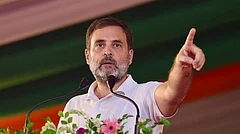
“This is anti-national act,” said the leader of the Opposition Rahul Gandhi in an attack on the BJP government, accusing it of trying to redraw India’s political map in the name of reforms for women. He framed the debate as a battle over the soul of the Constitution.
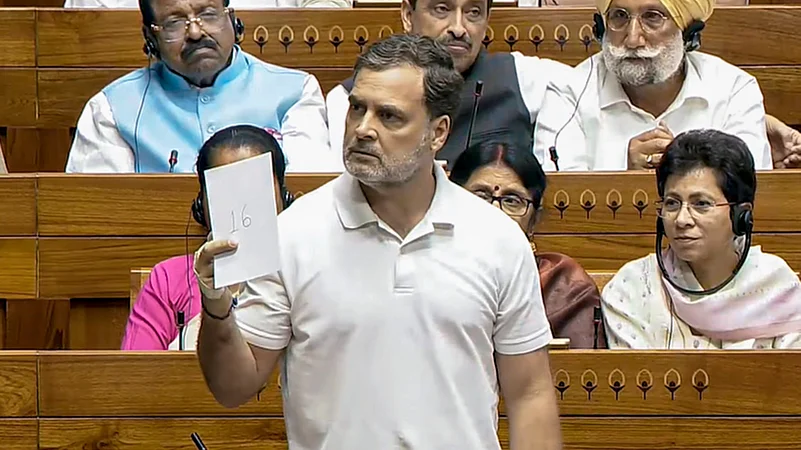
Participating in a debate in the Lok Sabha on the three bills, the Constitution (131st Amendment) Bill, 2026; the Union Territories Laws (Amendment) Bill, 2026; and the Delimitation Bill, 2026, Gandhi said the government was using the women’s reservation legislation to avoid a more fundamental demand — caste-based political representation after the census.
Together these bills propose increasing the size of the Lok Sabha to 850 from 543, enabling delimitation based on the 2011 Census, and implementing women’s reservation on the basis of revised constituencies. The Union Territories Laws Bill contains similar provisions for Puducherry, Delhi and Jammu & Kashmir.

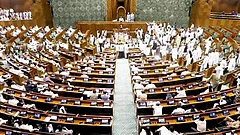
The Lok Sabha, on Thursday, held a marathon 12-hour session to discuss amendments to the women’s reservation bill, including removing the requirement to implement the law only after a fresh census. Before beginning the debate, the Speaker called for a division, where 251 members voted in favour and 185 against, from a total of 333 votes.
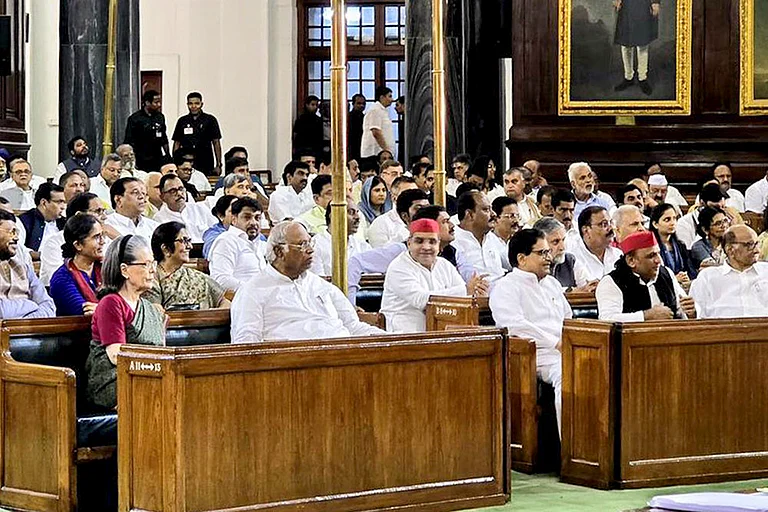
Rahul Gandhi alleged that the government was using the women’s reservation legislation to avoid a more fundamental demand, caste-based political representation after the census. “This is to bypass the census,” he said, claiming the move was intended to postpone representation in Parliament and state assemblies for another decade. He said it was a clash “between those who believe in Manuvad and those who follow the Samvidhan”.
Gandhi said the women’s reservation law had already been passed by Parliament in 2023, but the BJP had indicated it would only be implemented 10 years later. He argued that the current proposal was not about women’s empowerment, but an attempt to redraw India’s electoral map while “hiding behind the women of India”. Calling it a “shameful and anti-national act”, he urged the government to bring back the original women’s bill, saying the opposition would support its immediate passage.
He said the ruling establishment was unsettled by changing political currents and was attempting to “rejig India’s political map” in order to preserve its strength. Gandhi added that such an effort would require constitutional sanction and would face strong opposition from his party.
In response to the observations made by Amit Shah regarding the caste census, Gandhi argued that the point here was not about whether the process had been initiated but rather about whether its results would help achieve representation in the Lok Sabha and legislative assemblies. “What you are trying to do is to make sure that the caste census doesn’t lead to any representation in the next 15 years,” he claimed.
He further claimed that the BJP, worried by shifts in the country’s political mood and the erosion of its support, was now seeking to reshape constituencies nationally. Gandhi accused the government of having already done so in Assam and Jammu & Kashmir, and now wanting to extend the exercise across India.
Gandhi said there was “brutal” treatment of OBCs, Dalits, Adivasis, minorities and women, adding that this was a reality everyone recognised. He alleged that the government was trying to deny OBC communities political representation and power.
“You call them Hindus and you do not give them any space in this country,” Gandhi said, referring to OBCs and Dalits.
He broadened the issue beyond electoral politics, questioning where OBCs, Dalits and Adivasis stood within India’s major institutions. He pointed to the judiciary, the private sector, healthcare and centres of financial power, arguing that communities often described as the backbone of the nation remained excluded from positions of influence.
Gandhi said the opposition would not allow the government to strip communities of their rightful representation. “The entire opposition will defeat this attempt to deprive OBCs and Dalits of their rightful place in society,” he declared.

He also said the bills would weaken the influence of southern states, north-eastern states and smaller states, many of which already fear that delimitation based solely on population could reduce their share of seats in Parliament. Calling them “equal participants in the Union of India”, Gandhi warned that any attempt to diminish their voice would be firmly resisted.
“Women are a central force, a driving force in our national imagination, in our national perspective,” the Congress leader and Leader of the Opposition said.
Both Indira Gandhi and Atal Bihari Vajpayee, he noted, had confronted the same question of delimitation and chosen caution over haste. Gandhi said both of them had understood the risks and had not allowed delimitation to proceed.
He likened the Prime Minister to “a failed magician”, claiming attempts to mislead the public were over. Gandhi alleged that the bills were brought now to reshape the electoral map and to present itself as pro-women ahead of elections. But, he said, “The magician has been caught. The magician of Balakot, of demonetisation, of Sindoor, has been caught.” The remark provoked uproar from treasury benches, with Rajnath Singh demanding an apology.
“There is a central fundamental confusion in the mind of the BJP…. You aren’t the people of India, you aren’t the armed forces, stop hiding like cowards,” asserted Gandhi.
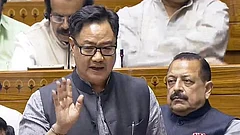
Union Parliamentary affairs minister Kiren Rijiju said Gandhi had mocked Operation Sindoor and called it “magic”, adding that this amounted to mocking the country. He asked the Speaker to expunge the remarks from the proceedings.
Gandhi also claimed that a deal had been signed with the US which, he said, no Prime Minister would have signed unless compromised.
“What you are attempting is snatching the constitutional rights of the people of India. We will not allow it. We will defeat the Bill here,” said Gandhi.
Suggesting that he knew more than he was revealing, he added that the Prime Minister Narendra Modi had appeared low in energy and was not able to engage when he spoke on Thursday, 16 April. Gandhi concluded by saying, “The people of India can try to solve this puzzle. The answer to your problems is in the number 16.”