






It’s been nearly 12 years since the Modi-Didi rivalry has turned out to be one of the most intense duels in Indian politics.
Banerjee had toppled the Left Front government in 2011 in alliance with the Congress, but parted ways in 2012.
The duel has kept Bengal politics in a largely bipolar state, with the Left and the Congress turning into marginal forces.
It was quite unprecedented. March 7, 2026. President Droupadi Murmu was in West Bengal to attend an event of the Santhal tribe. In the past, presidential events have rarely stoked controversies. But this time it was different. Murmu alleged that she felt insulted due to the state government’s breach of protocols.
Prime Minister Narendra Modi jumped on the issue soon. He did not name Chief Minister Mamata Banerjee, but alleged that her Trinamool Congress (TMC) government had “crossed all limits” by not leaving even the president—who is, above all, a tribal woman—beyond politics.
The next day, Banerjee appeared on the dais of her sit-in demonstration in Kolkata with a large printout of a photograph in her hand. It showed President Murmu standing in front of Bharatiya Janata Party (BJP) veteran L. K. Advani, and Modi, both of whom were sitting. Who was insulting the President here by making her stand while they sat, asked Banerjee, popularly known as Didi.



It’s been nearly 12 years since the Modi-Didi rivalry has turned out to be one of the most intense duels in Indian politics. Not only verbal salvos, but also bold political moves perpetuate this tension.
Both are known to have strong personalities. Both portray themselves as a tough nut to crack. Both appear ready to walk the extra mile. Both paint themselves as a powerful rescuer from a powerful evil. All these have contributed to an intense contest, with each constantly reformulating the rules of the game.

Modi’s supporters say, Modi hai to mumkin hai (If Modi is there, it is possible). He can take bold and unpredictable steps, like demonetisation, abrogation of Article 370 and the bifurcation of the state of Jammu & Kashmir.
Didi can make unexpected moves no less. She can storm into the office of her political consultant where the central agency, the Directorate of Enforcement (ED), was conducting a raid, and come out with the papers that she deemed important. She can turn up at the Supreme Court to argue a case in person.
Now that the election has been announced, the Special Intensive Revision (SIR) of the electoral rolls has turned into a major controversy overshadowing many other issues.

In 2014, Didi drew the first blood. Modi, after being named the BJP’s prime ministerial candidate for the 2014 parliamentary election, started his Bengal campaign on a cautious note, going soft on Banerjee. During his first few rallies, he targeted only the Left and the Congress.
Modi described Banerjee as a sister who was “working really hard” for Bengal. He even proposed that Bengalis would have two laddus in their hands if the Banerjee government works for them in the state and the Modi government works for them from the Centre.
As it appeared that Modi was trying to keep her in good humour to keep the door of a post-poll alliance open, the Left and the Congress started pressuring Banerjee to clarify her stand on Modi. Banerjee had toppled the Left Front government in 2011 in alliance with the Congress, but parted ways in 2012.
Noticing the tone of Modi’s speeches in Bengal, the Left and the Congress started to remind the people, especially Muslims and secular-liberal Hindus, how Banerjee had sent Modi flower bouquets after his 2002 Gujarat assembly election victory—a few months after the notorious Gujarat riots. The Left also brought up the TMC’s past alliance with the BJP during Atal Bihari Vajpayee’s prime ministerial tenure.
Muslims in Bengal have traditionally voted for the Left and the Congress. However, in the 2011 assembly election, a section of Muslims in south Bengal shifted their allegiance to the TMC. The party was planning to expand in the three Muslim-majority districts of northern and central Bengal—Murshidabad, Malda and Uttar Dinajpur. These districts were the strongholds of the Left and the Congress even in 2011.
Banerjee saw Modi’s soft approach towards her as a potentially backfiring political element. She launched a scathing attack in March 2014, repeatedly calling the BJP ‘dangabaaj’ (rioters) and Modi as ‘dangar mukh’ (the face of the riots).
Modi did not hide his surprise while responding to Didi’s jibes. “I thought she would be more interested in criticising the Congress and the CPI(M). But now I find that she criticises me a hundred times a day,” he said. He then alleged that Banerjee had betrayed the faith that the people reposed in her in 2011. “Bengal needed a ‘bada masterji’ (headmaster/principal) in New Delhi” to keep her government on the right track, he claimed.
Since then, the duel has kept Bengal politics in a largely bipolar state, with the Left and the Congress turning into marginal forces.
Banerjee has called Modi many names—‘Hitler’s uncle’, ‘Gabbar Singh’, Ravana, Duryodhana, fascist, dacoit and liar, among others.
She said she would have sent Modi to jail by tying a rope around his waist if she were in power in Delhi. How would people who do not care for their wives run the country, she wondered—an obvious reference to Modi’s marital estrangement. She felt like “giving him a tight slap of democracy”.
Modi, too, launched a range of attacks on her—from calling her “speed breaker Didi” who was spoiling Bengal’s development to one whose face glows in glee at the very sight of new infiltrators (Bangladeshi Muslims) migrating to Bengal. He said the TMC stood for terror, maut (death) and corruption.
However, Modi’s 2021 assembly election tactics of ridiculing Banerjee triggered some adverse reactions. At rally after rally, he repeatedly used a taunting, elongated call, “Didi... O Didi…”. At one rally, he said in a sing-song, mocking tone, “Didi-o-Didi! Arrey Didi, what happened? Why are you so angry?”
Many critics equated his tone with catcalling. West Bengal’s leading English daily, The Telegraph, headlined one of their reports as: “Looks like PM, speaks like ‘comment mara’ boy”.
Since their 2021 Bengal election heartbreak, Modi has not launched any personal attacks naming Banerjee. However, he has been relentless in targeting her government with strong words and allegations. Playing on the meaning of Banerjee’s name—Mamata means affection—Modi said that Banerjee had only given Bengal ‘Nirmamata’ (ruthlessness). He accused the TMC and the government of running ‘Jungle Raj’, ‘Syndicate Raj’ and extortion rackets.
Banerjee, though, has not stopped launching personal attacks. In 2024, when Modi claimed in a television interview that he was “not a biological being” and had been “sent by God”, Banerjee suggested that people should build a temple for him and keep him there. “We will offer flowers, chandan and bhog to him,” Didi said.
Now that the election has been announced, and the Special Intensive Revision (SIR) of the electoral rolls has turned into a major controversy overshadowing many other issues, the duel looks all set to intensify. Modi’s jibes at Didi for allowing unchecked corruption in the administration and illegal migration from Bangladesh is expected to ring as loud as Banerjee’s potshots at Modi for using federal agencies and constitutional bodies like the Election Commission to undermine the federal structure and grab Bengal by force.
After all, it’s their duel that keeps the cadre and support base of their parties energised—and the state’s electorate polarised.


Snigdhendu Bhattacharya is a journalist, author and researcher
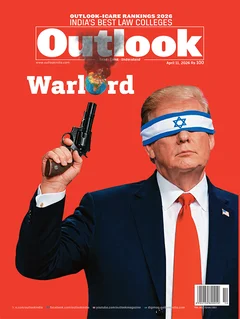
This article appeared in Outlook’s April 11 issue titled Warlord that focuses on the aggression unleashed on Iran by US President Donald Trump and the repercussions that are being felt across the globe with no end in sight.
















