Kolkata’s Netaji Indoor Stadium, which can accommodate about 14,000 spectators, was packed on September 8, 2022. West Bengal Chief Minister Mamata Banerjee addressed the grassroots organisers of her party, the Trinamool Congress (TMC). Beaming with confidence, she declared that a new front of regional parties will bring down Prime Minister Narendra Modi’s Bharatiya Janata Party (BJP) in the 2024 parliamentary election.
“There is Nitish Kumar in Bihar, Akhilesh [Yadav] in Uttar Pradesh and Hemant [Soren] in Jharkhand. We will all unite and defeat the BJP in 2024. All of us will be on one side and the BJP on the other,” she said. “If all regional parties unite, it’s game over for the BJP.” The crowd roared: “Joy Bangla [Hail Bengal]!”
None missed that she named the chiefs of Janata Dal (United), Samajwadi Party (SP) and the Jharkhand Mukti Morcha (JMM), respectively, but not the Congress. The absence was conspicuous and expected. If Modi had declared a mission for ‘Congress-mukt Bharat’, a Congress-mukt opposition alliance had been on her agenda since the fall of the Congress-led United Progressive Alliance (UPA)-II government in 2014. “We are the real Congress,” she kept saying.
The 2021 election victory had significantly boosted her confidence, as her party achieved a massive mandate by winning 215 or 70 per cent of the state’s 294 Assembly seats—the highest for any party in the state since Independence. She had bettered her 2016 tally by four seats, breaking her previous record. The only time any party in Bengal surpassed the TMC’s seat share was the highly controversial 1972 election after which the Opposition boycotted the Assembly for the next five years. In fact, the TMC’s back-to-back 70 per cent seat share in the 2016 and 2021 elections was one of the highest for a regional party in India.


At the September 2022 event, she reiterated what she had been maintaining since 2014: “Regional parties are the strongest in their respective states. In those places, they should be allowed to lead the fight against the BJP. No one should think they are the only big brother.”
The message was clear: the Congress should treat itself as a regional party in states where they are in power or the main Opposition. In the rest of the states, they should leave the space to the regional parties.
Cut to May 2026. BJP supporters are chanting ‘Jai Shree Ram’ outside her residence in South Kolkata’s Bhabanipur. The BJP swept the state Assembly elections, bagging 207 of the 294 seats. She lost not only the state, but also her seat.
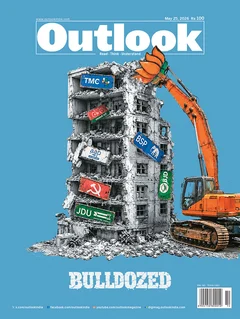
This marked the downfall of the last major regional force in eastern India. Bihar, Odisha, West Bengal, Assam, Tripura, Manipur and Arunachal Pradesh have BJP chief ministers. Jharkhand Chief Minister Hemant Soren remains the last regional leader standing in the East.
“The BJP’s pitch for ‘double-engine government’ seems to have impressed a large section of the voters,” says political scientist Sobhanlal Datta Gupta, a former professor at Calcutta University. “The era of regionalism that started in 1967 appears to be nearing its end,” he adds.
The chain of events speaks for itself. The Communist Party of India (Marxist)’s Manik Sarkar government fell to the BJP in Tripura in 2018. The BJP replaced the Left as the TMC’s main challenger in Bengal in 2019. Assam’s Asom Gana Parishad (AGP) lost much of its teeth to the BJP by 2021, while the All-India United Democratic Front (AIUDF) lost much of its support to the Congress. The BJP ended Biju Janata Dal (BJD) helmsman Naveen Patnaik’s 24-year-rule in Odisha in 2024. Lalu Prasad’s Rashtriya Janata Dal (RJD) has not been in power in Bihar since 2000, except when in alliance under Nitish Kumar’s chief ministership. Kumar himself relinquished the post of the chief minister to the BJP in April.
The march of the saffron party has been unhurried, yet relentless. It has moved through the cracks left behind by ageing regional satraps, turning every faultline into a foothold. With each election, the BJP has sharpened its craft, shedding old missteps and reinventing itself for new battlegrounds.
The regional parties, meanwhile, have remained trapped in their own contradictions. Old loyalties have frayed, succession battles have deepened and once-formidable citadels have weakened from within. In trying to defend their turf, they have often committed unforced errors, ceding ground inch by inch to a party driven by an expansive ambition to redraw the political map of India.
The Fatal Mistake
India’s grand old party, the Congress, had signalled its willingness to contest the 2024 Lok Sabha elections in alliance with the TMC. But Banerjee was unwilling to play ball. Scarred by memories of the UPA years, when the Congress often treated its allies with an air of entitlement, the TMC chief believed the political tide had turned.
If New Delhi once dictated terms to regional parties, Banerjee now wanted the Congress to recognise a new balance of power, one in which many of the very parties born from the Congress’s own splinters and rebellions would now determine how much political space the grand old party deserved at the Opposition table. Just two of West Bengal’s 42 Lok Sabha seats were offered to the Congress by Banerjee, fondly called Didi, a reflection of both her political dominance and the towering authority she has wielded over the state through years of fiery, street-fighter politics.
The Congress, however, spurned Didi’s deal and chose to ally with the Left, fracturing the anti-BJP vote in the process. The split handed the saffron party crucial victories in Raiganj and Malda Uttar, both Muslim-dominated constituencies where a consolidated Opposition vote could have altered the outcome. What appeared then as a small crack in the Opposition edifice eventually widened into a deeper rupture ahead of the 2026 Assembly elections.
The Congress managed to wrest two seats from the TMC, but the larger consequence of the alliance arithmetic was far more damaging for the Opposition bloc. The split in the anti-BJP vote enabled the saffron party to capture Muslim-dominated constituencies such as Jangipur, Nabagram, Beldanga, Kandi and Karimpur, gains that would have been difficult even with the implementation of the controversial Special Intensive Revision (SIR) exercise that led to the delisting of 27 lakh voters from West Bengal’s electoral rolls.
Tribal Identity, Religious Faultlines
The rise of regional satraps in Indian politics was built on the careful assertion of linguistic, caste and sub-national identities, a process that steadily fragmented the larger Hindu political identity the BJP and its ideological fountainhead, the Rashtriya Swayamsevak Sangh (RSS), had sought to cultivate.
Over the past decade, however, the BJP has upended that political grammar. It has reworked the very social equations that once sustained regional parties, stitching together new caste alignments, recalibrating welfare politics around class aspirations and steadily prising away the core vote banks that had long served as the regional satraps’ electoral fortress.
In West Bengal, the TMC’s magic formula was MM—Muslims and mohila (women). However, the TMC itself had opened the door to micro-identity-based politics, an art in which the BJP finally appears to have outsmarted them. Caste or religion-based identity politics was not part of Bengal’s mainstream until Banerjee introduced it, says Sibaji Pratim Basu, a former vice-chancellor of the state’s Vidyasagar University. “This led to the formation of micro-identity centric interest groups, which previously did not exist in the state’s electoral equations,” he adds.
The BJP appealed to the ethno-linguistic identity among the Koch-Rajbonshis of northern Bengal and convinced them about the pitfalls of the TMC’s Kolkata-centric, Bengali identity politics. They built a solid base among the Dalit Matua sect’s migrants from Bangladesh. They campaigned among the Hindu OBCs against the TMC government’s move to include the majority of the state’s Muslims under the Other Backward Classes (OBC) category. Ahead of the election, they struck a deal with some influential leaders of the Kudmi-Mahatos—a large OBC community—offering them more seats and special attention.
Among the defining features of the BJP’s rise in Bengal was its ability to reopen historical faultlines, particularly the lingering memories of Partition. Both macro trends and Assembly-level voting patterns suggested that the scale of the party’s gains could not have been achieved through anti-incumbency alone. At the heart of the surge lay an unprecedented consolidation of Hindu votes in favour of the saffron party.
The BJP’s campaign repeatedly invoked the idea of West Bengal as a natural homeland for Bengali Hindus after the Partition of the subcontinent, arguing that Muslims had already received a separate nation in the form of present-day Bangladesh. The steady rise in the Muslim share of Bengal’s population, from 19.85 per cent in 1951 to 27 per cent in 2011, was framed by the party as evidence of unchecked migration from across the border.
Over the years, this narrative evolved into a larger political warning that Bengal risked drifting towards becoming “Paschim Bangladesh”—or “West Bangladesh”—a phrase invoked to amplify fears of demographic change and the gradual marginalisation of the Hindu population. The circulation of viral videos showing attacks on Hindus in Bangladesh during the interim government led by Muhammad Yunus further sharpened those anxieties, making what was once projected as a distant concern appear immediate and closer to home.
In Tripura, the BJP successfully merged Bengali Hindu pride with indigenous tribal aspirations. These two communities frequently came into conflict in the past, as many tribals considered the Bengalis as intruders into their land. No less significant is the BJP’s achievement in making Assamese Hindus agree to accept Bengali Hindus of Bangladesh origin as their ‘persecuted brethren’, who must be settled here with honour.
Unlike the North and South, where governments change frequently, the electorate in the East likes to give long mandates to political parties.
The state has long witnessed tensions between Assamese and Bengali identities, faultlines that have historically cut across religious lines. In the run-up to the 2026 Assembly elections, the incumbent Chief Minister, Himanta Biswa Sarma, sharpened that divide through an aggressive campaign against the “Miya” community, a term commonly used for Bengali-origin Muslims in Assam. The political strategy appeared to have paid dividends.
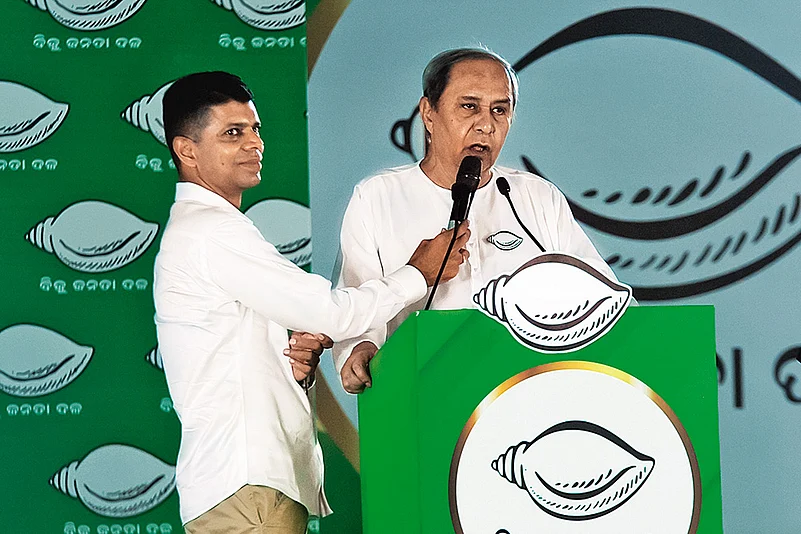
In Odisha, Naveen Patnaik’s fall appeared sudden, but the ground beneath him had been shifting for years. Son of the legendary Biju Patnaik, Naveen built his politics on the promise of clean administration and quiet efficiency. After founding the Biju Janata Dal (BJD) in 1997 and aligning with the BJP-led National Democratic Alliance (NDA), he rose to become the enduring face of Odia asmita in national politics.
But in a country where regional identity often shapes political loyalty, Naveen’s decision to elevate VK Pandian, a Tamil-born former IAS officer who joined the BJD in 2023, to a new role with a Cabinet minister rank altered the political mood. The BJP seized the opening swiftly, recasting the battle as one between insider and outsider, and piercing the very shield of regional pride that had protected Naveen for decades.
“The ‘outsider’ plank did the main damage to the BJD. The BJP promised their chief minister would be an Odia, whereas people believed Pandian would be the chief minister if the BJD came to power,” says Sunil Jena, an independent journalist based in Bhubaneswar.
During the election campaign, Patnaik countered the BJP’s ‘Jai Shree Ram’ with ‘Jai Jagannath’, but could not handle the saffron campaign around the ‘missing keys’ of the Jagannath Puri temple’s ‘Ratna Bhandar’. Jena said the BJP’s campaign alleging the keys were hidden in Tamil Nadu, Pandian’s home state, found many takers.
The BJP worked upon the rift between the tribal and the non-tribal Sadan population and those between Christian and non-Christian tribes. They told non-Christian tribes that those who converted to Christianity were unjustly benefiting from both tribal and religious minority statuses. According to a 2025 paper, Emergence of BJP in Odisha: A Critical Analysis of 2024 State Assembly Election, the BJP’s tribal support increased from 27.5 per cent in 2019 to nearly 42 per cent in 2024.
In Jharkhand, the BJP has been working on the tribal-Sadan and Christian tribal–non-Christian tribal rifts to challenge the JMM’s Sarna tribal identity politics and jal-jungle-zameen (water-forests-land) narrative. They are also approaching regional OBC leaders, promising more access to funds and more seats.
Waiting For the End of the Nitish Era
In Bihar, the RJD operated on the Muslim-Yadav (MY) combination, while Nitish Kumar had the Luv Kush coalition along with some Muslim support behind him. The BJP’s initial support was among the landed upper caste. However, they took time, riding on Kumar’s popularity, to spoil the RJD’s identity arithmetic. They waited for Kumar, whose health was failing, to retire at a moment most opportune for them. Eventually, they weakened the RJD’s equations by forming an alliance of less empowered sub-castes—the Kurmis, Koeris, Mallahs and Nishads—against the Yadavs, the dominant OBC group. They managed to bring about a unique caste coalition—the upper castes, the non-Yadav OBCs and the Dalits against the so-called MY combination.
From Revdi to Welfare
Much has changed in Indian politics since 2022. That year, PM Modi called ‘revdi culture’—the practice of parties promising freebies to voters—dangerous and argued that this must stop. The regional forces have traditionally relied on welfarist policies. This is what Modi opposed. However, 2023 onwards, the BJP jumped into competition with regional parties. Central schemes like Rs 6,000 via PM-KISAN, free ration and Ujjwala gas cylinders had already created the BJP’s own beneficiary base in most parts of the region. Their regional units offered more.
In Odisha, they promised a Rs 50,000 cash voucher to every woman, cashable over two years, annual financial assistance of Rs 10,000 to fishermen during the fishing ban period and free electricity for up to 300 units of usage. In Bihar, Rs 10,000 direct cash benefit to women associated with self-help groups turned out to be an electoral gamechanger. In West Bengal, they promised to double the amount that Banerjee’s government gave to women per month. This helped them sway a section of women’s votes away from Banerjee’s pool. “The BJP has taken away the biggest weapon of the regional forces—welfarism—by offering bigger welfare schemes,” says Datta Gupta. “This is evident from recent poll promises and electoral outcomes.”
East India has always tested the patience of challengers. Unlike the North and South, where governments change frequently, the electorate in the East likes to give long mandates to political parties. Be it the communists in Bengal, Patnaik in Odisha, or the Lalu and Nitish regimes in Bihar, once the public accepts a new caste alignment, it backs it to the extent of making deities out of leaders. The saffron flag now flies as the protector of regional pride along with the larger Hindu identity. Going by the past precedent, it would be difficult to change the direction of the wind in the near future, unless, of course, the Opposition parties realise their mistake of fighting each other and focus on age-old common themes like Mandal vs Kamandal.
MORE FROM THIS ISSUE

Snigdhendu Bhattacharya is a journalist, author and researcher