






The BJP literally swept the constituencies where Hindus comprised over 70% of the population. This triumph holds deep symbolic significance for the BJP. Late nineteenth century Bengal was the birthplace for Hindutva,
The party’s vote share surged from 38% in 2021 to 45.84%, with the party polling nearly 63 lakh more votes than in the previous assembly election.
This propelled its seat tally from 77 in 2021 to 206 — 70% of the 294 seats in the West Bengal Assembly.
In one of the most seismic political shifts in recent Indian history, a powerful anti-incumbency wave swept Mamata Banerjee from power after 15 years, catapulting the Bharatiya Janata Party (BJP) into office in West Bengal with a resounding mandate.
Banerjee, the Trinamool Congress (TMC) supremo, suffered a personal defeat. Nearly two dozen of her ministers also lost their seats. The scale of the BJP’s victory has overshadowed serious controversies surrounding the Special Intensive Revision (SIR) of the electoral rolls, including the deletion of over 27 lakh voters on grounds of alleged discrepancies.
Saffron surge
The BJP’s vote share surged dramatically from 38% in 2021 to 45.84%, with the party polling nearly 63 lakh more votes than in the previous assembly election. This propelled its seat tally from 77 in 2021 to 206 — 70% of the 294 seats in the West Bengal Assembly.



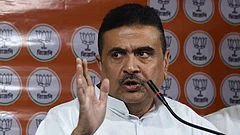
The BJP made deep inroads even in traditional TMC strongholds where the voter roll revision had minimal impact. This shows how the party would have won even without voter deletions, party leaders argued.
The TMC had secured 215 seats in 2021 and 29 of the state’s 42 Lok Sabha seats in 2024. The party saw its vote share plummet from 48% in 2021 to 40.8%. Its seat count crashed to just 80.
Hindu vote consolidation in favour of the BJP was so pronounced that the party won several seats with 30–50% Muslim populations—an outcome once considered nearly impossible.
In 2021, the TMC had dominated these constituencies, winning 84 out of 88 seats where Muslims formed over 30% of the population. This time, the BJP secured 19 of them.
As many as 61 of the TMC’s winners are from these seats. This underscores the extent of Hindu consolidation. The BJP literally swept the constituencies where Hindus comprised over 70% of the population.
“A cocktail of large-scale voter deletions, strong anti-incumbency, and unprecedented Hindu vote consolidation delivered this result,” observed political scientist Maidul Islam of the Centre for Studies in Social Sciences, Calcutta (CSSSC).
The TMC tried to beat anti-incumbency by highlighting the harassments that the voter roll revision caused. The party appealed to Bengali culinary sensitivities by warning people that the BJP would impose vegetarianism on the state. It turned the Election Commission of India into their principal opponent. Evidently, the majority of the voters were not touched.
Banerjee described the BJP’s victory as an “immoral win”, accusing the poll panel of manipulating results in over a hundred seats at the BJP’s behest. Her own defeat, coupled with the decimation of her party, has left the 71-year-old leader in an unprecedentedly vulnerable position.
The most remarkable aspect of this victory is that the BJP, which won its first Lok Sabha seat in the state on its own strength only in 2014, has now conquered West Bengal — India’s fourth-largest state by parliamentary strength — in just 12 years.
Before Narendra Modi’s rise in 2014, the party was a marginal player in Bengal, languishing with a mere 3–5% vote share.
Return to Roots
This triumph holds deep symbolic significance for the BJP. Late nineteenth century Bengal was the birthplace for Hindutva, which the Rashtriya Swayamsevak Sangh (RSS) family of organisations, including the BJP, describes as Hindu cultural nationalism.
During the late 1870s, Chattopadhyay, who penned the Vande Mataram hymn, laid the intellectual foundation of Hindu nationalism in a series of essays published in Bangadarshan, the literary-cultural journal he edited. He envisioned India as a Hindu Rashtra where the Muslims were outsiders and enemies. These ideas took a concrete shape in the novel Ananda Math (1882), perhaps his most influential one.
It was also a Bengali — Syama Prasad Mookerjee — who founded the Bharatiya Jana Sangh, the ideological predecessor of the BJP, in 1951. In the 1951-52 assembly and parliamentary elections, West Bengal turned out to be one of the newborn BJS’s main bases. However, following Mookerjee’s untimely death in 1953, the party faltered in Bengal, even as it grew in other parts of India. West Bengal emerged as a bastion of secular politics.
Over six decades later, the 2019 Lok Sabha election saw a massive swing of traditional Left votes in the BJP’s favour. The TMC blamed the Left for calculatedly shifting its votes to the BJP, while the Left parties blamed the TMC’s political violence for its supporters’ move towards the BJP in search of protection from Centre’s ruling force.
That vote never came back to the Left beyond marginal levels. During the 2026 election campaign, appealing to the remaining Left voters, BJP state unit president Samik Bhattacharya even said, “You don’t need to love BJP to vote for us. Do it once only to throw the TMC out.”
Finally, the BJP also dented the TMC’s support base, scripting a victory that is expected to leave lasting impacts.
Throughout the electoral campaign stage, the BJP took a two-pronged approach. On the one hand, party leaders highlighted the ‘TMC’s misrule’, citing cases of corruption, intimidation and lack of employment opportunities. On the other, they called upon Hindus to unite to ‘restore’ West Bengal to what it was supposed to be—‘a homeland for Bengali Hindus.’
They repeatedly cited how Bengal’s economy nosedived under successive ‘misrules’ by the Congress, the Left and the TMC and pitched itself as the only untested force that truly deserved a chance.
They also stressed that Hindus in West Bengal were facing a demographic threat and cited how Muslim share of the state’s population rose from 20% in 1951 to 27% in 2011. The party attributed this increase to ‘infiltration’ of Muslims from Bangladesh and promised to drive them out.
This theory, widely articulated across India with the phrase ‘Hindu khatre mein hain,’ also originated in nineteenth century Bengal, soon after the census of 1881 revealed growing Muslim population in undivided Bengal’s eastern parts, which now form Bangladesh.
On the evening of May 4, as Banerjee’s defeat became clear, Prime Minister Modi arrived at the BJP headquarters in Delhi wearing a traditional Bengali dhuti-panjabi. “Mookerjee fought tirelessly to keep Bengal in India (during partition),” he declared, adding that the late leader’s dream of a prosperous Bengal had waited too long for fulfilment.















