






Marked by voter roll disputes, legal battles, and allegations against the Election Commission, making it one of India’s most controversial elections.
High turnout despite a reduced electorate and widespread silence has made predictions difficult, with even major pollsters withholding results.
Tight contest between TMC and BJP, with smaller parties and shifting voter dynamics adding uncertainty and raising concerns about trust in democratic institutions.
India has not seen an election like the West Bengal Assembly polls of 2026—an intense battle of numbers, muscle power and mind games, marred by conflicts and controversies that required frequent judicial intervention.
It is also one of India’s most controversial elections in recent times, as it went ahead without resolving disputes surrounding 2.7 million voters who claim to be legitimate. The process has repeatedly raised questions about the impartiality of the poll panel and the threats posed to India’s federal system by the alleged bias of agencies such as the Election Commission.
In the end, the exit polls have left everyone puzzled. Even some pollstars. o much so that Axis My India, one of the country’s leading exit poll agencies, chose to withhold its results.

What lies ahead for Bengal? A landslide for either of the two main challengers, or a close contest resulting in a hung Assembly? Will this mark a watershed moment with a BJP victory in the birthplace of their Hindutva ideology, or will it prove to be its Waterloo?
Exit polls have predicted almost all possibilities. Therefore, the battle of nerves has peaked ahead of counting, unfolding more drama. Whether state or central government employees will be part of the counting process has also been fought in the top court.



Protecting counting centres and electronic voting machines is a do-or-die task, Trinamool Congress chief and outgoing Chief Minister Mamata Banerjee warned.
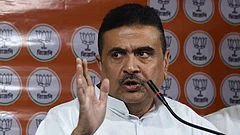
BJP’s Bengal president Samik Bhattacharya has urged women party workers to keep a night-long vigil outside counting centres. “This election will mark the reclamation of the Hindu homeland,” said BJP leader Suvendu Adhikari. “It will be historic.”

In 2021, the TMC won 215 of 294 seats, while the BJP secured 77. To reach a majority, the BJP must nearly double its tally; the vote share difference stood at 10% in 2021 and 7% in the 2024 Lok Sabha polls.
This time too TMC remains confident, with Banerjee predicting 226 seats, 11 more than in 2021, and a fourth consecutive term.
Party spokesperson Kunal Ghosh argued this was not a TMC–BJP contest, alleging Banerjee alone fought the “entire federal apparatus” in collusion with a biased Election Commission.
His party has called the Election Commission of India (ECI)’s Special Intensive Revision (SIR) a “targeted disenfranchisement drive.”
Ghosh alleged the “BJP–ECI combine turned the state into a war zone” by deploying lakhs of paramilitary forces. If the TMC wins despite this, he said, it would mark the beginning of the end of Prime Minister Narendra Modi’s rule at the Centre.
Several opposition leaders backed Banerjee. AAP chief Arvind Kejriwal and RJD’s Tejashwi Yadav campaigned for the TMC, while SP’s Akhilesh Yadav and NC’s Omar Abdullah issued statements of support.
After such a high-stakes election, uncertainty prevails.
First, there is an unusual silence. Bengal, typically politically vibrant, has seen little of its usual buzz in tea stalls or public spaces.
“We saw an exceptionally high non-response rate, with around 70% of voters refusing to participate,” said Axis My India chief Pradeep Gupta, calling it an “atypical and statistically significant challenge”.
The second puzzle lies in the numbers. The revised voter rolls cut the electorate by 84 lakh voters, unevenly across constituencies, altering equations in nearly four dozen seats.

Roughly 64 lakh names were removed from the list as dead, shifted and duplicate voters and 27 lakh names were removed for ‘logical discrepancies’, while seven lakh new voters were added. The electorate shrunk from 7.65 crore in December 2025 to 6.81 crore in April 2026.
This is 43 lakh voters fewer than the 2021 assembly election and by 79 lakh voters fewer than the Lok Sabha polls 2024.
Yet, the turnout rose. In 2021, 5.96 crore votes were polled. In 2024, 6.05 crore voted. This year, 6.29 crore have cast their votes. This means, many who usually do not turn up at the polling stations have voted.
The TMC expects these votes to against the BJP, blaming the saffron party for the harassment that the SIR caused. BJP believes these voters include those who have not been able to vote previously due to the TMC’s intimidation.
The third puzzle is that of the influence of the smaller parties—the Left, the Congress and the Indian Secular Front (ISF).
The Congress and the ISF draw most of their support from Muslims, who make up around 27% of the state’s population, according to the 2011 census. Congress is stronger in northern and central districts of Uttar Dinajpur, Malda and Murshidabad, whereas the ISF has gained ground in parts of southern districts around Kolkata.
If they fare better than 2021, it would hurt the TMC, which secured most of the Muslim votes in the last assembly election.
If the Left increases its vote share in the Hindu-majority urban pockets around Kolkata, it could be a challenge to the BJP, as it has grown in the state by attracting the former Left voters.
“We’ll break the TMC-BJP binary this time. We’ll draw votes from both the BJP and the TMC,” said CPI(M) state secretary Md Salim. His confidence comes from the crowd that their campaigns drew this time. “People are fed up with both the TMC and the BJP,” he added.

“There is a bigger picture,” believes political scientist Sabyasachi Basu Ray Chaudhuri, a former vice-chancellor of Rabindra Bharati University (RBU) in Kolkata. He argues the election has exposed a wider problem the country must confront, regardless of the outcome.
“This has shown a complete trust deficit between the components of India’s federal structure. It showed the opposition parties’ lack of trust on the poll panel. All these have led to a general trust deficit on institutions among the masses,” he said. This can have a larger impact on Indian democracy, he feels.















