The recent West Bengal Assembly election signals the dramatic unravelling of yet another dominant regional political party in India. The decisive defeat of Mamata Banerjee’s Trinamool Congress (TMC) and the ascent of the Bharatiya Janata Party (BJP) are best interpreted not as an abrupt rupture, but as part of a recurring historical pattern in the state.
Since Independence, politics in West Bengal has been marked by intense ideological contestation, confrontational mass mobilisation and a political culture that is often emotionally charged, sharply polarised, and, at times, volatile. Over time, power has shifted through successive phases of dominant-party rule—the Congress, the Left Front and the TMC—each constructing entrenched systems of governance that paradoxically create the conditions of their own decline.
What distinguishes the present moment is not merely regime change; it marks the BJP breaching its last frontier and accelerating the nationalisation of India’s regional politics. Anti-incumbency alone cannot explain the setbacks of leaders like Banerjee, M.K. Stalin and Pinarayi Vijayan, each leading deeply entrenched cadre-based parties. Nor can it account for the scale of the TMC’s collapse, which signals a deeper restructuring of the oppositional space.
In other words, the BJP is not merely occupying space vacated by a weakening regional force; it is actively restructuring the political-electoral field while reworking the federal order itself. At the core of this transformation lies a broader cultural project of ideological remapping that reconfigures Bengal’s Partition memory, earlier histories of Hindu mobilisation and demographic anxieties into the hegemonic grammar of an emergent “Second Republic” in post-Independence India.



From a comparative politics perspective, West Bengal follows a classic dominant-party trajectory: organisational depth and control over distributive networks initially generate stability, but over time harden into exclusion, coercion and decay, sowing the seeds of crisis. The state’s history also reveals a stark pattern. Once a dominant party is decisively dislodged, its return is structurally improbable, if not impossible. The TMC’s defeat, therefore, must be situated in the context of West Bengal’s distinctive path-dependent pattern of regime change.
The decline of the Congress system in West Bengal during the 1960s unfolded within what political scientist Atul Kohli termed the “politics of ungovernability”. Mounting pressures—refugee resettlement after Partition, food shortages, labour unrest and agrarian distress—overwhelmed the state’s capacity to manage competing demands. The Naxal insurgency sharpened this crisis, exposing the erosion of both legitimate and coercive authority. By the late 1960s, the Congress’ dominance had collapsed, replaced by fragile coalitions like the United Front, where fragmentation displaced governance and authority dissolved into drift. This breakdown set the stage for the Communist Party of India (Marxist)-led Left Front’s decisive ascent in 1977.
West Bengal’s history reveals a stark pattern. Once a dominant party is decisively dislodged, its return is structurally improbable, if not impossible.
Through disciplined cadre organisation and programmatic policy intervention, it built a highly mobilised state rooted in party networks. Land reforms—especially Operation Barga—secured a durable rural base while Panchayati Raj extended the Left Front’s control into the fabric of everyday life. Access to state resources became inseparable from party channels; governance was routed through entrenched local intermediaries. But prolonged monopoly over power corroded the system from within. As competition receded, the Left Front’s organisational discipline hardened into coercive control. Cadre networks fused with local strongmen, sustaining rule through voter intimidation, partisan welfare distribution and the suppression of dissent. Expanded access gave way to enforced loyalty. Its failed attempt at industrialisation—most visibly in Singur and Nandigram—exposed the limits of its redistributive model and alienated its rural base. When decline came, it was structural rather than cyclical, and ultimately irreversible.
After ending the Left Front’s rule in 2011, the TMC did not dismantle this architecture; it reconfigured and recentralised it rather more crudely. Banerjee’s regime fused populist mobilisation with expansive welfare schemes, especially targeting women and marginalised groups, while simultaneously constructing its own network of local intermediaries. What emerged was not a break from the past but its intensification: access to rights and resources increasingly flowed through partisan, negotiated channels rather than impersonal institutions.
The 2022 West Bengal teacher-recruitment scam laid bare the depth of this systemic decay. Irregularities in the 2016 hiring process affected over 25,000 teaching and non-teaching positions, embedded in a “syndicate” system where bribery, political brokerage and criminal networks converged to control access to public resources. Court intervention ultimately led to the cancellation of all such appointments—a sweeping indictment of a system in which institutional integrity had been hollowed out and replaced by organised patronage.
Research on political violence in West Bengal by Dutch political scientist Ursula Daxecker and her colleagues shows how coercion, once routinised, became embedded in everyday political practice in West Bengal. Voter intimidation, enabled by dense party networks and their influence over local policing, became a routine feature of electoral competition. Over time, coercion ceased to be exceptional and became normalised, extending beyond elections into the broader social and political order. However, prolonged political dominance also generated familiar structural distortions. What was once framed as grassroots empowerment came, in the eyes of critics, to resemble forms of a failed state. The Sandeshkhali controversy and the R.G. Kar Medical College incidents in 2024 further eroded the TMC’s popular appeal as allegations of intimidation, abuse and the misuse of political authority by party cadres gained wider traction.
Vijay’s surprise win shows that oppositional space can be expanded through a fresh social imagination rather than inherited partisan loyalties.
This normalisation of coercion under the TMC provides a critical lens for interpreting recent electoral trends in West Bengal. The record voter turnout in the 2026 Assembly elections—rising to 92.47 per cent from 82.3 per cent, with women’s turnout reaching 93.24 per cent—reflects a complex dynamic.
While such high participation may signal intense political mobilisation due to the Special Intensive Revision (SIR), it also reflects pressures that blur the line between consent and compulsion. At the same time, there are indications of shifting political behaviour among women voters—a group central to the TMC’s earlier success—amid growing concerns over violence and governance failures. This shift finds symbolic expression in the candidacy of Ratna Debnath, mother of the victim in the R.G. Kar Medical College case, who won as a BJP candidate.
In other words, the BJP’s historic victory is located within both immediate crisis and deeper historical currents. Unlike earlier challengers, it combines organisational expansion, strong central backing and a clear ideological frame. Its growth draws on Partition-era memory and earlier Hindu mobilisation, including the legacy of Syama Prasad Mookerjee, the founder of the Bharatiya Jana Sangh—making it less an outsider than a force reactivating submerged political currents.
Unresolved grievances of displaced populations from East Pakistan (Bangladesh) have been recast into contemporary debates on citizenship and identity, turning historical memory into political momentum. Cultural strategies—symbolism like celebrating the national song Vande Mataram, performative regional assimilation (from jhalmuri to fish) and cross-class Hindu consolidation—have reinforced this expansion, amplified by the resurgent national leadership of Prime Minister Narendra Modi and Home Minister Amit Shah.
The growing salience of religious identity and citizenship debates—articulated through terms like ghuspetiya—marks a sharp shift in Bengal’s historically syncretic political landscape. Its effects extend beyond electoral realignment into the cultural sphere. Even Durga Puja may come to reflect this transformation, as symbols like sindoor khela increasingly intersect with saffron politics.
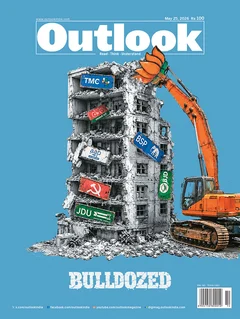
The scale of the TMC’s collapse carries implications far beyond West Bengal. It sharpens an uncomfortable truth for regional parties across India. They face a shrinking political space, declining bargaining power and erosion of the traditional support base. They are also pushed from being autonomous power centres to conditional political actors in the face of a nationally dominant, resource-rich challenger like the BJP. Parties like the Samajwadi Party, Dravida Munnetra Kazhagam, Telugu Desam Party, Biju Janata Dal, Shiv Sena, Aam Aadmi Party, Bharat Rashtra Samithi and Janata Dal (United) have long relied on social coalitions, regional identity and patronage networks.
The BJP’s historic victory in Bengal suggests these strengths of opposition parties can harden into liabilities when governance blurs into partisan control and coercion. By fusing centralised welfare, ideological consolidation, leadership projection and deep organisation, the BJP has re-nationalised welfare visibility, reframing identity beyond region and tying legitimacy to a larger cultural narrative. Most significantly, Hindutva’s adaptive flexibility allows it to align with regional social and cultural realities—absorbing local idioms while building cross-class coalitions. At the systemic level, the BJP is not just defeating regional parties; it is redefining their space and narrowing their horizons unless they adapt structurally and culturally.
The surprise victory of superstar Vijay in Tamil Nadu shows that oppositional space can be expanded through a fresh social imagination rather than inherited partisan loyalties, much like Congress’ Kerala resurgence through a credible, future-facing coalition narrative. Thus, crucial Assembly elections in Uttar Pradesh, Punjab, Gujarat and Uttarakhand in 2027, followed by those in Madhya Pradesh, Rajasthan, Chhattisgarh, Karnataka, Telangana, Meghalaya, Nagaland, Mizoram and Tripura in 2028, will decide whether India’s party system consolidates around BJP-led integrative dominance or reverts to usual competitive coalitional politics of regional parties.
In that sense, Gopal Krishna Gokhale’s observation—“What Bengal thinks today, India thinks tomorrow”—acquires renewed relevance in West Bengal and beyond. Whether it still holds will depend on how effectively a nationally resurgent BJP translates its win into good governance and durable social peace. The experience of Bihar after 2005 offers a possible, if imperfect, lesson. Thus, politics remains local and regional in an increasingly ‘multi-everything democracy’ in India.
(Views expressed are personal)
MORE FROM THIS ISSUE


Ashwani Kumar is a poet, political scientist and professor at Tata Institute of Social Sciences. He is presently a visiting professor in the United States