Those who have tracked India’s post-liberalisation journey would acknowledge that nearly every major economic, political and foreign policy reform has required governments in New Delhi to navigate layers of political compulsions. Much of that process involved accommodating regional satraps whose electoral interests, social coalitions and state-level priorities shaped the pace and direction of national decision-making.
The rise of the Bharatiya Janata Party (BJP) under Narendra Modi seeks to alter that political rhythm. Through the idea of the “double-engine government”, Modi has argued that governance moves faster when the Centre and the states are aligned politically.
Over the last decade, state after state has responded to this electoral pitch by voting the BJP to power, making India’s political map more uniform across large parts of the country. Today, BJP governments rule over a substantial share of India’s population, reducing the influence once exercised by regional parties that emerged from the Mandal movement.
The Opposition and critics of the BJP often describe the party’s rise as a challenge to the federal balance of the republic. Some argue that if the BJP were to secure a two-thirds majority in Parliament, with dominance in both Houses, it could attempt structural changes to the Constitution that may alter the framework of India’s liberal-democratic order.
Yet the idea of one party exercising dominance is not unfamiliar to India. Post-Independence, the country functioned under what scholars described as the Congress system, when the same political outfit governed both the Centre and most states. In the past few decades, the rise of India’s multiparty structure has been seen as a fundamental feature of its constitutional promise of social justice for the multitude of linguistic, caste, religious and regional groups. Politically, it is the thread that has strung together our unity in diversity.


In the decades since Independence, India has seen only a handful of prime ministers whose political appeal cuts across regions and cultures. At present, Modi’s BJP appears to have captured the imagination of a vast swathe of India as it continues to expand into new states, despite electoral hiccups along the way.
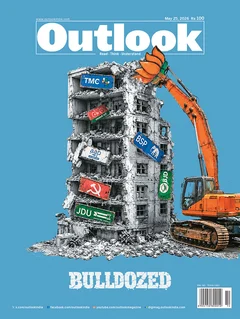
This issue’s cover story examines the strategies the BJP has deployed over the last decade to weaken regional parties on their own turf and build conditions for a more uniform political and policy framework across the country.
We trace how the spread of saffron politics across India has drawn strength from social and political fault lines that regional parties either ignored or failed to contain. There is merit in the argument that the rise of regional parties expanded social justice and deepened democracy at the grassroots after the Mandal era weakened the Congress system. Yet the BJP has also reshaped that social justice model by fragmenting the identity blocs built by regional parties and wooing castes and communities that remained outside the grasp of Hindutva’s political appeal for a long time.
It is difficult to predict whether the political order shaped by the BJP will endure as long as the Congress system did. So far, the BJP’s electoral success has remained closely linked to the popularity of Modi. Political observers often argue that personality-driven systems face uncertainty once the central figure exits the stage.
Unlike the Congress, where the Gandhi family remained the party’s electoral anchor in the post-Jawaharlal Nehru era, the BJP does not yet have a comparable nucleus beyond Modi. His political stature has overshadowed both contemporaries and possible successors within the party. Whether that becomes a vulnerability for the party in the future will depend as much on the BJP’s internal politics and bench strength as on the ability of the Opposition to present a united challenge.
MORE FROM THIS ISSUE

Neeraj Thakur is editor, Outlook