India’s ‘one-party dominance’ era of the 1950s appears to have returned—once led by the Congress, and now redefined under the Bharatiya Janata Party (BJP) with a broader national footprint, stronger ideological clarity and decisive leadership under Narendra Modi.
The BJP has decisively reconfigured the contours of India’s political order since capturing power at the Centre in 2014, marking a shift toward a new phase of one-party hegemony by decimating regional political outfits.
The BJP-led National Democratic Alliance (NDA) has expanded its rule to 22 states and Union Territories, thereby consolidating its footprint over nearly 80 per cent of India’s population according to the 2011 census.
In the recently concluded Assembly polls, the BJP breached the final rampart; West Bengal, the last fortress controlled by the powerful regional satrap, Mamata Banerjee. In doing so, it has steadily eroded the salience of regional parties that had emerged as pivotal actors in the post-Congress system. These formations gained prominence after the decline of the Congress’ one-party dominance from the late 1960s, a transition that intensified in the late 1980s, particularly in the aftermath of the Mandal Commission report.
After the Congress declined post-1989, regional parties rose to their peak, ushering in nearly 25 years of coalition-driven governance at the Centre. States like Uttar Pradesh (UP) and Bihar became powerhouses of regional formations. The NDA and the United Progressive Alliance (UPA) governments, led alternately by the BJP and the Congress, depended entirely on regional allies. As a result, coalition survival shaped every major decision, forcing the Centre to remain deeply responsive to regional aspirations, subnational identities and federal demands.



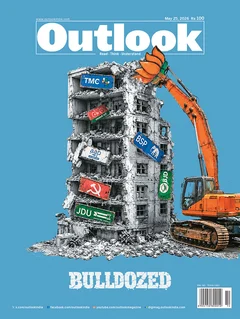
Modi’s rise in 2014 shattered the old equilibrium. The BJP rapidly expanded its footprint across western, central and northern India and, with Assam, Odisha and now West Bengal in its bag, the East as well. Key regional players like the Samajwadi Party (SP), Bahujan Samaj Party (BSP), Rashtriya Janata Dal (RJD), Shiv Sena and Nationalist Congress Party (NCP) have seen a stark decline. Both the Shiv Sena and the NCP suffered internal splits, with factions crossing over to the NDA. Even the Janata Dal (United), despite surviving through strategic realignments in Bihar, now operates under the shadow of BJP dominance. The BJP dislodged Naveen Patnaik’s Biju Janata Dal (BJD) in Odisha in 2024 and now Mamata Banerjee’s Trinamool Congress (TMC) in West Bengal. The message is clear: though regional parties still speak the language of federalism, identity and regional aspirations, the electorate is increasingly voting for national parties—above all, the BJP.
Though the Congress improved its tally to 99 seats in the 2024 Lok Sabha elections and even managed to snatch Kerala from the Left-led Left Democratic Front (LDF) in the May Assembly polls, it has failed over the past decade to establish itself as a credible national alternative to the BJP—or even as a reliable challenger to regional parties in their own strongholds. This void has left the space wide open for the BJP to expand further.
Two limitations explain the Congress’ failure to counter the BJP after 2014. First, it could not expand its social coalition to fill the space left by declining regional parties. Second, it failed to build a durable alliance with those parties to challenge the BJP effectively. The result is not merely electoral dominance by the BJP but a fundamental structural shift in India’s federal polity.
The BJP’S blueprint to capture the political space once held by regional formations took shape in around 2013, with Uttar Pradesh as its living lab.
The Modi-Shah BJP’s marginalisation of regional parties is best understood against the arc of their rise and fall in North India—especially in UP and Bihar. At their peak, these parties represented the deepening of India’s democracy and the powerful assertion of subaltern identities.
In the late 1980s and early 1990s, the SP and the BSP mobilised Other Backward Classes (OBCs) and Dalits in UP, rewriting electoral rules through identity-based politics. In Bihar, the RJD and the JD(U) rode the wave of backward caste consolidation and social justice in the post-Mandal era. Together, they decentralised power, challenged national hegemony and gave local aspirations a fierce voice within India’s federal framework. That very rise makes their subsequent eclipse by the BJP all the more telling.
Since 2014, the decline of regional parties—especially in UP and Bihar—has been no accident. It is the direct result of the BJP’s systematic, strategic and ruthless grassroots expansion, powered by a potent trinity: Hindutva, welfarism and the rebuilding of micro-social coalitions.
The party’s blueprint to capture the political space once held by regional formations took shape in around 2013, with UP as its living laboratory and the BJP’s Chanakya, Amit Shah, then party general secretary in charge, at the helm.
The mission: shatter the social coalitions painstakingly built by the SP and the BSP—coalitions rooted in dominant castes like the Yadavs and the Jatav Dalits.
The BJP did not attack these groups directly. Instead, it deployed a cunning strategy of selective marginalisation and counter-mobilisation. It bypassed the dominant intermediary castes and assembled a finer, more fragmented coalition—non-dominant OBCs and non-Jatav Dalits. Alliances with smaller caste-based parties—the Apna Dal, the Nishad Party and Om Prakash Rajbhar’s Suheldev Bharatiya Samaj Party—became the instruments of this quiet political engineering. The results of 2017, 2019 and 2022 in UP spoke for themselves: the strategy worked.
The 2024 Lok Sabha election was a rare exception: the SP-Congress alliance, wielding the ‘arakshan khatam kar denge’ fear under the PDA (Pichhda, Dalit, Alpsankhyak) plank, briefly cracked the BJP’s otherwise invincible coalition.
A key ideological move in UP, successfully replicated in other states later, lay at the heart of this strategy: breaking the assumption that OBCs and Dalits vote as monolithic blocs. By exploiting intra-group differences, the BJP fractured old caste coalitions and reassembled them under what is often called subaltern Hindutva.
The BJP didn’t end Mandal politics—it micro-Mandalised it: breaking OBC/Dalit blocs into smaller pieces and welding them into a nationalist framework that transcended traditional identity politics.
A similar—though distinct—strategy played out in Haryana. There, the BJP countered Jat dominance by mobilising non-Jat groups. Not a carbon copy of UP, but the same core logic: reconfigure caste hierarchies to expand the electoral base.
After the Congress declined post-1989, regional parties rose to their peak, ushering in nearly 25 years of coalition-driven governance at the Centre.
The BJP’s success from UP to Bengal also feeds on the decay of regional parties themselves. Once built on social justice and identity politics, many degenerated into dynastic fiefdoms or narrow caste silos—plagued by misgovernance, corruption and criminalisation. Having lost their ideological anchor and popular credibility, these former subaltern champions left the very space the BJP was waiting to fill.
In contrast, the BJP quietly built a broader coalition—bringing together upper castes, non-dominant OBCs and sections of Dalits in the Hindi heartland. At the same time, it shifted the discourse from identity politics to development, welfare and nationalism laced with Hindutva. Modi’s strong leadership, backed by targeted welfare schemes and direct benefit transfers, cut across caste lines. These interventions created fresh political legitimacy—eroding the old patronage networks that regional parties once relied on. Organisationally, the BJP’s Rashtriya Swayamsevak Sangh-backed cadre network has out-penetrated regional parties at the grassroots.
Ideologically, it has deployed subaltern Hindutva—absorbing non-dominant OBCs, Dalits and marginalised groups into a broader Hindu identity. This fusion of cultural nationalism, welfarism and development has decisively outflanked the post-Mandal logic of caste-based politics.
While a growing public perception of corruption, criminalisation and dynastic politics crippled regional parties’ claims to subaltern empowerment, the BJP capitalised ruthlessly—positioning itself as the party of governance, probity and merit. Its anti-corruption rhetoric delegitimised regional elites while rallying aspirational voters.
The BJP’s post-2014 ascendancy marks a paradigmatic shift—drastically shrinking the space once held by regional formations. Regional satraps, with the exception of Akhilesh Yadav in UP , wrongly assumed they could counter the BJP individually, undermining the Congress’ strength to lead and Opposition unity under the INDIA bloc, a fragmentation the BJP adroitly exploited.
Sharad Pawar and Arvind Kejriwal have seen their influence decline sharply. Naveen Patnaik fights for survival in Odisha, while Nitish Kumar has been diminished after the BJP installed Samrat Choudhary as Bihar’s first BJP chief minister.
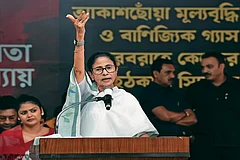
The May 4 election results further underscored this shift. The Dravida Munnetra Kazhagam (DMK), the Communist Party of India (Marxist) and the TMC all lost power. For the first time since its inception, the BJP is set to form a government in West Bengal, replicating its UP playbook by breaking Mamata’s bhadralok-Muslim coalition. In Tamil Nadu, the Tamilaga Vettri Kazhagam (TVK) has come to power, but regional marginalisation remains the broader trend.
In sum, the BJP’s rise is a story of national consolidation. The decline of regional parties reflects a course correction and deepening democracy—voters choosing development over caste, dynasty and personality cults.
Far from harming federalism, a strong national party corrects its distortions, integrating regional aspirations into a unified national framework. By ending fragmented mandates and coalition paralysis, the double-engine sarkar provides decisive governance, enabling long-term policy continuity and targeted welfare delivery. In the new political order, regional parties are not being wiped out but held accountable—compelled to compete on performance and delivery rather than identity and patronage. What we are witnessing is not the death of federalism but its long-overdue recalibration: a shift from fragmented, veto-ridden politics to a national-goal-driven democracy.
The emerging political order increasingly reflects a form of civilisational federalism in which regional identities continue to exist, but within a stronger nationally integrated cultural and political framework. Regional voices still matter—but national priorities will prevail.
(Views expressed are personal)
MORE FROM THIS ISSUE


Mahendra Kumar Singh is a former journalist and currently teaches political science at DDU Gorakhpur University, Gorakhpur