






US dominance relies on its overwhelming military strength. Such reliance presupposes that the world remains in a state of high tension
Around 40 per cent of India’s primary energy consumption relies on imports over which the US has substantial control. Hence India is not able to take a strong stance against the attack on Iran
Because neither side cares much, Iran’s civilian population will likely suffer a lot more, both before and after hostilities end
The coordinated attack on Iran by the US and Israeli military forces on February 28, 2026, has major ramifications for the future shape of global politics. Amidst calls for restraint and enforcement of international human rights law, the war tests the nerves of the US’ capacity to hold onto its hegemonic power and dominance over international affairs. In the wake of such an intense conflict, it is interesting to note the responses and alignments of the major powers of the world.
Thomas Pogge, professor of philosophy and political science and director of the Global Justice Program at Yale University, USA, answers some of the vexed questions of war by Tanvir Aeijaz, who teaches politics and public policy at Ramjas College, University of Delhi.
The contemporary philosophy of war looks into its moral and legal framework, straddling between the ideas of ‘realism’ and ‘idealism of just war’, and explains the crisis of conflicts as a breakdown of moral rules and order. Given this kind of global disorder, how do you explain the ongoing war between US-Israel and Iran philosophically?
It is a shared commitment among the US political and financial elite that the US must maintain global dominance, which is threatened by the shrinking US share of gross world product and especially by the long-term economic and technological ascendancy of China and India. This imperative is seen as existential, as the overriding US policy priority.
Assuming the traditional doctrine of three sources of state power—military, economic, and soft—continued US dominance clearly relies on its still-overwhelming military strength. Such reliance presupposes that the world remains in a state of high tension, with war an ever-present danger, ensuring that hard military capacity is viewed as the preeminent component of state power in international relations.
Military might is potentially limited by soft factors: a state’s citizens may withdraw support from their government; its soldiers may refuse specific commands. This may turn a heavily armed state into a “paper tiger” (in Mao Zedong’s colorful phrase). The US elites are highly apprehensive of this danger. The present US government had the FBI and federal prosecutors investigate six Democratic lawmakers who, in November 2025, advised US soldiers to refuse illegal orders. Pete Hegseth, the US Secretary of War, explicitly called for “no stupid rules of engagement”. Hitting the girls’ elementary school in Minab, the sports gymnasium in Lemard, and 13 medical facilities, the opening salvo in the attack on Iran is a vivid demonstration that the US military is fully usable, unencumbered by any soft moral or legal restraints.
Complementary to applying coercion, the US has long made overt and (mostly not so) covert efforts at regime change: ensuring that other states have pliable leaders. The US’ capacities in this regard may be even more dominant than its military capabilities. And here, too, US power relies on the known ability to act and to do so unencumbered by moral or legal restraints.
The centrepiece of the US strategy for continued global dominance is to maintain the perception that the US has unmatched and fully usable capacities for violence and subversion.


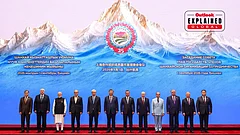

Do you see the world’s major players, particularly the global south, getting caught in the vortex of war? In such a scenario, how do you assess the concept of balance of power?
The US elites regard China as their primary challenge. But—with a military defeat of China and regime change in China both currently out of reach—they regard the whole globe (and even outer space!) as the chessboard on which this challenge plays out. Many countries around the world have geopolitical significance: as potential military allies, sources of raw materials, trading partners, transport conduits, or political supporters or opponents in international forums or public media. They can play such roles in support of the US and/or in support of China. The key goal of US foreign policy is to keep these other countries reliably supportive of the US and to maintain the ability to disrupt their support for China.
The recent outbreaks of violence in Ukraine, Venezuela, and the Middle East can be seen in this context. These military confrontations have disrupted the support China derived from Russia, Venezuela, and Iran. They have reminded everyone that in international relations, violence remains the ultimate decider (“the law of the jungle”) and that the US—with its ally Israel—is able and willing to inflict much more violence, especially on civilians, than any other state. These military confrontations have greatly diminished the weight and prestige of international law and morality as restraints on state conduct (“with survival at stake, one cannot be expected to fight with one hand tied behind one’s back”). And they have put the leaders of all states on notice that the US is willing and able to undermine and even to kill them if it regards them as an obstacle to US global dominance. In this way, other countries, including those of the global south, are drawn into the intensifying international contest for power.
The old concept of balance of power has no role in this contemporary contest. It had its place in a bygone world that ended a century ago—a world in which a handful of roughly equally powerful states (Britain, France, Austria, Germany, Russia, later joined by the US and Japan) were competing. The balance among these states is thought to have persisted because, whenever any one of them was on the verge of becoming dominant, the others would find it in their interest to join forces to constrain it. This collective leadership (“the concert of Europe”) ended definitively with WW2, which brought the US into a position of global dominance, with the Soviet Union and later China as distant runners-up. While a new balance of power—including the US, China, India, the EU, and Russia, perhaps, joined by Brazil and Indonesia—is possible, the US will do all it can to prevent its emergence.

What do you have to say about India’s silence on the war in West Asia as moral evasion?
Based on my very recent visit to India, I don’t think India is silent on this war—I encountered quite some lively debate on it both in academic and civil society circles. India’s government has been reluctant to speak out. This reluctance can be understood against the background of the analysis sketched in my previous responses: governments viewed as obstacles to US global dominance risk being penalised, undermined, or even taken out. In the case of India, the first of these dangers is quite serious: around 40 per cent of India’s primary energy consumption relies on imports over which the US has substantial control. These imports are threatened by the war and could become even more precarious if India’s government took a strong stance against the attack on Iran.
Remaining silent is indeed a kind of moral evasion. But there are also moral reasons for it, seeing how important access to affordable energy is for the poorer four-fifths of India’s population. The situation in the Middle East is unstable, Trump is unstable, and the Indian population and economy are highly vulnerable to energy supply or price shocks. Given these facts, I am reluctant to criticise the Indian government for its silence on the US-Israeli attack.
How significant is the idea of peace plans, the 15-point plan of the US and Iran’s five-point plan, in the ongoing war for a truce? Do you think mediation by Pakistan will have its own ramifications in India and South Asia, and in general?
I have no special insights into how the Iran war will end. Because neither side cares much about it, Iran’s civilian population will likely suffer a lot more, both before and after hostilities end.
The best outcome for the people of Iran would be neither a continuation of theocracy, nor a revival of monarchy under Pahlavi junior, but rather a Constituent Assembly preparing a new, democratic constitution. This kind of resolution could be proposed in the UN Security Council and, if it were to be vetoed there by a permanent member, re-proposed in the UN General Assembly under its Uniting-for-Peace mechanism. Iran has an ancient and distinguished culture and a deep layer of highly educated people, so I am quite confident that such a Constituent Assembly, properly convened, would result in just and democratic constitutional arrangements that would, in particular, respect the freedom of all citizens to decide for themselves how comprehensively they want to live and practice their religion. The UN resolution should call for all hostilities to be suspended while the Constituent Assembly is being set up and doing its work. During this period, essential administrative services would be provided by a caretaker government.
To be sure, this sort of resolution would not be likely to succeed. It would not be attractive to Israel or the US, nor to Iran’s theocrats or monarchists. But it has (based on my correspondence with Iranian intellectuals) substantial support within Iran. And it would be morally far superior, both procedurally and substantively, to any outcome based on violence or the threat thereof. For this reason alone, it should be set forth at the UN, most plausibly by some of the non-permanent members of the Security Council, which currently are Bahrain, Colombia, the Democratic Republic of the Congo, Denmark, Greece, Latvia, Liberia, Pakistan, Panama, and Somalia.
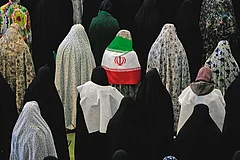


Much depends on the outcome of the ongoing war, nevertheless, in a scenario where Iran finally has an advantage, what kind of world-order do you envisage post-war, particularly in the context of human rights and humanitarian laws?
Returning to a sober predictive mode, the outcome of this war will not have much influence on the world we will see thereafter. Even if the US comes away empty-handed, it will, in the service of its billionaires and multinational corporations, continue its quest to preserve its global dominance by foregrounding its military might through saber-rattling and through the worldwide promotion of wars and hostilities, crises and incidents, disputes and conflicts, tensions and belligerence. As a result of this, human rights and humanitarian laws will be increasingly sidelined as nice ideas that must be set aside for the sake of survival. In a world on the brink of war, the obsession with “national security” becomes all-consuming—not merely in foreign policy but also domestically. The power of a government depends on how strongly and unconditionally it is supported by its population, and such support must therefore be manufactured by whatever means necessary.
Given the destructiveness of modern weapons and the amazing speed of their AI-assisted use, this coming period will be highly dangerous for humanity. It can end, broadly speaking, in three ways. The first outcome is a highly destructive war among nuclear powers, most likely involving the US as one of the belligerents. The intimidating spectre of such a World War 3 may motivate the second outcome: reluctant acceptance of continued US dominance, with China, India, and Europe negotiating a measure of regional autonomy. The third outcome is a moralisation of international relations with strong, human-rights-based supranational institutions, with marginalisation of military and economic might in favour of democratic and judicial decision making based on arguments grounded in considerations of justice and the common good of humankind. As we know from national and regional (European Union) examples, such a world is quite feasible. But a realistic path toward it is presently quite difficult to imagine.
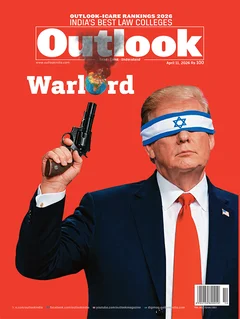
This article appeared in Outlook’s April 11 issue titled ‘ Warlord’ that focuses on the aggression unleashed on Iran by US President Donald Trump and the repercussions that are being felt across the globe with no end in sight.
















