Israel captures Beaufort Castle in deepest Lebanon incursion since 2000
Israeli forces crossed Litani River amid expanding operations against Hezbollah
Lebanon offensive may complicate ongoing US-Iran peace negotiations in West Asia
Israeli forces have seized the Crusader-era Beaufort Castle in southern Lebanon, the military confirmed on Sunday, marking the deepest Israeli incursion into the country since its withdrawal in 2000 and a significant escalation in its campaign against Hezbollah.
The castle, perched on a cliff overlooking the Litani River near the city of Nabatiyeh and roughly 14 kilometres from the Israeli border, was taken after days of intense fighting in surrounding villages. Israeli Defence Minister Israel Katz posted a photograph of troops raising an Israeli flag over the fortress on X, declaring it "a clear message to our enemies: anyone who threatens Israeli civilians will lose their strategic assets one by one."
The Israel Defence Forces said the operation was aimed at establishing control of the Beaufort Ridge and the Wadi al-Saluki area, dismantling Hezbollah infrastructure and removing direct threats to Israeli civilians, AP News reported.
"From Beaufort Ridge, Hezbollah terrorists managed military and combat activities and carried out numerous attacks," the military said, adding that it was prepared to expand operations further if needed. Israeli forces have now crossed the Litani River — which had served as a de facto boundary — and pushed troops into villages approaching Nabatiyeh, a major urban centre in southern Lebanon. Evacuation orders have been issued for Nabatiyeh's residents as well as those of Tyre, Lebanon's fourth largest city.


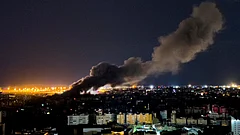

Built by the Crusaders around the 12th century on the foundations of earlier fortifications, Beaufort Castle has served as a military asset for successive powers across nearly a millennium.
The site holds particular symbolic weight in Israel, where it inspired one of the country's most celebrated war films. UNESCO granted it provisional enhanced protection in late 2024 — the highest level of immunity against military use — as part of a package covering 34 Lebanese cultural properties. The castle had already sustained significant damage during Israel's earlier 18-year occupation.
These intensifying ground campaign threatens to complicate the broader diplomatic effort to end the US-Iran war since Tehran already made it clear that any peace memorandum must include a ceasefire in Lebanon.