Religious rhetoric has been used time and again to hide and decorate material interests
With a crusade-like zeal, political and military leaders are using religious language to motivate troops, not uncommon for Iran.
The convergence of the interests of Christian Zionists of America and the Jewish Zionists of the US and Israel have sharpened the religious front.
The names of the heroes
l’s made to memorise
With guns in their hands
And God on their side
—Bob Dylan, With God on Our Side, 1963
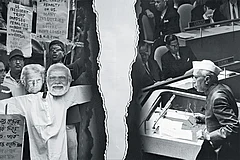
April 12, 1963. Town Hall, New York City. A 21-year-old man in blue jeans casually walked onto the dais with his guitar and harmonica. The West is said to have separated the church from the State years ago. But the young, still unknown man called Bob Dylan shattered those myths. Amidst pin-drop silence, his high-pitched voice, pained by passion, delivered a scathing indictment of the use of religion for justifying wars—from the genocide of native Indians to the Cold War.
March 2026. With a crusade-like zeal, political and military leaders are instrumentalising apocalyptic religious language to motivate troops and justify bombardments.
Christian Zionists are calling the US-Israel war on Iran a step towards facilitating the return of Jesus Christ through complete Jewish occupation of ancient Israel territories. In the US, President Donald Trump is being described as having been anointed by Jesus for the Iran war. Under his watch, the US has dropped the olive branch, which signified the power of peace for over two centuries, from the design of the seal on its new dime. Talk of building the Jewish Third Temple in Jerusalem, where the Islamic Al-Aqsa mosque compound stands now, is getting louder. Iran and its allies are speaking of jihad, the holy war, and the return of Imam Mahdi, the supposed redeemer of Islam.


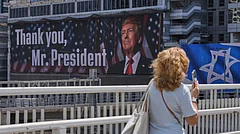
Jerusalem, a site historically important for all three Abrahamic faiths—Judaism, Christianity and Islam—has become the bull’s-eye of three major state powers to bomb, and bomb enemy territories indiscriminately, targeting even schools and hospitals. All for geopolitical dominance, but in the name of God. Dylan’s song has never felt more alive than today. He wrote, “...you don’t count the dead when God’s on your side.”
Religious rhetoric has been used time and again to hide and decorate material interests, and also to inspire people to join or support war efforts, points out Gilbert Achcar, professor emeritus of development studies and international relations at London’s School of Oriental and African Studies (SOAS). “Iran, Israel and US rulers are using religious motifs to inspire believers on their land to garner support for their war efforts,” says Achcar.
The religious references that the current political and military leaders in the US, Israel and Iran are using are baying for blood.
“We read in this week’s Torah portion, ‘Remember what Amalek did to you.’ We remember—and we act,” said Israeli Prime Minister Benjamin Netanyahu at the beginning of March.
In the Hebrew Bible, Amalek is both a nation and a nomadic tribe considered the arch-rival of ancient Israel. Netanyahu was quoting from the Book of Deuteronomy, which is part of the Torah of the Jews and the Old Testament of the Christians. The Book of Deuteronomy asks to “blot out the memory of Amalek from under heaven,” a comment that Israel National Security Minister Itamar Ben-Gvir quoted in a March 2 social media post.

The Hebrew Bible and the Old Testament contain more violent action against the Amalekites. “Now go, attack the Amalekites and totally destroy all that belongs to them. Do not spare them; put to death men and women, children and infants, cattle and sheep, camels and donkeys,” says the First Book of Samuel.
Ben-Gvir also compared the assassinated Supreme Leader of Iran, Ayatollah Ali Khamenei, to Haman, the biblical villain of ancient Persia (modern Iran) mentioned in the Book of Esther, who plotted to destroy the Jews. The defeat of Haman led to the merry Jewish festival of Purim.
Political scientist Achin Vanaik points out that Israel’s attack on Iran started roughly 48 hours before Purim’s observation was scheduled to be observed on March 2. Today’s Iran cannot be compared with ancient Persia. Nevertheless, Israel is using this story to paint their war efforts as the fulfilment of a religious quest of the Jewish people against a supposedly ancient enemy, says Vanaik.
In the US, the troops are reportedly being told by their superiors that this war is “part of God’s divine plan”. They allegedly referenced citations from the Book of Revelation to drive home the point that American and Israeli attacks will “hasten the return of Jesus Christ”. Soldiers were allegedly told that the Iran war is intended to bring about Armageddon, the final war of good against evil. Officers were asked not to question the mission, as it was prophetically ordained.
Iran’s nuclear programme is a lame excuse the US-Israel alliance is citing, much like how the US invaded Iraq, alleging the presence of weapons of mass destruction, but could not provide any evidence of Iraq building such things.

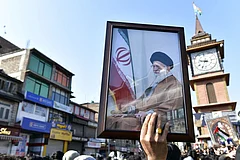
In the Islamic theocracy of Iran, high-ranking Shia cleric Abdollah Javadi-Amoli issued a jihad fatwa. Several religious leaders equated Trump and Netanyahu with Satan. Iran-led ‘Axis of Resistance’ movements in Iraq and Yemen called the US-Israeli war against Iran ‘the new battle of Karbala’.
Iran’s attempt to use religion to rally people for the war is not surprising. It is formally an Islamic theocracy, essentially a Shiite one, with a cleric at the helm. Since the Islamic Revolution that brought them to power in 1979, their authoritarian rule has not only launched a systematic cultural war on everything they deem Western, but has also suppressed dissent through brutal measures. Hijab has been imposed on women. They have painted resistance to the West, especially the US, as a holy, religious duty of its citizens.
Last year, senior Shia clerics called Trump the ‘one-eyed Dajjal’, the Islamic anti-Christ or false messiah, whose rise spells the impending emergence of Imam Mahdi. In February 2026, the Hezbollah’s Lebanon-based Secretary General Sheikh Naim Qassem said that the Islamic Republic of Iran is already the government of Imam Mahdi.
Besides, Iran has made repeated attempts to export the revolution—through militias acting as proxies—to the Arab world, targeting Sunni monarchies and elected governments. It had portrayed its war with Iraq during the 1980s as the return of the seventh-century Battle of Karbala. This is one of the key reasons why the Gulf countries have mostly sided with the US-Israel axis against Iran.
However, Israel and the US—formally Western and secular democracies—are not lagging when it comes to using religion for their war efforts. After all, both nations have seen the rise of religious nationalists, paving the convergence of the interests of the Christian Zionists of America and the Jewish Zionists of the US and Israel.
Zionists advocate for a sovereign Jewish state in Palestine, a region historically associated with the Jewish people and also inhabited by other communities over time. It is essentially a nationalist movement among Jews, with a significant secular element in its early years in the 19th century. In the US, over the past few decades, Christian evangelists’ growing proximity with a section of Orthodox Jews has strengthened what is called Christian Zionism, a politico-religious movement. The evangelical Christians are Trump’s most loyal voter base.
In 2017, after Trump acknowledged Jerusalem as Israel’s capital in a controversial move during his first Presidential term, Amer Aziz, a writer and editor associated with the Muslim Writers Guild of America, summarised the vision of the Christian Zionists as the following: “The Jewish people will return to Jerusalem where the third temple will be rebuilt ushering Jesus’ return and the Armageddon against the anti-Christ—possibly the Islamic Messiah.”

Now, American troops are reportedly being told that the Iran war is all about that Armageddon. Vanaik, a retired professor of international relations at the University of Delhi, points out a curious aspect of this alliance. He highlights that in the US, the Christian evangelists are usually anti-Jewish. They believe all the Jews will convert to Christianity when Jesus Christ returns. However, for all practical purposes, till that still distant day of the return of Christ, they support Zionism.
“Many such evangelists and supporters of Trump’s Make America Great Again (MAGA) camp also cite the Islamic theocracy in Iran to justify their alliance with Zionist Israel and the joint war efforts between it and the US,” he says. At the same time, he notes, there are others in the same Christian fold who are opposing this war as a betrayal of Trump’s pre-election promise to not start foreign wars.
While some cracks have certainly emerged in Trump’s MAGA camp over the latest war efforts, the hatred for Palestine’s backers, especially Iran, remains quite high. Of course, the hatred was being built up for a long time. Institutionalising hatred against the enemy is key to energising one’s forces. Lifelong demonisation of an adversary makes war inevitable. Islamic Iran has similarly built hatred against the West, the US in particular, as well as Israel, through regular and systematic propaganda.
The ground for expanding Israel’s territory was being ideologically prepared for quite a few years. US Secretary of War Pete Hegseth was a television presenter in 2018 when he said, “There is no reason why the miracle of the re-establishment of the temple on the Temple Mount is not possible.”
On the Temple Mount in Jerusalem currently stands the Islamic compound known as Al-Aqsa, which includes the Al-Aqsa Mosque and the Dome of the Rock. The first two Jewish temples on the Temple Mount were destroyed by Babylonian polytheists and Roman polytheists in the 6th century BCE and the first century CE, respectively. Now, building the third temple on the Temple Mount amounts to the destruction of the Al-Aqsa compound—a definite recipe for war.
‘Religious rhetoric has been used time and again to hide and decorate material interests, and to inspire people to support the war efforts.’
In his 2020 book, American Crusade, Hegseth wrote: “We don’t want to fight, but, like our fellow Christians one thousand years ago, we must.” He has tattooed across his chest the Jerusalem Cross—the coat of arms of the Crusader Kingdom of Jerusalem after 1099. This has long been associated with the idea of Christian warriors reclaiming the Holy Land.
Now, Hegseth is visibly overzealous with the idea of claiming all of ancient Israel. On the 10th day of the US’ war on Iran, Hegseth quoted from the Book of Psalms in the Old Testament: “Blessed be the Lord, my rock, who trains my hands for war and my fingers for battle.”
Muslims did not cause or contribute to the Jewish exodus from ancient Israel. That process was driven by Assyrian, Babylonian, and Roman empires centuries before the advent of Islam. That same region subsequently became known as Palestine. However, the rise of the Zionist movement since the 19th century led to the demand for the creation of a Jewish state of Israel, where the Jews scattered in different parts of the world would make their home.
For this, Palestine would be divided between Muslims and Jews. The Arabs opposed this proposition. They argued that the Jews, being a minority there at that time, could not have claimed half the land. Thus, since the birth of Israel in 1948, the region has seen war after war.
Netanyahu has been trying to give a religious dimension to his war against Palestine since October 2023. This was also when he first referred to those on Palestine’s side as Amalek. And his government did in Gaza exactly what had been told in the Old Testament to do to the Amalekites: spare none. Raze. Erase.
When secular strategic interests get baptised in sacred language, wars become harder to end. Atrocities become divine will. As Dylan’s song pointed out, “And you never ask questions when God’s on your side.”
Vanaik says that the current war efforts have both religious and material motivations because these efforts are being driven by religious nationalism, not religion or nationalism alone. Since nationalism is even more powerful than religious sentiments, even religious fundamentalists have to frame the ideology as religious nationalism, he argues.
According to him, there is no doubt that in the “US-Israel-India axis”, the current governments of the three countries perceive certain common strategic and military interests. At the same time, there is also a growing Islamophobic dimension in the ideological beliefs held by proponents of Hindutva, Zionism and right-wing conservative Christian evangelism that claim terror as an inherent characteristic of Islam. “However, the fact remains that terrorism can be and is justified in the name of all kinds of ideologies—religious and secular,” says Vanaik.
While Israel and the US continue to use Biblical references, Achcar feels that Trump makes hiding their real intentions rather difficult. “Trump is more blatant than any other US president. He would not and does not hesitate to express his real intentions,” says Achcar.
It is, indeed, becoming a subject of growing suspicion that Iran’s nuclear programme is a lame excuse the US-Israel alliance is citing, much like how the US invaded Iraq, alleging the presence of weapons of mass destruction, but could not provide any evidence of Iraq building such things.
Achcar, however, adds that Netanyahu and Trump’s interests also have conflicts. “Netanyahu wants to weaken Iran as much as possible. He even wishes for a collapse of the state. A fragmentation of Iran along ethnic lines would be his most favoured outcome. However, Trump does not want that,” says Achcar.
He feels that a collapse of Iran, or even of its current regime, would destabilise western and central Asia; it would also hurt US interests there. “Trump wants Iran’s regime itself to shift and collaborate with the US, like what happened in Venezuela. Here lies the main difference in the interests of Israel and the US.”
Whether these differences in material interests overpower the religious zeal remains to be seen. But for the world to see through propaganda, we might need to solve the puzzle that Dylan gave us in that 1963 song.
I can’t think for you
You’ll have to decide
Whether Judas Iscariot
Had God on his side
Maybe it’s not a puzzle. Everybody can claim to have God by their side. But it’s we who have to figure out—whose side God, the merciful, is really on. “If God’s on our side, He’ll stop the next war,” Dylan concluded. Can believers who do not want the war go on to reclaim God to end it?


Snigdhendu Bhattacharya is a journalist, author and researcher
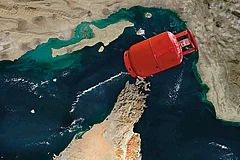
This article appeared in Outlook's April 1, 2026 issue titled ParaDime Shift, which looks at how the US-Israel attack on Iran has come home to India with the LPG crisis and is disrupting India’s energy ecosystem, exposing policy gaps, and testing the limits of its diplomacy.