India said nothing after the killing, a move widely read as a decisive tilt towards the US-Israel axis.
Former NSA Shivshankar Menon called the silence inexcusable, saying our silences and our actions are quite inexplicable.
Experts warned India underestimated the capacity of Iran to hold out under an American-Israeli attack even as New Delhi later reached out to Tehran over shipping through the Strait of Hormuz.
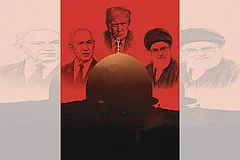
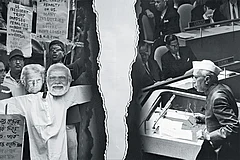
In the end, India said nothing. Iran’s supreme leader Ali Khamenei was killed in a precision strike by Israeli missiles fired from beyond Iran’s air defence range. The intelligence was provided by the US. The government’s refusal to condemn the killing of the head of state of a country with which India has long maintained civilisational and strategic ties was widely read as a decisive tilt towards the US-Israel axis. The optics were sharpened by Prime Minister Narendra Modi’s high-profile visit to Israel, where he addressed the Knesset to resounding applause, just 48 hours before the conflict erupted.
Yet, as the war dragged on and energy security concerns surged to the fore, New Delhi appeared to recalibrate, reaching out to Tehran in a bid to safeguard its interests. Over the course of three turbulent weeks, India sent out a series of seemingly contradictory signals, raising a deeper question: is this a departure from its long-held commitment to strategic autonomy, or an uneasy adaptation to a rapidly shifting geopolitical landscape?
The opposition in India has naturally gone hammer and tongs against the government, accusing it of forsaking the country’s long-cherished independent thinking and raising its voice against oppression, be it support for South Africa under apartheid or Palestinian rights. The US announcement that India has been given permission to buy Russian oil did not sit well with people who felt that it diminished India’s stature. India’s timidity has come as a surprise to many within Delhi’s diplomatic community, including Western diplomats.


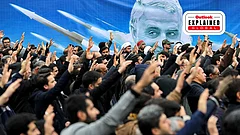

“A fundamental impulse running through our foreign policy since 1947 has been safeguarding our strategic autonomy. Some of the recent actions of the government call into question this hard-won and well-preserved policy that has paid us rich dividends,” says Manish Tewari, Congress leader and MP from Chandigarh.
The Indian Foreign Service, made up of serving and retired diplomats, is a tight-knit community that rarely speaks out publicly against the government. Whatever differences may occur from time to time are discussed behind closed doors. Yet for the first time, former National Security Advisor Shivshankar Menon, usually reticent to point fingers at his former colleagues, was riled enough to do so. He criticised India’s refusal to condemn the killing of Iran’s Supreme Leader. “Our silences and our actions are quite inexplicable, frankly. Not to have anything to say when the head of state of a country you recognise is assassinated in your neighbourhood by another country and stay absolutely silent on the issue… is inexcusable,” Menon said, but pointed out that it has become part of a pattern. Menon was speaking to television host Karan Thapar in an interview for The Wire.
“Not speaking up has cost India. Looking back, it is painfully evident that India could have navigated better the perilous diplomatic waters. We could have given a calibrated statement on the killing of the Supreme Leader,” says retired ambassador K. P. Fabian.
Indian diplomats are adept at tightrope walking, balancing both sides where our national interests are concerned. But somehow, this time around, New Delhi did not bother. India issued several statements, criticising Iran for attacking its Gulf neighbours, but there was radio silence on the strikes against Iran by the US and Israel—the killing of 165 schoolchildren by an American Tomahawk missile or the sinking of an Iranian ship in the Indian Ocean.
Did the mandarins in South Block misread the situation? Have they forgotten Iran’s history and the eight-year Iran-Iraq war following the Iranian Revolution? The US and the entire Western world were backing Saddam Hussein, providing Iraq with equipment and funds. Iran survived that. The patience and resilience of the Iranian people and their ability to endure pain is known to all those who have a sense of history. Nearly a million people were killed in that war.
New Delhi possibly believed that the heavy bombardment that killed the Supreme Leader and most of the top Iranian commanders, including the defence minister, would lead to a quick collapse of the regime and the installation of a pro-Western government. India could pick up the threads from there. Perhaps this is why India acted as it did. “The Indian government clearly underestimated the capacity of Iran to hold out under an American-Israeli attack, to strike back against US assets and Israel, as well as the Gulf states, and Iran’s ability to literally weaponise interdependence and impose costs on the world economy,” says Srinath Raghavan, author and historian.
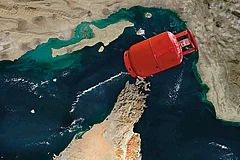
India’s concern about the conflict spreading to the Gulf Cooperation Council (GCC) is obvious. Condemning Iranian action is to be on the right side of the Gulf-Arab ruling families. The Gulf provides over 50 per cent of India’s crude imports as well as natural gas, and almost 90 per cent of India’s LPG shipments are from Gulf suppliers that pass through the Strait of Hormuz.
At least 10 million Indian nationals live and work in the region, sending back precious remittances that keep the home fires burning. For India, a stable West Asian neighbourhood is not just a question of geopolitics—it is also about the livelihoods of its people. It was obvious to everyone that an attack was imminent when the US began moving its aircraft carriers to the Persian Gulf. There was no forward planning for such a contingency.
“For a country with such high stakes in the Gulf and West Asia, this is a serious error of strategic judgement. Unfortunately, it conforms to a pattern: our inability to anticipate dramatic changes in our neighbourhood, be it in Sri Lanka, Bangladesh or Nepal. A national security apparatus with this strike rate should seriously look at its systemic deficiencies,” adds Raghavan.
New Delhi could have taken a more nuanced stand from the start. If it had acted with foresight, this mad scramble to get its shipments through the Strait of Hormuz could have been smoother. Foreign Minister S. Jaishankar was on the phone to his Iranian counterpart Abbas Araghchi to allow some of its over two dozen vessels passage through the Strait. Iran has not given blanket guarantees to Indian ships, as it has to China, Türkiye, Pakistan and some other countries. Modi was also on the line to President Masoud Pezeshkian.
If Iran is disappointed with India’s stand, it has said nothing publicly. While official Iran kept mum, some media outlets have noted that many countries, including India, have not condemned the attacks. While there is generally no expectation from Western countries, the media were surprised that “India, considered a long-standing friend, and given the deep historical ties between the two nations, there has been a public expectation that India would at least condemn the killing of civilians. Even incidents such as the death of schoolchildren in Minab have not been condemned in India,” a local Farsi news outlet notes.
Later this year, India will host the BRICS summit, which now also has Iran as a member and could also convene a meeting of the Quad, comprising the US, India, Japan and Australia. These two groupings sit on opposite ends of the geopolitical spectrum: one shaped by China and Russia, the other anchored by Washington. BRICS will certainly demand a statement on the unprovoked attack on Iran by the US and Israel. Navigating these competing alignments will test New Delhi’s diplomatic agility.
The war in West Asia is testing not just India, but the world, leaving little room for countries to manoeuvre.
“To be fair to India, every government around the world is struggling to get a grip on this crisis. It is impossible to predict how long it will last, how high oil prices will go, and what an erratic and unprepared US President will do next. This needless war could do serious damage to India’s economy, already weakened by Trump’s tariffs. And it is not at all clear how it will end,” says Ian Hall, who teaches international relations in Australia’s Griffith University.
Meanwhile, the hostilities rage on. Israel claims Iranian Intelligence Minister Esmail Khatib has been killed. And as news of Iran’s security chief Ali Larijani’s killing by Israel has come in, India has chosen to be silent once again. India had said, “Such attacks are unacceptable and need to cease.” But no word on the killings.
Has India stopped hedging its bet and signalled that it has chosen the side of the US and Israel? Only time will tell.


Seema Guha is a senior journalist covering foreign affairs
This article appeared in Outlook's April 1st, 2026 issue titled 'ParaDime Shift,' which looks at how the US-Israel attack on Iran has come home to India with the LPG crisis and is disrupting the nation's energy ecosystem, exposing policy gaps and testing the limits of diplomacy.