West Asian leaders view both a weakened or collapsed Iran and a resilient, strengthened Iran as dangerous outcomes, with neither offering a clear path to regional stability.
A state collapse in Iran could trigger widespread instability, echoing Iraq and Libya, while a stronger Iran may expand its regional influence and intensify proxy conflicts.
Ongoing missile and drone attacks across Gulf states highlight Iran’s strategy of sustained asymmetric pressure, exposing vulnerabilities despite high interception rates.
For the rulers of West Asia, the US-Israel war imposed on Iran is personal and deeply unsettling. In private conversations across Riyadh, Abu Dhabi, and Doha, policymakers are grappling with a question that has no reassuring answer: what outcome of this war can they actually live with?
So far, none seems acceptable.
A collapsed Iran, at first glance, might appear to remove a longstanding adversary. But few in West Asia believe it would end there. Instead, they fear a familiar pattern, one seen in Iraq after 2003, in Libya after 2011, and in parts of Syria and Afghanistan.
State collapse does not create order; it creates a vacuum, and in that vacuum, militias, armed factions, and non-state actors tend to proliferate. For countries in West Asia, such a scenario unfolding across Iran’s vast territory would mean instability stretching along their northern horizon, far more unpredictable than any centralised state.


Yet the alternative, a victorious Iran, is hardly more comforting.
An Iran that absorbs sustained US-Israeli pressure and still emerges standing could become more assertive, not less. It would likely carry a renewed sense of strategic confidence, perhaps even vindication, and could be more inclined to project influence across the region. For West Asian monarchies that have spent decades trying to limit Tehran’s reach, that prospect raises equally serious concerns.
This is the uncomfortable reality confronting West Asia today: both collapse and victory represent different kinds of risk, and neither offers a clear path to stability.
Rivalry that Predates Ideology
The unease with Iran is often framed through the lens of the 1979 Islamic Revolution, but in truth, it runs deeper. Even before the revolution, Arab monarchies viewed Iran as a formidable regional rival. Geography ensured proximity, and history fostered suspicion.
During the era of the Shah, when Iran was closely aligned with the US, West Asian countries still regarded Tehran with caution. The concern was less about ideology and more about ambition and scale. Iran’s size, population, and military capacity made it a natural contender for regional influence.
In Paul E. Erdman’s The Crash of ‘79, although fiction, the character Bill Hitchcock reflected a genuine strategic instinct that existed well before the Islamic Republic. It mentions Saudi Arabia seeking American arms not to confront Israel, but to defend itself against Iran, led by Raza Shah Pahlavi.
The revolution simply transformed that instinct into a more structured and ideological rivalry. Iran’s efforts to export its revolutionary model, along with its cultivation of networks of influence in Lebanon, Iraq, and Syria, gave rise to what many in the West Asian countries came to describe as a “Shia arc”. Over time, this network evolved into a persistent strategic challenge.
Over the past decade, West Asian countries believed they had managed to contain this challenge, even if they had not fully reversed it.

The current war, however, has begun to unsettle that balance in ways that are difficult to predict. If Iran emerges stronger, the mechanisms that kept its influence in check could weaken, and West Asian countries worry that the region could slip back into a more intense phase of proxy competition with fewer constraints and higher stakes.
Early Calculations and Shifting Realities
When the war began, West Asian capitals approached it with cautious calculation rather than outright alarm. There was a quiet expectation that military pressure might weaken Iran without pushing it into collapse. Such an outcome, where Tehran recalibrates but remains intact, was widely seen as the most manageable scenario.
Privately, officials in West Asia conveyed a clear message to Washington: apply pressure, but avoid pushing Iran to the point where the state itself begins to fracture. Only Israel wanted a total collapse to watch with glee from a distance.
Yet as the conflict has dragged on, those early assumptions have started to unravel. Iran’s resilience, combined with the unpredictability of US decision-making under President Donald Trump, has turned what was expected to be a controlled confrontation into a more open-ended and uncertain conflict.
Increasingly, West Asian policymakers are confronting a possibility they had hoped to avoid: that Iran might not weaken in a controlled way, but instead endure and potentially emerge stronger.
This shift in perception is no longer abstract; it is being shaped by the scale and persistence of attacks across the region.
For now, West Asian leaders are trying to manage uncertainty with a mix of diplomacy, restraint, and recalibration.
Since the escalation began on February 28, 2026, Iranian missile and drone strikes have hit multiple West Asian countries in sustained waves—as per an estimate, around 4,000 to 4,600 attacks across the Gulf Cooperation Council, with the UAE alone accounting for nearly half. By early April, broader estimates indicate that the cumulative number of projectiles launched across the region has crossed 5,000 to 6,000, even as air defence systems report interception rates often exceeding 90 per cent.
The UAE has borne the brunt, with 2,400 to 2,469 attacks recorded in late-March and early-April, according to various assessments. Detailed breakdowns from around April 1 indicated 438 ballistic missiles, over 2,000 drones, and several cruise missiles were intercepted or engaged. The UAE accounts for 48 to 50 per cent of total attacks, reflecting its centrality as an economic and logistical hub.

Kuwait has faced between 791 and 950 attacks, placing it in the 18-20 per cent range. A drone attack has hit the Mina Al-Ahmadi Refinery, the country’s largest, which caused fires and underscored the vulnerability of energy infrastructure.
Saudi Arabia’s figures vary, depending on the source, ranging from earlier counts of around 723 attacks to broader tallies exceeding 1,000. Many of these have been intercepted or classified as low-intensity engagements, often targeting oil infrastructure in the Eastern Province, including facilities near Ras Tanura. Even so, Saudi Arabia represents roughly 16 to 20 per cent of the total.
Bahrain has recorded between 429 and 600 attacks, with official figures citing hundreds of intercepted missiles and drones. Its share remains close to nine to 10 per cent.
Qatar presents a different kind of vulnerability. The broader estimates suggest figures approaching 700. The significance lies not just in numbers but in impact. Attacks on gas infrastructure, particularly at Ras Laffan, have disrupted nearly 17 per cent of Qatar’s liquefied natural gas production capacity, with potential long-term consequences measured in both output and revenue.
Oman remains the least affected, with 19 to 22 attacks, accounting for about 0.5 per cent of the total.
Taken together, these patterns illustrate a clear strategy: sustained, asymmetric pressure on US allies through strikes on energy facilities, logistics hubs, and military-linked infrastructure. Even where interception rates are high, debris, occasional penetrations, and economic disruption have ensured that the impact is felt.

For West Asian countries, the implications have been sobering.
For decades, they relied on US security guarantees, missile defence systems, intelligence coordination, and naval protection to shield them from such threats. Yet the current scale of attacks has exposed the limits of that protection. The belief that external security umbrellas could provide near-complete insulation has been shaken.
At the same time, a more uncomfortable realisation has begun to take hold. In private discussions, some policymakers increasingly question whether the US presence in the region is primarily designed to protect West Asian countries at all, or whether its deeper strategic purpose lies in securing Israel’s position only.
Dilemma of Military Dependence
This reassessment is also forcing a closer look at internal security structures.
Most West Asian monarchies have deliberately avoided building large standing armies. The reasoning is rooted in political caution: strong militaries have historically been the vehicles of coups in many parts of the world. Instead, these states rely on smaller, tightly controlled forces, often drawn from trusted tribal networks and elite guard units loyal to ruling families.
These forces are dependable and politically reliable, but they are not structured for prolonged, high-intensity conflict. As a result, West Asian nations have depended heavily on external partners for broader defence capabilities.
The current war has exposed both the strengths and the limitations of that model.
At one of the war’s most volatile moments, diplomacy stepped in to prevent further escalation.
Türkiye and Pakistan, working through different but complementary channels, have moved to primarily prevent Saudi Arabia from entering the war. For Saudi Arabia, that intervention has come just as it was approaching a critical threshold. But the underlying tensions remain.

For many West Asian policymakers, the conflict has exposed the limits of longstanding assumptions about security and alliances. The idea that external protection alone can guarantee stability is being reconsidered.
As the war continues, West Asian countries find themselves navigating an increasingly narrow path.
An Iran that collapses could unleash chaos that is difficult to contain. An Iran that emerges stronger could reshape the regional balance in ways that feel equally threatening.
Between these two outcomes lies a space that is uncertain and constantly shifting.
For now, West Asian leaders are trying to manage that uncertainty with a mix of diplomacy, restraint, and recalibration. Türkiye and Pakistan may have created an opportunity, but it is fragile.
Whether it can be used to steer the conflict toward a more stable outcome remains unclear.
What is already evident, however, is that this war has forced West Asia to rethink not only its adversary, but also its assumptions about allies, security, and the limits of power in an increasingly unpredictable region.
(Views expressed are personal)


Iftikhar Gilani is a journalist currently based in Ankara, Türkiye.
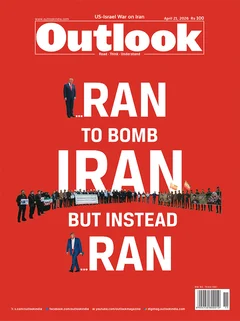
This article appeared in Outlook’s April 21 issue, 'I ran to bomb Iran, but instead I ran' which looked at the US-Israel war on Iran and what it means for families living through it and what is at stake in the states going to elections in the first phase