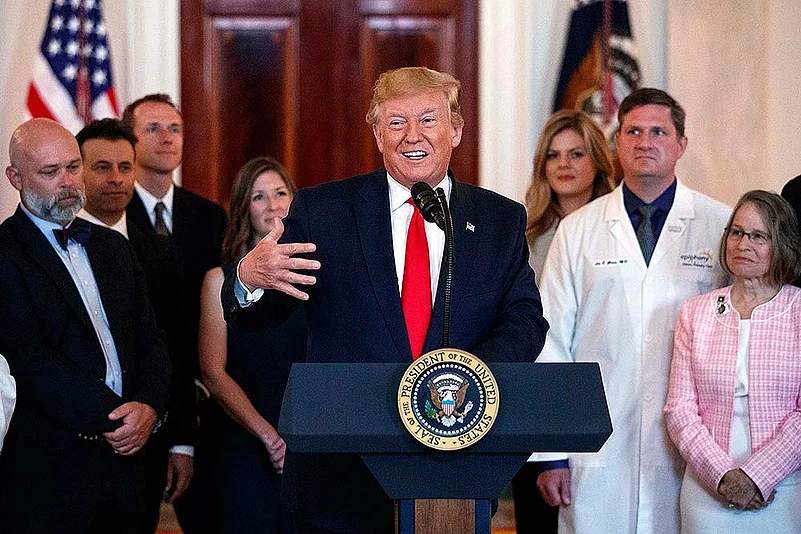
Donald Trump warned the U.S. would hit Iran “very hard tonight,” escalating already heightened military tensions.
The threat follows renewed U.S.-Iran exchanges that have weakened ceasefire and diplomatic efforts.
Markets reacted nervously, with oil prices rising amid fears of wider regional conflict.
U.S. President Donald Trump has dramatically escalated tensions with Iran, declaring that the United States will strike the country “very hard tonight” following a fresh round of military exchanges that have further destabilized an already fragile ceasefire.
In a post on his Truth Social platform, Trump claimed that Iran’s military capabilities had been largely neutralized and warned of imminent military action. He also signaled a broader strategic objective, saying the U.S. could eventually take control of key Iranian oil and gas infrastructure, including Kharg Island, the country’s principal oil-export terminal in the Persian Gulf.
The latest threat comes after two consecutive days of tit-for-tat attacks between U.S. and Iranian forces. According to reports, the renewed hostilities have undermined diplomatic efforts aimed at securing a preliminary peace agreement between Washington and Tehran.
While indirect negotiations are said to be continuing, recent military actions have cast doubt on prospects for a swift resolution to the conflict.
Trump’s remarks mark one of the strongest statements yet in the ongoing confrontation. In addition to threatening new strikes, he suggested that the United States could assume control over Iran’s energy infrastructure and markets, drawing comparisons to U.S. actions in Venezuela. Analysts say such rhetoric is likely to further inflame tensions across the Middle East and could have significant implications for global energy supplies.


Iran has not immediately responded to Trump’s latest comments. However, Tehran has previously argued that recent U.S. military operations effectively voided the ceasefire agreement reached earlier this year. Iranian forces have also been accused of launching retaliatory attacks against U.S.-linked targets in the Gulf region, contributing to a cycle of escalating violence.
Financial markets reacted swiftly to the developments. Oil prices rose after Trump’s announcement, reflecting investor concerns that a broader conflict could disrupt energy exports from one of the world’s most strategically important oil-producing regions.
With military operations intensifying and diplomacy under pressure, the coming hours could prove critical for regional stability and international energy markets.