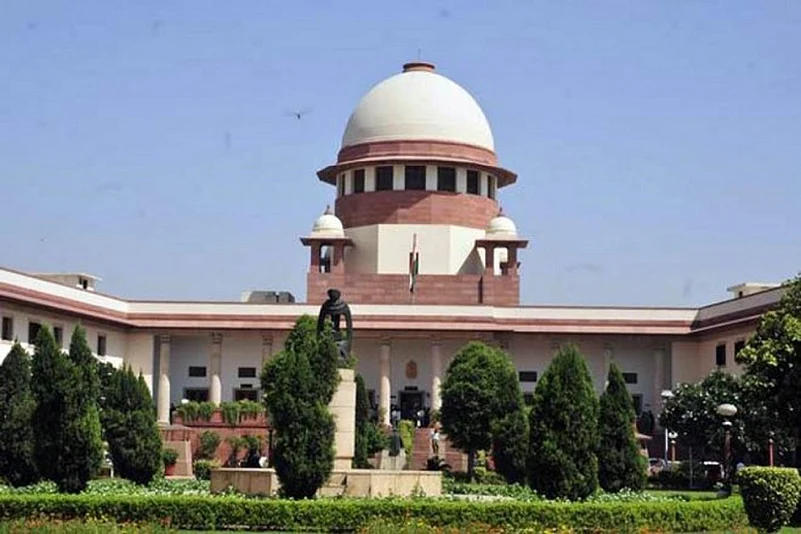
The Supreme Court recognised homemakers as “nation builders”, highlighting their vital role in childcare, family management and social development.
It fixed the notional value of domestic care at ₹30,000 per month for motor accident compensation claims.
The ruling creates a separate compensation category for “loss of domestic care”, potentially increasing payouts in future accident cases involving homemakers.
In a landmark judgment that could reshape compensation calculations in motor accident cases across India, the Supreme Court has recognised homemakers as “nation builders” and ruled that the loss of domestic care provided by them must be treated as a separate and compensable head of damages. The court also fixed the notional value of domestic care services at a minimum of ₹30,000 per month.
A bench comprising Justices Sanjay Karol and N. Kotiswar Singh delivered the ruling while hearing a motor accident compensation matter involving the death of a homemaker.

The judges observed that the contribution of homemakers extends far beyond household chores, encompassing childcare, emotional support, family management and the nurturing of future generations.
“The homemaker contributes to the growth of the human being and the nation,” the bench said, stressing that unpaid domestic labour has long been undervalued despite its immense social and economic significance. The court expressed hope that homemakers would now be recognised as “nation builders” in legal discourse and compensation frameworks.




The judgment creates a new principle in motor accident compensation law by recognising “loss of domestic care” as an additional category of compensation. The court clarified that this head of damages would be available over and above compensation already awarded under existing principles laid down in earlier landmark rulings, including the Pranay Sethi case.

The ruling could have far-reaching implications for thousands of pending and future accident claims, where the work of homemakers has often been assessed using low notional income benchmarks or equated with wages earned by skilled labourers. The Supreme Court rejected such comparisons, holding that they fail to capture the true value of domestic and caregiving work.
The decision builds on a series of earlier judgments in which the apex court emphasised that unpaid household labour carries measurable economic value and deserves recognition within the legal system. By assigning a minimum monthly value of ₹30,000 to domestic care, the court has taken a significant step toward formal acknowledgement of homemakers’ contributions to families, society and the broader economy.