






The crisis has shaken long-standing Gulf reliance on US security guarantees, highlighting vulnerabilities as conflict risks spill into the region.
Rising tensions with Iran, including threats to energy infrastructure and the Strait of Hormuz, have intensified economic and security concerns.
GCC states are likely to pursue a more diversified strategy—balancing US ties with stronger defence capabilities, diplomacy with Iran, and broader global partnerships.
The Iran crisis places Gulf monarchies in a strategic dilemma, exposing the limits of longstanding security assumptions while intensifying rivalries. For decades, the states of the Gulf Cooperation Council (GCC)—Saudi Arabia, the United Arab Emirates, Qatar, Kuwait, Bahrain and Oman—have relied on a formula: security guaranteed by the United States, economic prosperity anchored in energy exports, and a cautious balancing of regional tensions, adjusting with Israel, anxious about Iran. The current crisis disrupted this equilibrium. Alignment with Washington does not insulate them from conflict; their geography ensures they remain vulnerable to the consequences of confrontation between larger powers. Iran upset their certainty by expanding the crisis horizontally to them.

The dilemma is a perception in Gulf capitals that they are drawn into a conflict not of their making while bearing disproportionate risks. Iran’s targeting of facilities linked to US presence shows that hosting such assets can invite attacks. Disruptions to energy infrastructure and economic activity highlight how quickly conflict costs escalate, threatening stability, investor confidence, and vital energy flows. Qatar’s gas exports are almost entirely dependent on the Strait of Hormuz. In the conflict, Qatar has had 17 per cent of its gas infrastructure damaged.
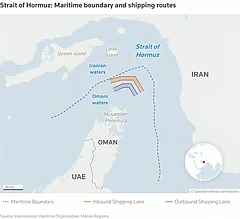
This led to the pointed question now being asked, often privately: did the US prioritise the defence of Israel while leaving its Gulf partners exposed? Washington would argue that its military posture is designed to protect all its partners; the optics have been less reassuring. Gulf states found themselves managing the immediate fallout on their own soil. If US forces were present, their role did not fully align with the expectations that Gulf leaders may have harboured about comprehensive protection. Sixty-five per cent of crude oil from the GCC depends on the Strait of Hormuz. The GCC economies suffer from the risk of disruptions by Iran and by the US. Such disruptions impact crude oil shipments, trade movements, and economic balance, manifesting the problems of depending on a lone maritime route.




Compounding this dilemma is the sharpening rivalry with Iran. The crisis heightens the strategic capability of Iran as a threat, with its remaining ability to project threats through missiles, drones, and proxies. While often viewed as a Sunni-Shia rivalry, the impetus is mainly geopolitical. Iran’s utilisation of asymmetric strategic options to inflict damage, even on para-aligned states, mixes attributes among combatants and neighbours, embedding anxiety across Gulf capitals.
Did the US prioritise the defence of Israel while leaving its Gulf partners exposed?
The conflict depicted the perimeters of strategic rivalry. While Iran’s activity raised threat anxieties, it also showed the risks of uncontrolled enhancement. For the GCC, which lies close enough to face Iranian threats, a major war would be devastating. This generates a paradox: Iran is perceived as a greater threat than before, yet avoiding direct confrontation with Iran has become an important consideration. Managing this perception will be important to the evolution of the Gulf strategy.
The Gulf states could pursue a more diversified approach to security. Among this will be a continued, though more calibrated, partnership with the US. The military, technological and intelligence advantages that Washington provides cannot be easily replicated, and there is no immediate alternative that offers a comparable security umbrella. This may be complemented by enhanced indigenous defence capabilities. Investments in missile defence systems, cybersecurity, and the protection of critical infrastructure may accelerate as Gulf states try to reduce vulnerability to shocks.

Another element is renewed emphasis on diplomacy with Iran. De-escalation efforts, including regionally facilitated dialogue, may gain momentum. As confidence levels are constrained and perceptions vary, diplomatic and back channels could control spirals of risks and anxieties to prevent overreactions. As some GCC members have signed the Abraham Accords, will they be able to follow more autonomous polices towards Iran rather than follow the Israeli narrative? Just as Oman tried to be a mediator, others could fit the role if they had a distance from Israeli perspectives. Would they reconsider the Abraham Accords till Israel becomes a normal state?
The Gulf states could diversify their partnerships. Engagement with other partners, including China, India and Europe, may allow broader strategic alternative policies to emerge. These cannot substitute for the breadth of US engagement, particularly as military support; they could support economic development, technological partnership and strategic hedging. This multi-polar partnership approach manifests the current efforts by middle powers who carve out autonomy by relating to specific sectors with varied partners rather than engage exclusively with just one.

The crisis brings into focus regional cooperation within the Gulf itself. Despite their differences, the GCC states share common vulnerabilities, particularly in relation to energy infrastructure and maritime security. Strengthening coordination on these issues, including intelligence sharing and joint defence initiatives, could enhance collective resilience. Internal divergences may limit the extent to which a fully integrated security framework can emerge.
The Strait of Hormuz remains a critical factor shaping Gulf calculations. As one of the most important energy chokepoints, its stability is vital not only for the Gulf economies but for global markets. Any perception that the Strait could be disrupted by Iran or by the US has immediate economic repercussions. For the Gulf states, ensuring it is kept open is a paramount objective. This aligns them with a broader international consensus that the Strait must remain a secure and open passage, even as tensions with Iran complicate this goal. If they cannot do this, they should prepare for Indo-Pacific economies, augmenting their China +1 approach on supply chains, with a GCC+1 approach to energy sources and supply chains. The economic growth of the Indo-Pacific cannot be hostage to strategic frailties in the Gulf.
The Iran crisis has exposed the fragility of the Gulf’s traditional security paradigm while forcing its states to confront a more complex and uncertain strategic environment. The perception that alignment with the US does not guarantee protection, the heightened threat from Iran, and the risks of being caught in great power competition have all contributed to a reassessment of priorities. The likely outcome is not a dramatic rupture with existing partnerships, but a gradual shift towards greater autonomy, diversification, and diplomatic engagement. In navigating this transition, the Gulf states will seek to balance deterrence with dialogue and external alignment with internal resilience in an effort to secure their interests in an increasingly volatile region.
(Views expressed are personal)

MORE FROM THIS ISSUE



Gurjit Singh is the Former Ambassador to Germany, Indonesia, Ethiopia, ASEAN and the African Union. He is the author of The Durian Flavour: India And ASEAN after a decade of the Act East Policy.
This article is part of the magazine issue dated May 11, 2026, called 'Khela Hobe? ' about Assembly Elections 2026 and how West Bengal may prove to be the toughest battleground for the Bharatiya Janata Party.















