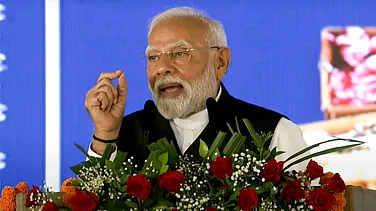
Campaign marked by theatrical performances, with Vijay urging voters to listen for one day, as narratives and strategies leave a lasting imprint beyond polls.
DMK frames issues like delimitation, Hindi imposition and fiscal devolution as structural fault lines rooted in Centre–State tensions and Dravidian ideology.
While identity politics and ‘North vs South’ debate energise cadres, shifts on the ground, including softening views on Hindi, raise questions on their long-term electoral resonance.
“On April 23, for one day alone, please listen to what I say. After that, every year I will listen to you,” declared actor-turned-politician Vijay as he wrapped up his election campaign on April 21 in Chennai.
The election campaign in Tamil Nadu, which began well before the formal announcement of polls, has been marked by such theatrical performances, often layered with politics, and, at times, infused with rhetoric and grandstanding. As the country awaits the people’s verdict in what is widely seen as one of the most complex and multi-layered elections in recent years, the campaign issues continue to simmer beneath the surface.
Beyond the immediate outcome, the narratives, imagery and campaign strategies deployed during this election are likely to leave a lasting imprint, shaping not only the trajectory of state politics but also Tamil Nadu’s evolving engagement with the Union government.
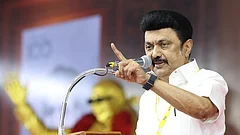


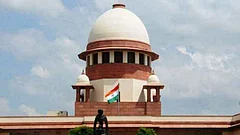
The theatrics that played out during the election were set well in advance, during the tenure of the M.K. Stalin government, when it was embroiled in a series of political and legal confrontations with the Union government, largely centred on questions of Centre–State relations.
How these issues, which lie at the core of the Dravidian ideological framework, will play out after the election remains an open question. Equally significant is whether they represent enduring structural concerns or are being invoked primarily for electoral mobilisation.
“Some of these issues, such as delimitation and women’s representation, are essentially national in character. In Tamil Nadu, however, Stalin has taken what is explicitly a kind of ‘anti-North’ position, in line with the older Dravidian political lineage. This may resonate to an extent within the State. But I suspect these issues will endure in the future,” says Ajay Gudavarthy of Jawaharlal Nehru University.
The durability of these issues lies precisely in their dual character: they are not merely electoral constructs, but structural concerns embedded in India’s federal framework. Their invocation during elections may sharpen rhetoric, but the underlying tensions—over representation, fiscal federalism and political balance—are likely to persist well beyond the electoral cycle.
Those who contend that the campaign’s key issues will not fade away, and were not merely theatrical devices, point to two underlying dynamics. First, many of these concerns have had a long gestation, periodically surfacing in Tamil Nadu’s political discourse well before this election. Second, they are not incidental but foundational to the ideological grammar of Dravidian politics, which has historically foregrounded questions of social justice, linguistic identity and State autonomy.
Vignesh Rajahmani, a political scientist, argues that the DMK’s articulation of issues such as NEET, Hindi imposition, delimitation, the National Education Policy and what it terms discriminatory fiscal devolution reflects a strategic consolidation rather than episodic mobilisation. By bundling these diverse concerns under a common ideological frame, the party is attempting to recast them as structural fault lines in India’s federal arrangement, rather than as isolated policy disagreements.
“Notably, within the broader delimitation debate, the question of representation in the Rajya Sabha did not receive much attention during this election. However, this is likely to emerge as a significant issue going forward.
The DMK has also appointed a commission on Centre–State relations, headed by retired Supreme Court judge Justice Kurian Joseph. The recommendations of this commission are expected to serve as a key reference point in shaping future political discourse,” Vignesh adds.
This framing serves a dual purpose. In the immediate term, it sharpens electoral messaging by linking governance questions to identity and regional rights. In the longer term, it positions these issues as enduring axes of political negotiation with the Union government. The implication is that, regardless of electoral outcomes, these debates are likely to persist, not only because they resonate politically, but because they speak to unresolved tensions within the federal compact itself.
Stalin, who helped foreground the ‘North vs South’ debate, further amplified it after the Union government pushed the women’s reservation measure while linking it to delimitation, a prospect long viewed with apprehension by southern States. The chief minister’s symbolic act of burning the Bill had a ripple effect on the campaign trail, energising party cadres and sharpening the narrative.
Leaders of the DMK framed the issue as one of identity and federal rights. Party workers across Tamil Nadu echoed this sentiment, invoking Tamil pride and continuity with the Dravidian movement’s legacy. “The BJP government is attacking the Tamil language and culture. C.N. Annadurai and M. Karunanidhi fought against it; now Stalin is continuing that battle,” says Shivakrishnan, a DMK worker, who came for a rally in Kolathur, Chennai.
Analytically, the DMK’s strategy reflects a calibrated attempt to fuse policy concerns, such as delimitation and representation, with emotive questions of identity. By doing so, it elevates institutional debates into markers of cultural and political assertion. However, this framing also invites contestation. The AIADMK and the BJP were quick to dismiss the narrative as a diversionary tactic, aimed at deflecting attention from criticisms and allegations against the State government.
While the ‘North vs South’ narrative appears to resonate strongly among cadres of the DMK, its ability to capture the imagination of the broader electorate remains uncertain. The issues invoked, delimitation, Hindi imposition and fiscal devolution, are not unique to Tamil Nadu, but are shared across several southern States. This raises questions about whether they can sustain themselves as mass political mobilisers beyond party structures.
T.T. Sreekumar of the English and Foreign Languages University points out two structural limitations. First, there is little evidence of coordinated political action among southern States on these issues, which weakens their potential as a broader federal front. Second, even within Tamil Nadu, the present moment does not mirror the intensity or scale of past mass movements such as the anti-Hindi agitations, which had a far deeper societal penetration.
He further suggests that while parties like the BJP may be engaging with these issues from a long-term strategic perspective, regional leaders such as Mamata Banerjee and Stalin face the challenge of sustaining their political salience over time. “Stalin’s emphasis on Tamil identity is thus both a political necessity and a strategic choice, but its durability remains contingent on how these issues evolve and resonate,” he says.
Crucially, Tamil Nadu’s political landscape itself appears to be in flux. The positioning of the AIADMK alongside the BJP, and the electoral performance of Vijay, introduce new uncertainties. “If Vijay manages a credible vote share, it may not come solely at the expense of the AIADMK, but could fragment the opposition space more broadly. In such a scenario, the possibility of a consolidated anti-DMK front in the future cannot be ruled out,” an outcome that, as Sreekumar suggests, could have significant implications for the trajectory of Dravidian politics itself. “There is no denying the fact that the influence of the Dravidian legacy will endure, but how far it can resist the push of Hindutva remains the critical question,” adds Sreekumar.
The Tamil identity question, articulated as a core ideological position by the DMK and the broader Dravidian movement, has historically found its most potent expression in opposition to Hindi imposition. However, on the ground, the sharp anathema once associated with Hindi, prevalent across both rural and urban Tamil Nadu, appears to be gradually softening.
Velumurugan, a cab driver in Chennai, puts it bluntly when asked about the language question: “You travel across major cities and towns in Tamil Nadu, you can find Hindi-speaking people everywhere. They have come here seeking better jobs, and in the process, they have popularised Hindi, softening the antagonism we once had towards the language.”
Rithikesh, an IT professional in Coimbatore, points to another visible shift on the ground, the rapid growth of Hindi coaching centres across Tamil Nadu. “People across the spectrum, doctors, entrepreneurs and students, are enrolling in Hindi tutorials,” he says. “The symbolism associated with the Hindi language will not be as effective as it once was in the State.”
These observations reflect a broader, ground-level shift that complicates the political narrative. Migration-driven cultural exchange, especially in urban centres, is normalising linguistic plurality in ways that political discourse often overlooks. While parties like the DMK continue to frame language as a site of resistance and identity assertion, everyday interactions are gradually reshaping attitudes, making them more pragmatic than ideological.
Analytically, this shift points to a subtle but significant transformation. While the symbolic power of linguistic assertion remains intact within political discourse, everyday practices, shaped by migration, media consumption and economic mobility, are recalibrating public attitudes. This creates a divergence between ideological positioning and lived experience: the political salience of anti-Hindi mobilisation may persist, but its emotional intensity and social embeddedness are no longer as uniform as they once were.
This evolving landscape complicates the Dravidian parties’ traditional reliance on linguistic identity as a unifying force. Even as they continue to deploy it as a marker of resistance and autonomy, its ability to function as a mass adhesive in the face of competing narratives, including those advanced by the BJP, is increasingly contingent rather than assured.
“The issues that Tamil Nadu raises, be it financial devolution, delimitation, or what is seen as the erosion of cooperative federalism, are substantive and cannot be dismissed. Ideally, the southern States should have come together on these concerns. However, parties like the Indian National Congress, which are in power in some southern States, face ideological constraints in fully embracing a North–South framing,” adds Gudavarthy.
Analytically, this underscores a key contradiction in the current political moment. While regional parties such as the DMK seek to consolidate a southern political identity around questions of federalism, national parties remain wary of endorsing narratives that may appear territorially divisive. This limits the possibility of a cohesive southern bloc, even when there is convergence on specific policy concerns.
But for the DMK, the issues it has foregrounded over the past five years are not episodic, they form the core of its ideological positioning. The challenge, however, lies in the changing social context. The conditions of the 1950s and 1960s, when anti-Hindi agitations propelled the party into the political mainstream, have undergone a significant transformation in contemporary Tamil Nadu.
The question, therefore, is not merely whether these issues can be invoked during elections, but whether they can be sustained as instruments of political resistance in a changed landscape, where identity, aspiration and opportunity intersect in more complex ways than before.
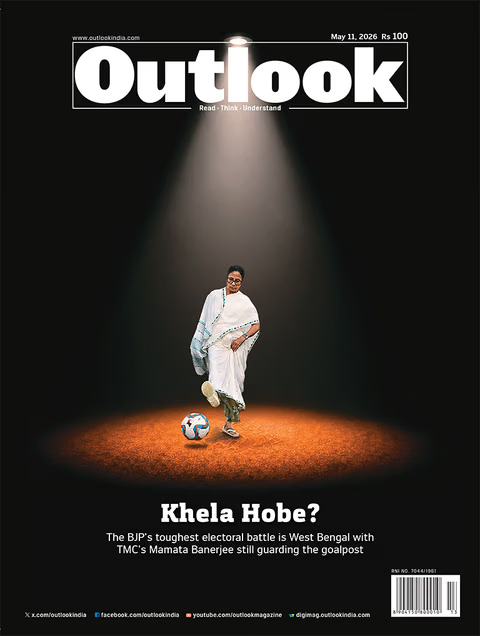


This article is part of the magazine issue dated May 11, 2026, called 'Khela Hobe? ' about Assembly Elections 2026 and how West Bengal may prove to be the toughest battleground for the Bharatiya Janata Party.
N.K. Bhoopesh is an assistant editor, reporting on South India with a focus on politics, developmental challenges, and stories rooted in social justice