






Murshidabad, once a glittering global trade hub, is now one of West Bengal's poorest districts, with broken roads, missing teachers, and despair.
Nearly 4.5 lakh of 27 lakh deleted voters are from Muslim-majority Murshidabad, raising fears of mass disenfranchisement ahead of May 4 results.
The BJP pushes ghuspetia and CAA, while TMC treads carefully; development failures and communal polarisation define a state in search of revival.
The Bhagirathi, flowing hesitatingly between the banks of Azimganj and Jiaganj in Murshidabad, pale and placid at this time of the year with a few fireflies twinkling on its banks, would be witness to the slow decay of a once glittering city. Folklore has it that Murshidabad with its precious stones and fine silk had five per cent of the world trade in the 18th century and was more alluring than London. Jagat Seth, an enterprising and shrewd financier, first to the nawabs of the region and later switching sides to the British, is said to have been the richest man on earth in the mid-1700s.
Today, Murshidabad is one of the poorest districts of West Bengal, as unadorned as fireflies in the daytime. The roads are broken, the houses in the villages are half-made, potatoes are rotting in godowns, teachers are missing in schools, there are no jobs, and the air hangs with despair. Murshidabad is also the district with a high concentration of Muslim population, nearly 70 per cent, and where the deletions in the Special Intensive Revision or SIR—the controversial move by the Election Commission of India (ECI) to revise the voters list just before the polls—has been the maximum. It is estimated that of the 27 lakh deleted voters who can still knock at the doors of 19 judicial tribunals for redressal, around 4.5 lakh would be from Murshidabad alone. In village after village, house after house, people allege names have been randomly struck off.



Subarnamrigi is one such village off the highway towards Kolkata, with nearly equal Hindu and Muslim population. The Hindu houses are at the beginning, with a small Durga temple in the middle. A few paces down the village road, the Muslim households begin, with a small mosque. There is nothing to tell between the two, the main occupation of both communities is farming—grains, a few pulses, vegetables and some fishing in the ponds. Most Muslim households claim there have been massive deletions of names from the voter list. Sonogram Bibi, in her 70s, rushes inside her ramshackle hutment and digs out all her identity cards to show anyone asking her about the SIR. She says she has been voting at least from the 1990s, in all Lok Sabha, assembly and panchayati polls, and yet this time, her name has been deleted. Strangely, the names of her two sons and daughters-in-law are all intact. She pleads with us to bring this to the notice of the authorities and get her name reinstated.

“How can a state go to elections with 27 lakh voters out of the voter’s list?” asks Mahua Moitra, Trinamool Congress’ (TMC’s) firebrand politician, whom we meet in her constituency Krishnanagar. “They have been simply disenfranchised. Murshidabad has the highest concentration of Muslims in India. It was the model district for the Sachar Commission (The Justice Rajindar Sachar Committee Report in 2006 concluded that socio-economic indices for Muslims were dismal in India),” she says. But the TMC is wary of saying how the SIR would impact its fate on the fourth of May, the counting day. The party’s supremo Mamata Banerjee and its emerging young leader Abhishek Banerjee don’t dwell on the voter deletions too much in their speeches. From going all out at the SIR a few weeks ago, there seems to be a recalibration as the polling day neared. “As the Bharatiya Janata Party (BJP) intensifies its campaign against the ghuspetia (Bangladeshi infiltrators), the TMC doesn’t want to be seen as a party siding with them,” says a local journalist. North Bengal, where Hindus form 61 per cent of the electorate and Muslims only 36.7 per cent, is the region the TMC had a poor showing in the last assembly elections, winning only 14 of the 43 seats.
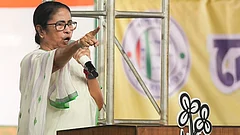
The TMC is wary of saying how the SIR would impact its fate. The party’s supremo Mamata Banerjee doesn’t dwell on the voter deletions too much in her speeches.
The BJP maintains the SIR is a scientific process to eliminate the discrepancies in the voter’s list—duplicate names, names of the dead still being listed, and so on. They argue this cleaning-up process has happened smoothly in other election-bound, Opposition-ruled states like Tamil Nadu and Kerala, so why this hue and cry only in West Bengal? There is no mention of SIR in the BJP leaders’ rallies. In those, it’s just an attack on Mamata Banerjee and with a distinct communal colour. Like the speech of Assam Chief Minister Himanta Biswa Sarma, a star campaigner for the BJP in the West Bengal elections, in Siliguri.
“She (Mamata Banerjee) keeps saying inshallah, inshallah and khuda hafiz, khuda hafiz in her speeches. Arre, do take Ram’s name also sometimes. So, if she doesn’t say, I will say it. Jai Shri Ram,” he thunders, marching across the stage, as the crowd roars back. (This appears to be a trend started by Mamata Banerjee, not to stand at the podium and deliver the speech, but walk to and fro with a cordless mike. Abhishek Banerjee does the same, and now some BJP leaders have taken the cue. Sarma even jives to the catchy BJP song for this election at the end of the speech, with others on the stage joining him). His one-hour speech is almost entirely on communal lines, attacking Mamata Banerjee, with a few minutes spent on development and welfare.
We want to meet him backstage, but he asks us to come to Bagdogra Airport for a chat. We catch him at the VIP section and he answers a range of questions. As his speeches have been controversial both in Assam and elsewhere, we ask him about his opinion on hate speeches: “We should understand the meaning of a hate speech. In India, there is a fear among the Hindus that we are losing our identity. That Partition was not fair to us. If expressing that sentiment is hate speech, then I don’t know. We have gone for family planning, but some people have not done family planning. So we are on the verge of being outnumbered. If I use swear words against Babur, I can’t be called a culprit. How many Hindus he killed? So Babur should be attacked and nobody should try to defend him. Nobody should try to defend Aurangzeb because he killed Hindus. I don’t say anything against Rahim, I don’t say anything against Abdul. So, Abdul, Rahim, Farooq are all fine by me.”
The BJP takes up the ghuspetia or Bangladeshi infiltrators in its rally speeches, but on the ground there doesn’t seem to be any resonance among the people, at least in the areas we travelled in. But Bengal does share its borders with Bangladesh, Bhutan, Nepal and further north with China. People coming from across the border—the one with Bangladesh is particularly porous with fencing only in some parts—getting their Aadhaar card made in India and taking the benefits of the various welfare schemes is common. There have also been a few cases of radicalised Muslims coming in from across the border to create mischief in the state. In these border districts, the ghuspetia rhetoric may have some traction, but it is not an election issue in central Bengal. “The illegal immigrant is the biggest bogey,” says Moitra. “The BJP has ramped this up in the last six to seven years. I have heard Modi say that safeguarding the border is the Centre’s duty. So why is it a state election issue?” she asks.
As we move down from north Bengal, the dark green, undulating tea gardens give way to paddy fields, vegetable farms and mango orchards. The overbearing poll issue of SIR also starts to fade away and issues of development, unemployment and lack of opportunity surface. Fifteen years is a long time for any chief minister and her government to deliver, but there is a clear sense of dissatisfaction among the people. But they also seem to be in a bind as most of them are not fully committed to giving the BJP the reins. Central Bengal has been the TMC stronghold, the party sweeping 67 of the 73 seats in the region in the last state polls with a vote share of a whopping 51 per cent. The BJP got only six seats and the party is giving it all to consolidate its position here.
We meet a senior BJP strategist, who didn’t want to be named, who says the party has gone from constituency to constituency to improve its winnability. Many small alliances have been formed with many Adivasis and Schedule Caste (SC) communities and, according to him, this will tilt the margin in their favour. For instance, the Matua community—Dalits who came from East Bengal at the time of Partition—form the second-largest bloc among SCs. Observers say they can impact the results in 30-odd constituencies and they are going with the BJP this time. We meet a Matua leader, improbably named Hitler Chowdhury in Siliguri (His father read Mein Kampf and was very impressed with Hitler’s nationalistic fervour, so he named his son after him. One would expect the son to be squeamish about it, but Hitler Chowdhury revels in his name, saying he has only imbibed the good qualities of the dictator). “The BJP has promised us citizenship rights under the Citizenship (Amendment) Act (CAA) if they come to power. We also want development, which we have not seen in the last 15 years,” says Chowdhury.
The BJP strategist also feels many Muslims will move away from the TMC this time and will veer towards the Left and the Congress because they are fed up with Mamata’s duplicity. We meet Congress leader Sachin Pilot campaigning in West Bengal at the Malda Airport Ground in Lalgola assembly constituency, about to board his chopper. “There is very high anti-incumbency in the state. We have sent a strong message to Congress workers by fighting in all the 294 seats,” he says. Anything the Congress gets will be an improvement as it scored a naught in 2021.
The TMC camp obviously doesn’t even entertain the possibility of the BJP making inroads or the Congress and the Left making any dent. “The high voter turnout is a clear indication that the Mamata government is coming back,” says a senior TMC MP. “So many voters have come out in droves to vent their anger against the politically motivated SIR, fearing they will be disenfranchised if they don’t vote this time. A number of Bengalis have come from all across the country to vote. From the first phase voter turnout, it is clear that the TMC is doing much better, even in regions it didn’t fare so well in 2021,” he adds. (The high voter turnout is read by both sides to its advantage. The BJP says it shows people’s disenchantment with the Mamata government and they have voted with such force to defeat it).
The green fields and the heavily laden mango trees give way to shanties and concrete as we drive towards Kolkata and south Bengal. This too is TMC’s citadel, the party winning a landslide 98 of the 101 seats in 2021. The BJP managed just two seats even though a third of the population in this region is Hindu. We go to Rajarhat to attend a rally of Abhishek Banerjee, Mamata’s heir apparent and one of the TMC’s most dynamic leaders. The ground is covered by a solid tin shed with chairs for everyone to sit. There is a giant screen behind the stage where the TMC anthem is playing on speakers. Shots of the crowds caught by the whirring drones flying overhead are intercut to the anthem. All so professional, it could have been a BJP rally.
Abhishek Banerjee, lean and nerdy, gets out of a black SUV, sprints up the stairs and is on the stage in a jiffy. He works the crowds, striding across the stage with a mike and they respond with fervour. The broad theme of the speech is Bangla pride and how Bengalis will never bow to outsiders. The candidate he is canvassing for is Aditi Munshi, 37, who is a singer by profession and one of the TMC’s 55 women candidates—the highest by any party in this election. The next day we attend a Mamata rally in Chowringhee, which is a more sedate affair, but then she is preaching to the converted. Her speech is meandering but the crowd is in rapt attention, laughing with her when she takes a dig at Modi. Can she pull off another win for the TMC, if not as spectacular as last time?
But whoever takes oath as the next chief minister of West Bengal will have their task cut out. As economist Surjit Bhalla points out, soon after Independence in 1950, West Bengal’s per capita income was 113.8 per cent relative to all-India. In 1976, it slipped to 90.3, a year before the Marxists would take control. The long Communist Party of India (Marxist) rule brought it down to 80.8 in 2010. But the worst was during Mamata’s rule, between 2011 and 2024, and now the per capita income in West Bengal is 70.3 per cent of the average big-state income. Beyond SIR and ghuspetia, beyond Bangla pride vs outsider, beyond macher jhol and jhalmuri, it will be this number which will be a constant, which will stare at the new government.



Satish Padmanabhan is managing editor, Outlook















