






In 2021, more than 58 deaths were recorded with over 300 cases of political violence recorded across eight phases of assembly elections.
In the 2023 Panchayat elections, 50 people were killed on polling day and following day
In 2026, 2,400 companies or 2.4 lakh personnel of the CAPF were deployed across the state, which is more than twicele the deployment in the 2021 assembly elections
As strong-room drama grips constituencies across Bengal before counting day, the state deals with an epithet it is not quite sure of how to handle. The 2026 Assembly elections have been termed as ‘death-free elections’, a rare occurrence in the state’s history. Over the two phases of elections on April 23 and April 29, no cases of death or major bombings were reported across 294 constituencies of the state.
Chief Electoral Officer of the state, Manoj Agarwal, hailed the peaceful elections as a “noteworthy achievement” of the central and police forces. “It is an achievement for us that no major cases of poll violence in terms of deaths or bombings have taken place in West Bengal. We have tried our level best… deficiencies if any will be ironed out in future,” he said.
The state has witnessed election-related deaths across all major elections in its recent past. According to US-based independent organization, Armed Conflict Location & Event Data Project (ACLED), West Bengal has witnessed the most election-related violence of all states in the country over the last six years. In 2021, more than 58 deaths were recorded with over 300 cases of political violence recorded across eight phases of assembly elections. According to reports and official figures, in the 2023 Panchayat elections, around 18 people were killed on polling day and following day, with the total deaths around 50. In the run-up to the 2018 Panchayat elections, 30 people were killed, while polling day recorded 13 deaths.



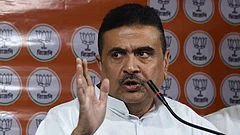

While the ‘peaceful process’ has been hailed and noted by all stakeholders and analysts, numerous questions have been raised on the heavy deployment of paramilitary forces and the state apparatus at play. With Bengal accounting for a major percentage of election-related violence in the country, a higher concentration of paramilitary forces was aimed to ensure efficiency. Prior to the elections, more than 2,400 companies or 2.4 lakh personnel of the Central Armed Police Forces (CAPF) were deployed across the state, which is more than double the deployment during the 2021 assembly elections (1,100 companies). In addition, 77 police observers, including encounter specialists, have also been brought into the state to monitor particularly sensitive areas, and 165 additional counting observers have also been deployed.
Ahead of the second phase, the Election Commission of India (ECI) had also brought in National Investigation Agency (NIA) officials, to ensure 'bombs are not used' by miscreants. Home Minister Amit Shah further announced that almost 700 companies (70,000 personnel) would remain in the state after results are declared on May 4. In another first, to further bolster polling security, the Election Commission of India marked 100-metre perimeters/restricted zones around polling booths, described as a “Lakshman Rekha.” In numerous booths, polling agents of the ruling party were met with strict actions from the CAPF, regarding which the ruling dispensation has cried foul play.
Central forces resorting to intimidation: TMC
The Trinamool Congress Government, at loggerheads with the ECI, has repeatedly criticised the deployment alleging ‘central overreach’ and intimidation. Over the course of the two phases, the TMC top brass has highlighted instances of central authorities allegedly exerting pressure on people and party cadres, including distributing BJP’s pamphlets in one instance. Chief Minister and TMC supremo Mamata Banerjee has repeatedly criticised the deployment and the concentration of personnel across booths, alleging that the central forces were engaging in partisan acts.
Following the second phase, Banerjee said, “The atrocities by the central forces are unprecedented. What is happening is not at all free and fair polls…Central forces are supposed to guard the country's borders, but instead they are working for a particular party. They have assaulted so many of our cadres and have forced our polling agents to leave the booths.”
Prior to the elections, a social media post from the Election Commission of India’s (ECI) official had raised eyebrows among critics, when it issued a warning, as “straight talk” to the TMC and said that the upcoming elections in West Bengal should be “fear-free, violence-free, intimidation-free, inducement-free, raid-free” and without any “raid, booth jamming and source jamming”. Despite no major instances of violence, bombings reported across two phases; re-election took place across 15 booths in the state.
Analysts attribute the lesser incidents of political violence to a much-curtailed electoral span (2 phases as opposed to eight phases in 2021) and the heavy deployment ratio - 1 CAPF personnel for every 100-150 voters across constituencies over the two phases.
Critics Sound Post-Poll Warning
Former MP and retired IAS officer, Jawhar Sircar points out that election-related deaths are recorded factoring across few days before and after the polling dates rather than being specifically linked to election-day. “The fact that there was no death on polling-days is creditable, but we must also remember, the figures related to elections in the state is a larger media creation, with every death in every aspect linked to elections, especially in the last decade. There is an element of unverifiable exaggeration linked to the image here,” says Sircar.
Sircar, who served as the Chief Electoral Officer of the state for two elections, also points out the psychological factor coming into play for the Centre's image at large. “With wholesale rearrangement of administrative structure, almost 300-400 officers of consequence removed, and deployment of 2.4 central force personnel, the Centre would be badly hurt if anything went wrong. It was its own de-facto litmus test. It is a question of contesting images at play, as Amit Shah has repeatedly pressed on the fact that law and order is a state subject. But the deployment numbers in Bengal contrast that.”
Critics, including Sircar, fear that the image of violence-free elections being created disguises the tension without solving the issues lying deeper. “If no side is willing to accept defeat, there will be violence of a scale we have hardly seen - which would be inversely related to the image of peaceful elections projected before the results,” predicts Sircar. He believes that ‘administered peace of a day-or-two is not reflective of the violent mood that exists in Bengal’ as there has been a perpetuated culture of violence by all parties.
The apprehension regarding violence following the results is shared by numerous commentators. Sircar adds, “Kolkata Police and West Bengal Police are in absolute shambles owing to the restructuring carried out by the ECI. Lines of command have been completely blurred with individuals aware of disruptive elements and networks now transferred. Once the central forces are withdrawn, there will be an absolute vacuum.” He believes that the retention of personnel, as announced by Amit Shah, can work temporarily, but any number after the initial deployment figures (more than 2.4 lakhs) will ‘end up being patchy.’
The concerns have started finding ground with recent developments. Despite heavy monitoring, the assembly constituency of Falta, in South 24 Paraganas, stands at the centre of controversy. Following a probe, the ECI has ordered re-polling across all 285 booths of the TMC-stronghold, ‘on consideration of severe electoral offences and subversion of the democratic process’. Besides unrest across booths in the region, voters had complained of polling buttons on the EVM being covered with adhesive tape or ink. The poll panel has said re-poll across all the booths, including auxiliary polling stations, will be held between on May 21, with results on May 24. Critics have raised questions on how such lapses could take place despite heavy armed forces deployment and the possibility of further unrest in the booths, many of which (in which re-polling took places) are Muslim-majority areas.
Falta was in the news even before it went to polls, when an exchange between TMC candidate Jahangir Khan’s associates, and the ECI-appointed Special Police Observer, Ajay Pal Sharma, an IPS officer of the Uttar Pradesh cadre became viral on social media. The TMC condemned the action with state finance minister Chandrima Bhattacharya saying, “The media calls him an ‘encounter specialist’. We wonder what such a police officer from Yogi Adityanath’s State is doing here? How can he visit a house and issue threats to women when the male members are not around? Has he been given the charge of arresting people without a shred of evidence?”
While peaceful elections have been hailed, critics are apprehensive of the faultlines that lie below the surface as the state walks into one of the tensest counting days it has ever witnessed.















