






Over 18 per cent of the 3.21 crore electors voted in the first two hours of the second phase of polling in West Bengal amid sporadic violence.
Tension gripped the Bhabanipur seat briefly as Chief Minister Mamata Banerjee and Suvendu Adhikari took swipes at one another in the same booth area.
Banerjee was already seated outside the booth after receiving complaints of alleged intimidation of local TMC leaders when Adhikari arrived there amid heavy deployment of central forces.
Under a sun that had barely begun to bake the streets of South Bengal this Wednesday, the air was already thick with a familiar, heavy tension. By 7:00 AM, the quiet hum of Kolkata and its neighbouring districts was replaced by the rhythmic shuffle of feet as voters—some 3.21 crore of them—began lining up for the second phase of the Assembly elections. This isn’t just another phase; it is a march into the state’s political soul, covering the high-stakes corridors of Hooghly, Nadia, and the 24 Parganas. By 9:00 AM, the numbers told a story of deep engagement: an 18.39 percent turnout, with the rural stretches of Purba Bardhaman leading the charge.
But the data points of turnout and gender ratios—including nearly 1.57 crore women and 792 third-gender voters—were quickly overshadowed by a high-voltage human drama in Bhabanipur. In a move that shattered years of electoral ritual, Chief Minister Mamata Banerjee swapped her usual late-afternoon ballot for an 8:00 AM patrol. The sight of her seated outside a booth in Chakraberia, visibly simmering over reports of voter intimidation, set the stage for a cinematic face-off when her arch-rival, Suvendu Adhikari, rolled in flanked by a phalanx of central forces.
The exchange was a microcosm of the state's fractured politics. "I will not allow any hooliganism," Adhikari declared with the practiced steel of a challenger. Behind him, the Chief Minister’s voice carried the weight of a leader who feels her home turf is under siege. She spoke of "terror" unleashed by central forces in the dead of night and accused the very machinery of the election of bias. It was a rematch of their 2021 Nandigram duel, played out not in the muddy fields of the coast, but in the urban lanes of Chetla and Padmapukur.

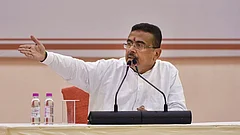


Beyond the VIP standoff, the "festival of democracy" bore its usual scars. In the narrow lanes of Liluah, an EVM malfunction turned a patient queue into an agitated crowd, eventually met by the blunt force of a lathi-charge. In Panihati, the atmosphere turned somber and sharp as Ratna Debnath—the BJP candidate and mother of the RG Kar victim—found her vehicle blocked by protesters, a poignant reminder of the raw emotions still swirling around the state’s recent tragedies. From the recovery of a firearm in Jagaddal to the vandalized camp offices in Shantipur, the day was marked by a jagged edge of sporadic violence.
For the Trinamool Congress, this phase is about protecting a fortress; in 2021, they swept 123 of these 142 seats. For the BJP, it is a desperate attempt to prove that their influence isn't restricted to the northern hills. As the day progresses, the quiet bravery of the common voter—standing in line despite the mock polls turned brawls and the bike-borne gangs in the distance—remains the most resilient part of the Bengal story. It is a battle for the heart of the state, fought one ballot, and occasionally one confrontation, at a time.
















