






Bhattacharya brought with him a political polish that was missing in BJP’s primary outreach in the state in the recent past.
Experts say having Bhattacharya at the wheel enabled the BJP to gain in Bengal’s Presidency region while building a sense of trust urban middle-class voters could relate to.
Bhattacharya's wit and penchant for limericks sit well with the urban crowd.
Samik Bhattacharya isn’t BJP’s usual poster boy. He talks about his knack for fountain pens, quotes Tagore, and modulates a bassy voice defined by a sense of moderation not very synonymous with the saffron camp of the present. The president of the party in West Bengal, Bhattacharya has been at the forefront of BJP’s campaigns, addressing and interacting with the popular space in a way which speaks of control, confidence, and composure.
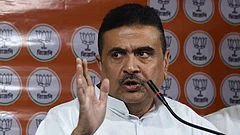
In line with the BJP’s strategy to run campaigns without a chief ministerial face, the party’s pre-poll campaigns catered to a definite plan and a concise understanding of gaps, scope and reach that the camp warranted in Bengal. While Prime Minister Narendra Modi and Home Minister Amit Shah served as the crowd-pulling faces of the overwhelming number of rallies and addresses across the state, Samik Bhattacharya and former Leader of Opposition, Suvendu Adhikari played competent supporting roles, each in their own distinguishable language and style.
The popular notion prior to polls pitched Adhikari as the face of the party moving into the elections, but since 2025, Bhattacharya’s parallel space was not only firmly established but also given primary media space - mostly representing the party’s de-facto official voice in Bengal. A Rajya Sabha MP and veteran leader of the party, Bhattacharya finds his roots in the RSS. Joining the Bharatiya Janata Yuva Morcha (BJYM) in the 90s, he rose up the ranks to lead the BJYM’s Howrah district zone. He was later elevated to the position of the youth wing’s state general secretary, a post that he held for 10 years.

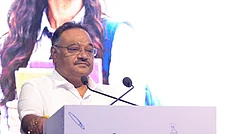


Despite not having a strong electoral track record, he holds the distinction of becoming only the second person from the BJP to be elected to the West Bengal assembly, winning from the Basirhat Dakshin seat in a 2014 by-election. Hailed as someone who has witnessed the bloom of the party in the state, he has been a consistent presence since BJP's nascent days, guided by the likes of former Union Minister and noted leader from Bengal, Tapan Sikdar.
Wearing a sombre expression on his face, Bhattacharya has always been praised for his oratory skills which commentators feel, have been shaped by his experience of growing with the party. However, Bhattacharya found himself battling for relevance in the party as it failed to find momentum in Bengal even after the BJP’s rise to power in the Centre in 2014. Despite becoming a spokesperson, his position within the party did not materialise into recognition as names such as Dilip Ghosh and Sukanta Majumder took centre-stage before the arrival of Adhikari into the saffron camp.
The BJP, despite managing to win 77 seats in the 2021 state elections, had faced a thumping defeat in the state at the hands of the Trinamool Congress in the 2024 Lok Sabha elections. Dilip Ghosh, the man behind the party’s rise in 2021, was sidelined as Adhikari became the primary opposition face. Despite finding good ground among major SC voter bases and Hindu-majority constituencies, the urban appeal continued to elude the party. However, as Bhattacharya was named state president in 2025, the BJP underwent a strategic shift. Old guards were reframed into the mainstream equation, as the BJP attempted to alter its tactics and appeal beyond the lines of specific traditional voter bases.

In the run-up to the 2026 elections, Mamata Banerjee went on to pitch Bengali Ashmita as the core poll plank and ramped up her attack on the BJP as a Hindi-speaking mercenary ‘outsider party’ incapable of grasping the nuances of Bengali culture in the run-up to the elections. In Bhattacharya was BJP’s bid to appeal to the middle-class urban voters in and around Kolkata, where the BJP had failed to gain any ground. Dilip Ghosh and Suvendu Adhikari, who had often resorted to crude verbal attacks in language that invited more flak than fortune in Bengal’s urban liberal circles, found a space diametrically opposite to that of Bhattacharya.
As fish and meat became flashpoints in the run-up to the 2026 polls, Bhattacharya took the questions head-on. He had rhetorically asked at a press conference - “Bangali, machch khabe na?” (Won’t Bengalis eat fish?) and spoke about the non-vegetarian and diverse food habits in states like Bengal and Bihar. When pointed out that meat bans had been imposed in the latter, he had quipped that he would send people from Bengal, if needed, to ensure that any such thing did not happen in the neighbouring state. He has emphasised on his choices as a Bengali numerous times, which many feel, potently fed the party's vision in having an urban yet organisationally produced face.
Residing in Salt Lake, an upscale area of Kolkata, Bhattacharya brought with him a political polish that was invariably missing in BJP’s primary outreach in the state. Rarely spilling anything loose, Bhattacharya’s appearances at rallies and interactions with the press have been marked by moderation and restraint. Critics attribute his style to the pedigree of BJP’s yesteryears under the helm of Atal Bihari Vajpayee, who also has also been Bhattacharya’s political exemplar. He has often quoted Vajpayee, highlighting his fondness of fish, literature, and culture.
Commentators believe Bhattacharya’s elevation as state president and a parallel face of the party’s campaigns comes with strategic relevance. Suvendu Adhikari, despite presenting himself as the strongest opposition voice and the most prominent face in the anti-TMC crusade, was, for many, still a turncoat leader once involved in Trinamool’s corruption scandals, and a proponent voice of Hindutva who would not think twice before unleashing communal barbs doused in vitriol. From threatening to teach people who went against Hindus, a lesson like ‘Israel did to Gaza’, crediting Hindu voters for his wins in Nandigram and Bhabanipur and promising to work for them solely to blaming the episodes of post-poll violence on ‘people who go to madrassas’, Adhikari, has vocally, taken the Himanta Biswa Sarma route, openly brandishing his Hindutva ideals.
Critics say it is here that Bhattacharya contrasts the flared-up (yet essential) presence in the Hindutva machinery. “We are not against nationalist Muslims. West Bengal belongs to everyone. We are against fundamentalist Muslims deciding the course of the state and its policies,” he had said in an interview, in sharp contrast to the tone of Adhikari. When questions were raised on post-poll violence in Bengal and bulldozer rallies on the streets following BJP’s victory, he clarified that if any of the people involved in these activities were members of the party, he would personally ensure that they are expelled and arrested, emphasizing on the need for law and order in the state. “If we are unable to control and address the instances of violence, I should resign from my position,” he added.

Bhattacharya's wit and visible penchant for limericks and quips have also sat well with the urban crowd. He often speaks of his experiences with leaders from other camps, and episodes shaped by political courtesy, to the extent of praising Mamata Banerjee as an able and towering political leader, while his colleagues went on the offensive. Many experts feel having Bhattacharya at the wheel enabled BJP to gain in Bengal’s Presidency region (40 seats wrested from the TMC) while building a sense of trustability and relatability with urban middle-class voters. In addition, much of the BJP’s success in the elections is being credited to the return of the party’s old guards, the organisational glue behind which has been attributed to Bhattacharya.
As the new Chief Minister takes oath tomorrow, Bengal joins the saffron map of the country for the first time in its history. For many, the optics of running government from Writers' Building (the secretariat building used prior to 2011), hosting the swearing-in ceremony from the iconic Brigade Grounds and that too, on the birth anniversary of Rabindranath Tagore are strategic opening attempts at establishing itself as a party conversant with Bengal’s culture. In Samik Bhattacharya, was a strategic push for moderation and presentability on the urban map, which observers feel, would have probably not taken to Hindutva politics in its otherwise stiff, linear, and heady form.















