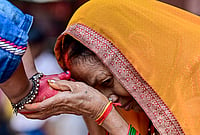
Among the 81 seats in the Jharkhand Assembly, Koderma is the only constituency that has been represented by women continuously for nearly three decades. The steady presence of women leaders in the Koderma Assembly seat remains one of the more striking features of Jharkhand’s political landscape.
This trajectory, which began in the late 1990s, continues even today, with leaders such as Annapurna Devi and Dr. Neera Yadav leaving a strong imprint on the constituency. Another notable aspect of Koderma at present is that both the Lok Sabha and Assembly seats from the region are represented by women. After serving several terms as an MLA, Annapurna Devi has represented Koderma as a Member of Parliament since 2019 and is also a Union minister. Dr. Neera Yadav, meanwhile, has been the sitting MLA from Koderma since 2014. Both leaders belong to the BJP.
One of the main reasons often cited for the strength of women representatives here is their close connection with grassroots workers. This relationship helped shift the constituency away from the traditionally male-dominated political structure and ensured that women leaders continued to receive support and opportunities to rise to positions of influence.
At the same time, the leadership of women in the Koderma Assembly seat did not emerge simply because they are women. It also followed a familiar political pattern seen across many parts of the country. As is often the case in Indian politics, when a sitting male representative dies and his son is not yet politically established or eligible, the party frequently nominates the wife to carry forward the political legacy.



Union minister Annapurna Devi’s entry into politics followed this very pattern. Born in 1970, she entered electoral politics in 1998 after the death of her husband, Ramesh Prasad Yadav, a multiple-term MLA from the Janata Dal. Later that year, she contested and won the by-election from Koderma. Carrying forward her husband’s political legacy, she went on to win successive Assembly elections in 2000, 2005, and 2009, gradually turning Koderma into a stronghold. During this period, she also served as a minister in the governments of Bihar and Jharkhand, handling departments such as Mines, Industries, and Women Welfare.
However, the 2014 Assembly election marked a turning point in her otherwise uninterrupted electoral journey, when she lost the seat to BJP’s Dr. Neera Yadav during the Modi wave. It was the first major electoral setback of her political career. Even so, she remained active in politics and continued to strengthen the organisation as the state president of the RJD. In 2019, she made a significant political move by joining the BJP.
She staged a strong comeback in the 2019 Lok Sabha elections, winning from the Koderma parliamentary constituency and marking her entry into national politics. In 2021, she was appointed Minister of State for Education in the Modi government. Apart from her ministerial responsibilities, she has also served as one of the national vice-presidents of the BJP, further consolidating her position within the party and in national politics.
At present, Annapurna Devi serves as the Union Cabinet Minister for Women and Child Development, and she continues to enjoy a strong reputation in her constituency. Seen as an influential OBC leader with a firm grassroots base, she is today recognised not only in Koderma but across Jharkhand’s political landscape. She holds a Master’s degree in History from Ranchi University.
MORE FROM THIS ISSUE
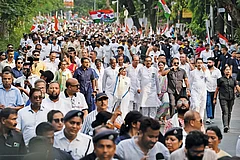


Over the past three decades, the people of Koderma have repeatedly accepted women’s leadership despite the deeply patriarchal nature of electoral politics elsewhere. As a result, the constituency has come to be seen as a notable example of women’s political presence in the region. This trend can be traced back to the tenure of Rita Verma, a multiple-term Member of Parliament from Dhanbad and a Union minister in the Atal Bihari Vajpayee government, and it continued with greater visibility during the period of Annapurna Devi’s leadership in Koderma, where political power has often remained in the hands of women.