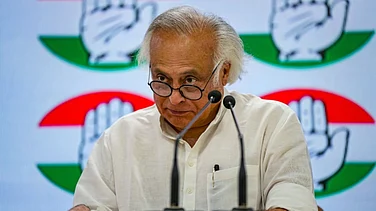
Union Minister for Women and Child Development Annapurna Dev paid tributes to the innocent civilians who lost their lives.
The attack, carried out by the Pakistan-based group Lashkar-e-Taiba, didn't just target a location; it targeted families.
The memory of Pahalgam also carries the weight of India's steel-willed response.
It has been exactly one year since the quiet, pine-scented air of Pahalgam was replaced by the smoke of gunfire and the cries of the innocent. On Wednesday, the nation paused to look back at that "dark chapter," as Union Minister for Women and Child Development Annapurna Devi led a sombre wave of tributes to the 26 lives lost in a tragedy that felt less like a political statement and more like a wound to the country’s soul.
The attack, carried out by the Pakistan-based group Lashkar-e-Taiba, didn't just target a location; it targeted families. Most of the victims were tourists—mothers, fathers, and children—who had travelled from across India to seek a moment of peace in the valley’s legendary beauty. "This is a dark chapter of cowardice and inhumanity that the nation can never forget," Devi shared in a moving post on X, capturing the collective grief of a nation that still remembers the names and faces of those who never came home.
But the year has been defined by more than just sorrow. The memory of Pahalgam also carries the weight of India's steel-willed response. Following the tragedy, the government launched Operation Sindoor, a massive military counter-offensive that saw Indian forces dismantle terror hubs and military infrastructure across the border and within Pakistan Occupied Kashmir (POK). It was a clear, loud message that the blood of innocent travellers would not be shed without consequence.

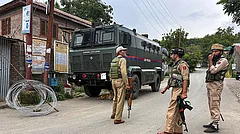

Today, as flowers are laid at memorials and security remains tight across Jammu and Kashmir, the atmosphere is one of defiant resilience. While the political and military machinery continues its work, the day belongs to the families. For them, Pahalgam isn't just a news headline or a strategic milestone; it’s an empty chair at the dinner table. One year later, India stands with them, proving that while time moves on, the promise to remember—and to protect—remains unbroken.
The legacy of that afternoon in Pahalgam is now a quiet, enduring presence in the homes of those left behind. For the families of the 26 victims, the first anniversary isn't just a milestone of national security; it is a day of deep, personal silence. While Operation Sindoor provided a sense of justice, it cannot fill the void left by a parent or a spouse. As the valley begins to see the return of tourists, it does so with a heavy heart and a watchful eye, carrying forward the memory of those who simply wanted to witness "Paradise on Earth" and found themselves instead at the centre of a nation’s collective mourning.