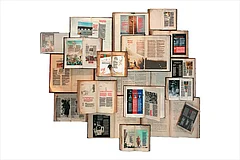
Magazines remain exciting and unpredictable, offering a complete reading experience beyond the digital scroll.
The tactile pleasure of a new magazine and the habit of waiting for the next issue still endure.
A magazine has a great user-experience, it doesn’t need charging, the batteries never die, it doesn’t hurt the eyes, doesn’t have crawlies, and can be switched off whenever one wants.
Always and Forever
Over 30 years ago, when I joined the weekly Sunday as a reporter, everyone around me said it was a big mistake. ‘The age of magazines is over’ was the chorus. Sunday Magazine did close down for various reasons but the age of magazines was not over. Evidently, it still isn’t as this special issue of ‘30 Years of Outlook’ proves. There is something exciting, unpredictable and complete about a magazine. The thrill of sitting down with a new edition of a magazine, holding the cover to the light to examine its design, opening the first pages, to look at the contents to savour what’s inside, then to flip the pages to give a look-see at the various stories and articles, stopping at some stunning photograph or an illustration, and then finally zeroing in on which article to start reading from is a unique experience.
It offers a sense of liberation; the editors may have curated the magazine carefully, going from serious stuff to the back-of-the-book stories, keeping similar themes stacked together, breaking it between reportage and opinion pieces, but the reader is free to read from wherever she wishes, even begin to read from back-to-front. A magazine has a great user-experience, it doesn’t need charging, the batteries never die, it doesn’t hurt the eyes (though it can sometimes make the head spin), easy to scroll up or down, doesn’t have crawlies, and can be switched off whenever one wants.
Magazine Junkies
Most readers of my generation would be magazine junkies, as there was nothing much else in way of education or entertainment while growing up. They would remember as children the eagerness with which they would await the next issue of a Chandamama or a Champak, or later Target. In my house, there would be a bunch of English, Hindi, Tamil and Malayalam magazines on our sun-mica coffee table in the living room. There would a fight to get our hands first on an Illustrated Weekly of India, the great broadsheet with huge photos or a Dharmyug. We would keep the dour EPW (Economic and Political Weekly) for later and lunge for the flighty Blitz. Then there would be Tamil magazines my parents bought from the shop called Madras Concern in Karol Bagh—the pocket-sized Kumudam and Vikatan for films, short stories, gossip and jokes or the larger Thuglak for politics and Cho Ramasawamy’s cutting satire. We kids couldn’t read Malayalam and would wait patiently for father or mother to get free to read us the latest adventures of the cartoon characters Bobanum Mollyum in Malayala Manorama.



Perennial Charm
There were magazine lending libraries those days. ‘Library’ is too grand a word, these were shops in a DDA market often squeezed between a chaatwala and a cycle-repair kiosk, which lent out magazines for a small fee. The person at the shop would maintain a register of when we borrowed the magazine and pencil in a due date on the cover. There would be a melee to grab the new editions at the beginning of a month. Sometimes you could get hold of a weekly magazine only at the end of its cycle. I would come home with a bunch of magazines and there would be a clamour to finish them before the due date so no fine was imposed.
Later, when I was in college, I would spend hours in the British Council Library or the American Centre greedily devouring a New Yorker, GQ, Esquire, National Geographic, Culture, The Sunday Magazine or even Photography Today and Golf Digest in the cool hush of the air-conditioning, with free drinking water. While studying in Bangalore, I would be more often in the numerous reading rooms of the city than in classrooms. Even today, I go to the India Habitat Centre’s fantastically stocked library with the same zest, and open a new issue of Sight and Sound or Granta or Wired with the same anticipation.
I hope the age of magazines doesn’t end, at least in my lifetime. When this hectic phase of life is over, when I would be able to put up my feet and relax, it is not Instagram or YouTube, Netflix or Amazon, newspapers or websites that I foresee myself to be addicted to. I see myself sitting on a comfortable chair, looking at the changing hues over mountain peaks or listening to the lashing of waves, with a fully-loaded magazine in my hands.
Satish Padmanabhan is the Managing Editor, Outlook magazine


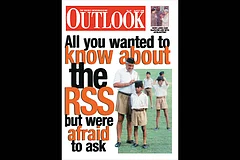
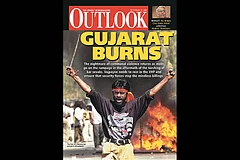

This article appeared as 'In Defence of Magazines' in Outlook’s January 01, 2026, issue '30 years of Irreverence' which commemorates the magazine's 30 years of journalism. From its earliest days of irreverence to its present-day transformation, the magazine has weathered controversy, crisis, and change.