


To Men Who Write Women Off
Women have always lived on the margins of power. Yet history shows that change begins precisely from those edges. This is a story about claiming space in a newsroom shaped by men, about refusing inherited hierarchies and the price of insisting on being visible, uninterrupted

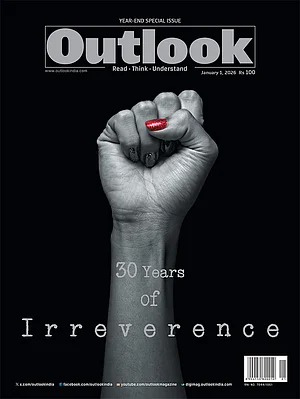
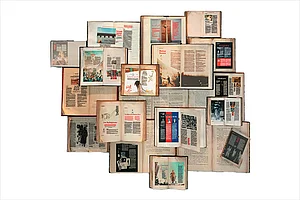
Fully-Loaded Magazine: 30 years of Irreverence
Thirty years ago, Outlook set out to ask uncomfortable questions and tell stories others would not. This piece traces a turbulent journey, from near collapse to cautious renewal
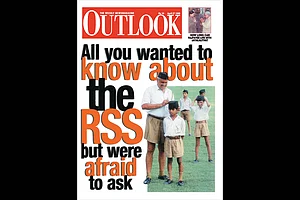
The Binary Vision: 30 Years of Religion and Politics in India
Communalism in India is neither an aberration nor a recent invention. Yet, over the last three decades, these latent fissures have acquired a sharp political grammar, transforming faith into an organising principle of power. This special package looks back at key moments, forgotten reportage and defining debates that mapped this transformation.
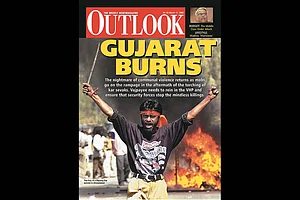
The ‘Othering’: How Majoritarian Politics Redefined Belonging in India
Through its archives, reportage and covers over three decades, Outlook traces this journey of othering, charting how fear, faith and politics converged to redraw the boundaries of citizenship, and asking whether this tide has reached its peak or is still rising
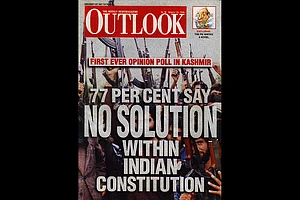
Zone Of Interest: Outlook’s Relentless Reporting Conflict and Change
Unpacking uneasy truths with clarity and uncompromising journalism.
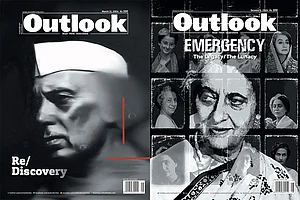
Saints And Scoundrels: Outlook's Portraits Of Influence
From Nehru to Narendra Modi, Outlook has profiled the people who shaped key political and cultural moments in Indian history
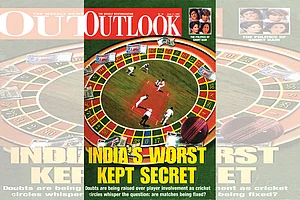
Outlook's Scoops, Scams, Scandals: The Stories That Would Not Stay Buried
Outlook magazine was founded with the idea that journalism as a public record mattered. Over the years, the investigations the magazine has carried out have changed the face of India.
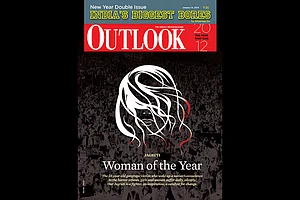
Jungle Raj: Outlook’s Chronicle of Violence, Justice and Resistance
For decades, Outlook has borne witness to India’s darkest moments, crimes that shattered lives, exposed power and prejudice, and tested the nation’s conscience. From Delhi to Kathua, Mumbai to Kolkata, these stories are not just records of violence, but acts of remembrance and resistance.
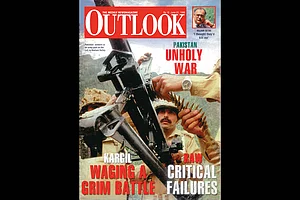
The Deadly Theatre: Outlook Bears Witness To War
Across borders and decades, Outlook has documented conflict not from war rooms but from ruined homes, silenced streets, and surviving voices, because war is never distant, never abstract, and never someone else’s tragedy
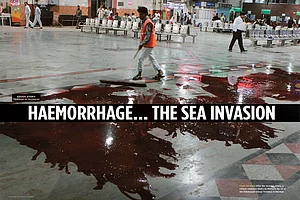
Parliament to Pahalgam: Outlook’s Frontline Reporting
Three decades of recurring attacks, delayed justice, and civilians paying the price remind India that the shadow of violence still lingers.

The Outlook Mirror: Chronicling The Stories India Lived
In its 30-years, Outlook magazine has chronicled India's life, culture, and pivotal social moments.

A Feminist Outlook: Women's Rights, MeToo, And The Resistance
Crime against women has continued, their political representation is still low and their participation in the workforce is yet to be recognised.

The Invisibles: Outlook Chronicles How Caste Shapes India
For Outlook, telling stories of the oppressed and bring to the readers the most inhuman have always been a very important area to cover.
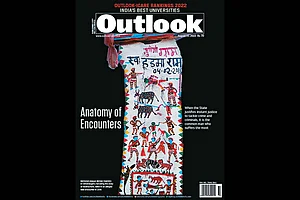
Outlook's Notes From The Underground: 30 Years Of Truth To Power
In its 30 years, Outlook magazine has always found itself telling the stories that those in power didn't want told and amplifying the voices of underdogs
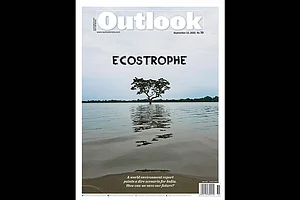
Jal, Jangal, Jameen: Outlook's Coverage Of Land, Environment, And Survival
The fate of the planet hinges on the course human activities will take. Will the future end in flood and fury? Or will humans evolve a new way of life to save us from ourselves?
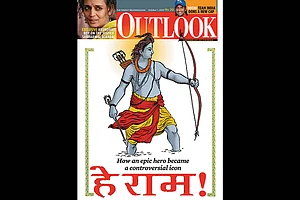
The Myth Factory: Belief, Politics, and the Making of New Ayodhya
How faith, power, and spectacle converged as Ayodhya transformed into a symbol of cultural assertion and political ambition.

Always And Forever: May The Age Of Magazines Never End
Magazines survived, not by racing against the times, but by refusing to be rushed by them. This special issue marking 30 years of Outlook is proof that the form endures, not merely as a container of news, but as an experience in itself.