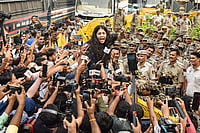
The abandonment of women and others by the system is a function of patriarchy that still resists women as equals.
We looked at the women of the Ramayana as an interrogation of dominant narratives.
Often cases involving Muslim women are framed as a fight between secular and personal laws. In doing so, we ignore larger, more interesting questions.
In the country of Ram, the mythological deity, the story of Sita, his wife, is often linked with his fate and almost never looked at as a story of a woman pitched against patriarchy. Sita, the feminist, was the one who walked away. Betrayal by men didn’t turn her into a weak woman. She walked on fire and remained unscathed. Sita made a choice. She was a woman, unbound.
Sita is us.
Sita’s story is also ours. Of discrimination and of betrayal.
The abandonment of women and others by the system is a function of patriarchy that still resists women as equals. Their work is often ignored and they are often seen as “puppets” by men and other enablers of this discrimination. They are called emotional and therefore, they are rendered as dysfunctional in a system designed to favour men and their rage.

Violence is of all kinds. Crime against women has continued, their political representation is still low and their participation in the workforce is yet to be recognised.


Women’s bodies are sites of resistance and not submission or violence. The mango tree with the bodies of two minor girls hanging from its branches in UP’s Badaun in a 2014 rape case, the memories of the body of a Dalit girl in Hathras in 2020 burnt to erase evidence, the endless trauma of the 2012 Nirbhaya gang rape case in Delhi, the stories of many witch-hunts across the country are just a few among the many kinds of violence and abuse that women suffer in our times and in our land. It is still a man’s world when those that fought for catharsis after having suffered abuse at the hands of the powerful men have had to step back and deal with the shame of speaking out about their bodies and souls.

We, the women and others of India, have been fighting for equality and fairness for a long time and yet, we suffer from the wrath of the system that has always favoured patriarchy. The long road to find equality and justice for the LGBTQ community is yet to find an ending.
The stigma is real. The violence too. The stories of women that Outlook had reported on are a testimony to all of this and more as women continue to challenge and to wage their battle against the rage of men.
Sita’s redemption is yet to come. And it will. Women journalists and their allies will tell the stories as they must be told. With empathy and emotion so that we remember that we are not victims but a force of resistance.

Consumed by Political Motivation: The Women’s Reservation Bill was passed after 27 years. But is it a landmark win or a grand spectacle?


Breaking Barriers: In this issue, we attempt to reset beauty standards by telling stories of empowered women in the hope that these inspire more women to be wise and competent, not merely kind; to be strong and ambitious, not merely graceful
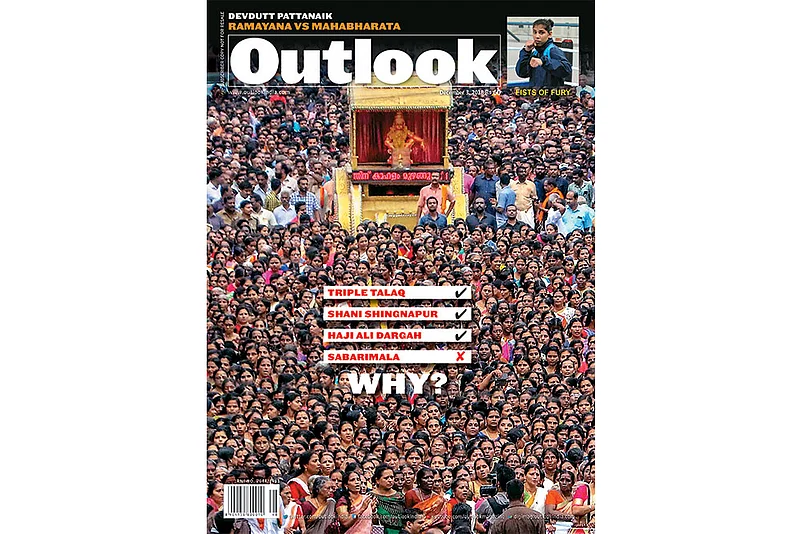
Women’s Entry into Sabarimala: Not so very long ago, Sabarimala would have been an unknown entity outside Kerala. Now, this debate over gender bristles with implications for a host of questions related to society, politics, law and religion across India
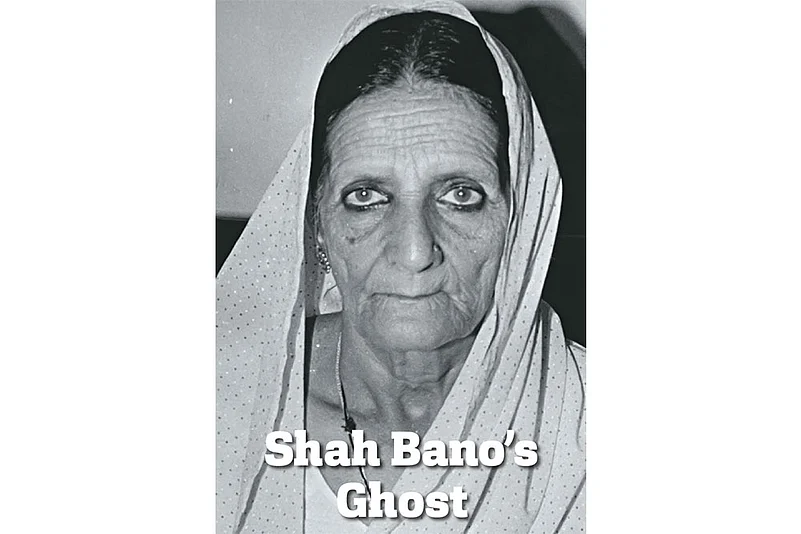
Equivalent Rights?: Often cases involving Muslim women are framed as a fight between secular and personal laws. In doing so, we ignore larger, more interesting questions.

Uniquely Indian: From anti-dowry campaigns in the 1980s to anti-rape demonstrations in the 1990s, Indian feminism has taken a trajectory that has brought it into close contact with the spontaneous struggles of women throughout the country

Lesbian Couples: Of couples who can look you in the eye and say, yes, we are lesbian, and proud of it

Dedicated to Queerness: Transgenders remain the most marginalised community. They are often subjected to violence, including rape, and have to leave their homes because of stigma.

Sexism, Harassment, and Moral Policing: Women joining the formal workforce on an equal footing has given rise to the troubling phenomenon of workplace harassment. Male entitlement is a reality, as is an almost structural kind of female victimhood.

Binaries present a complex grid. Popular culture has always trapped us in the binary political, social and cultural grids. It is a matrix of this and that, us and them. Forever opposed in a morality battle, forever choosing sides
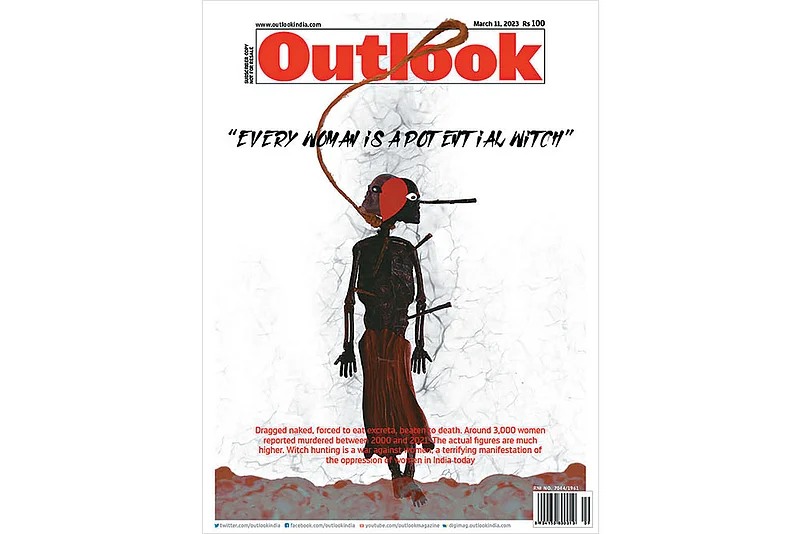
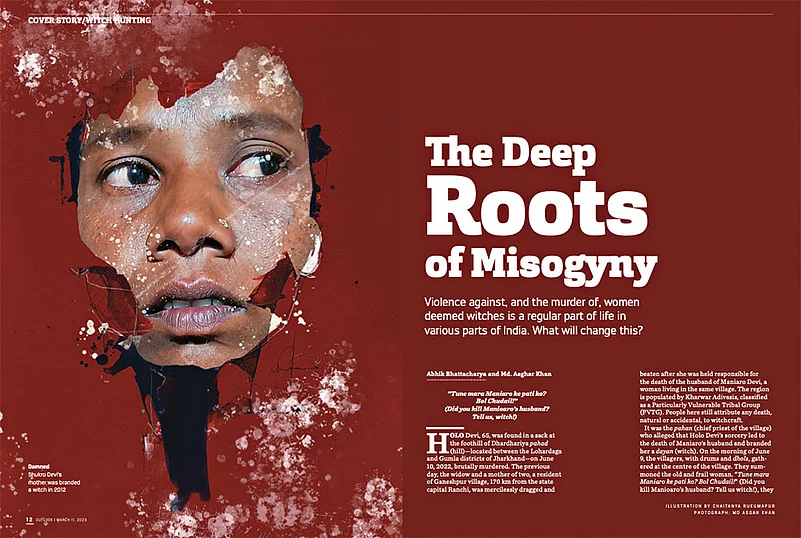
Patriarchy at Play: The voices of women branded as witches are seldom heard and hence ghastly violence against them by men in the name of witchcraft has continued unabated over centuries

Domestic Disturbance: A major problem with the domestic worker market is the scarce information agencies provide of workers that makes exploitation easier
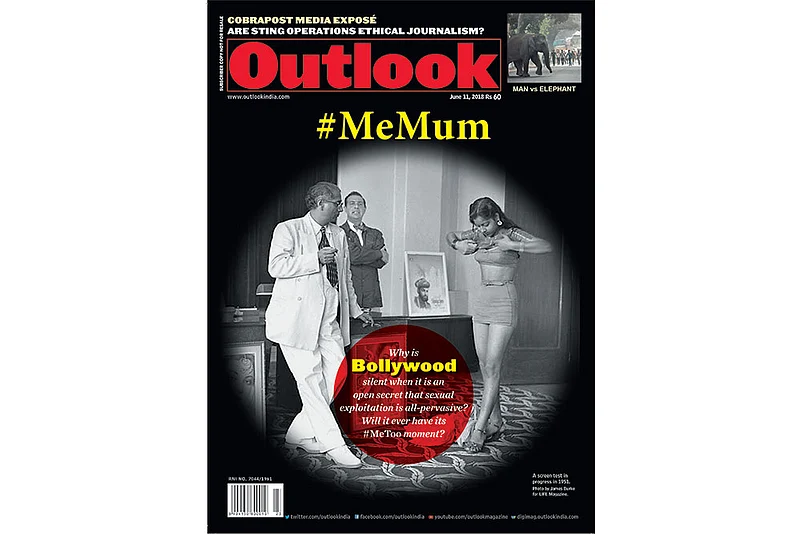
Main Chup Rahungi: We borrow everything from Hollywood. Why not #MeToo? Why is Bollywood silent on its own desi Weinsteins?
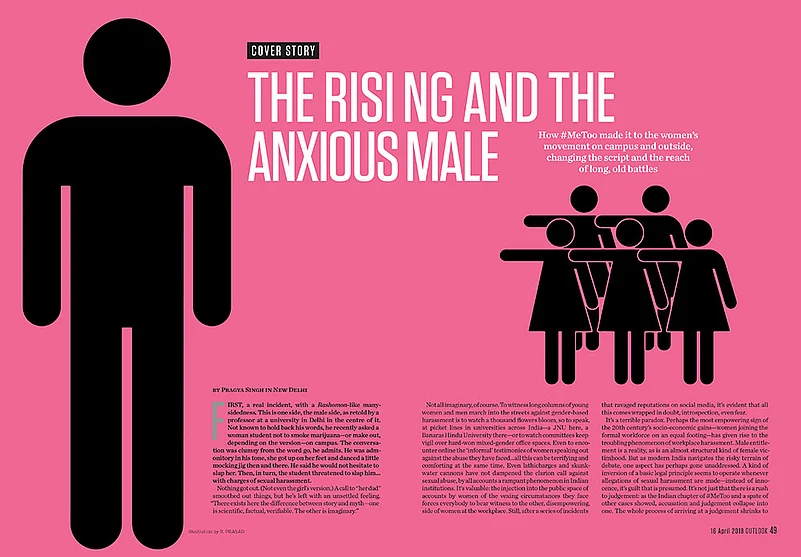
How #MeToo made it to the women’s movement on campus and outside, changing the script and the reach of long, old battles

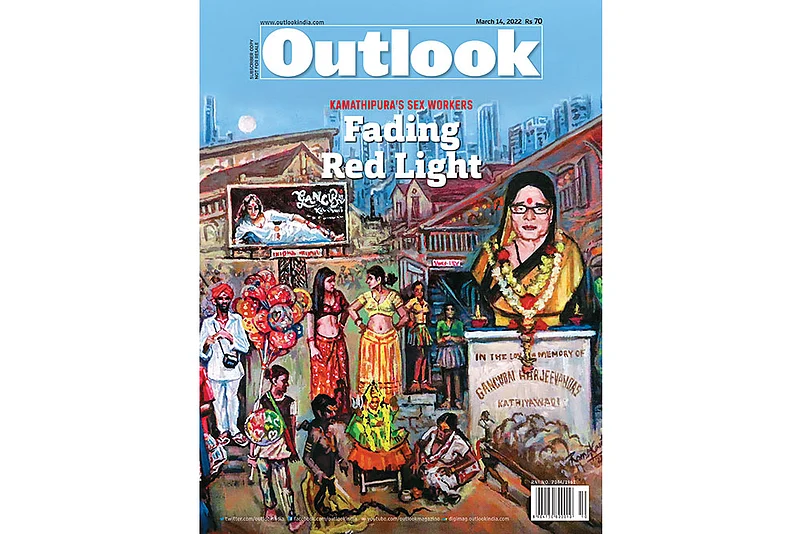
Sex Workers of Kamathipura: Multiple factors including the law have made it impossible to collectivise the women in the locality. Sex workers eke out their livelihoods under the shadow of criminalisation under laws such as the Immoral Traffic Prevention Act that is used to harass, arrest and detain them




This article appeared as 'We, The Women & Others' in Outlook’s January 01, 2026, issue '30 years of Irreverence' which commemorates the magazine's 30 years of journalism. From its earliest days of irreverence to its present-day transformation, the magazine has weathered controversy, crisis, and change.