From a small-town upbringing in Meerut to becoming one of India’s most sought-after screenwriters, Sumit Arora built his career through an enduring love for storytelling.
His work across television and cinema—including Border 2 (2026), Dahaad (2024), Jawan (2023), Stree (2018), The Family Man (2019–) etc captures the humour, contradictions and emotional pulse of everyday India.
In this interview with Sakshi Salil Chavan for Outlook India, Arora reflects on his journey, creative discipline and the quiet labour behind shaping some of the country’s most widely loved stories.
Anurag Singh’s Border 2 (2026) has broken records and turned out to be 2026’s first blockbuster hit. Although behind the glitz and the box-office numbers is a writer—the quiet destiny-maker of its story, whose journey began even before he plunged headfirst into Mumbai’s filmy ordeal. Screenwriter Sumit Arora, hailing from Meerut in Uttar Pradesh started with no connections, no roadmap and little more than a love for words. He learned his craft in television writers’ rooms, through cult shows like Dill Mill Gayye (2010), Chidiya Ghar (2011-2017) and Pavitra Rishta (2009-2014) becoming one of the highest-paid television writers along with building a voice both authentic and unmistakably Indian. Years of persistence and disciplined storytelling eventually propelled him to the heart of India’s biggest films and streaming hits—Jawan (2023), Stree (2018), The Family Man (2019-), Guns And Gulaabs (2023) and Reema Kagti’s Dahaad (2023). Today, Arora’s writing reaches millions, yet his work remains grounded in everyday India—its humour, contradictions, anger and tenderness.
In this conversation with Sakshi Salil Chavan for Outlook, Sumit Arora reflects on his humble beginnings as a teenager from a small town to becoming the force behind record-breaking box-office triumphs. Arora’s quiet, unassuming persistence underpins some of the country’s most loved films—proving that while stars light up the screen, it’s the words behind them that make history.
You moved to Mumbai when you were 18, with no trusted friends or family in the city—just a dream to be a writer-director. As someone shaped by a quaint upbringing in Meerut, what was the initial struggle like and did you ever doubt your decision?


Interestingly, I never really doubted whether I could write. I always felt that this is what I had to do. From childhood, I loved reading and that naturally turned into a love for writing. When I moved here at seventeen and a half, I started writing immediately. My work was already getting published in newspapers across the country, often every Sunday. Seeing my writing in print reassured me that I was on the right path and doing something meaningful.
I always knew I would write—whether literature, articles, short stories or scripts—but whether I would survive specifically in this film world was uncertain. It’s a world governed by forces you can’t always control, particularly when you enter without any contacts. Still, I never allowed doubt to settle for long. A relative noticed and shared a Balaji Telefilms writing opportunity with me and that’s how I found my footing. I’ve always believed that if the passion is real, you find a way. I work with a “blinkers-on” discipline wherein distractions and anxieties may exist on the margins, but when the goal is steady, my internal focus keeps them from overpowering the larger vision.
It’s a bit like cricket—isn’t it? When the ball is coming towards you, you can only concentrate on that one delivery. Speaking of cricket, you take a keen interest in cricket and mentioned that you once aspired to be a cricketer. Having also contributed to the dialogues of 83 (2021), can audiences expect a cricket-centric film in your upcoming writing or directorial projects?
The analogy you mentioned is perfect—every ball is an opportunity or a chance to hit a four or a six. Sometimes, naturally, you may be clean bowled. But does that mean you should leave the pitch? You are still in the game and there will always be another inning, another chance. Each ball is the only certainty; everything else—the past, the future and the “what ifs”—is an illusion. When you put a work of art out into the world, it no longer belongs only to you, it belongs to everyone. Both praise and criticism are part of the process and the real work lies in taking it as feedback and continuing to give your best with each project.
And of course, working on 83 was rewarding but I would love to direct a film centered around cricket someday. I captained my school team in Meerut and that love for the game has stayed with me ever since. Sports dramas have this incredible way of telling profound stories—they’re powerful metaphors for life, teamwork and passion. I’ve always wanted to explore that extensively on screen as a director.
You’ve spoken about writing every day as a discipline. How do you guard your craft against the daunting pressures of commercial deadlines?
It does get monotonous sometimes, yes. But I’ve found a way to break that monotony—I always work on two or three projects at the same time. So if one starts feeling repetitive, I shift to another. Writing itself never feels like a burden—being immersed in stories for ten hours—that’s actually my playground. I genuinely enjoy it and don’t feel tired in that process.
Of course, deadlines can occasionally feel overwhelming, making you think,“Oh my God, what more do I have to do?” That’s exactly why I keep multiple projects going, sometimes belonging to different genres. When one subject starts feeling heavy, I can switch to another. It helps me stay productive, meet deadlines and still enjoy the process.
Many people are still nostalgic about Dill Mill Gayye (2007-2010) as peak Indian television of the late 2000s and keep asking for it to return. You’ve seen the television landscape in India shift in real time. Do you ever think about writing for the show or bring out something tonally similar again?
Even after all these years, people are still reminiscent of Dill Mill Gayye? Honestly, that never fails to amaze me. Having been in the industry for over twenty years, it’s incredibly heartwarming to see that kind of lasting support for a show I was part of. I started my career in television and it’s emotionally and professionally such a cozy, satisfying space for me.
Has it been on my mind? Absolutely—one of the things I adore about the medium is how it gives you the time and scope to really explore characters-driven stories over episodes. Truthfully, I haven’t done something like that in a while and I’d really love the chance to revisit it. To have the opportunity and the window to create a show like that again would be amazing. TV gives you the freedom to play, experiment and have genuine fun with storytelling and I’d love to craft that experience once more—for myself and hopefully, for a new audience too.

Being a dialogue writer, you’ve given many characters their takiya kalam. If someone were to pick a memorable phrase you often say, what would it be?
I often say this everywhere: “Samajh rahe ho na? Tum samajh rahe ho na?” (“You get it, right?”). My usual attempt is along the lines of making sure the other person is on the same wavelength. I was reflecting on it recently and it struck me that, more often than not, when I say it, I’m not just speaking to others—I’m also quietly reassuring myself. It reminds me of a couplet by Nida Fazli: “Kabhi kabhi yun bhi humne apne hi ko behlaya hai, jin baaton ko khud nahi samjhe, auron ko samjhaya hai.” When you’re in a writer’s room, the job is often about convincing others of your ideas and that catchphrase of mine “Samajh rahe ho na” naturally weaves itself into the process.
Some writers need solitude while others thrive in chaos. You’ve mentioned developing last-minute script changes even during shoots. Could you recall an experience where a creative decision taken on the spur of the moment became your best decision?
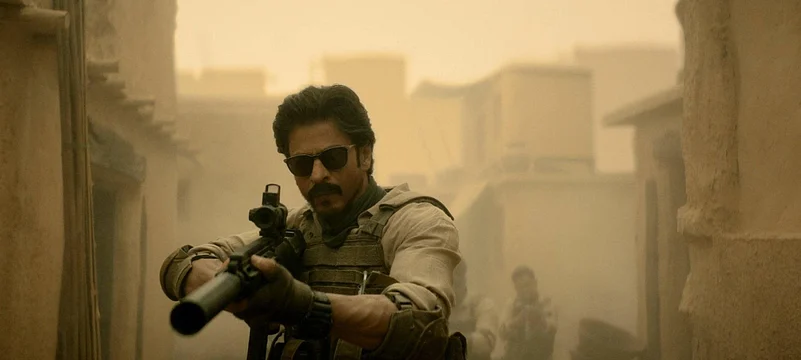
That’s right. Often, last-minute changes happen in the scripts and nothing is ever really final until it’s shot. Some directors prefer a different approach. Kabir Khan, for example, is one of those directors who finalizes the script completely before filming. I’ve experienced this spontaneity in my writing process though, for instance, working on Jawan (2023). I spent a month on set and many of the scenes were shaped in this very way. Being on set constantly allowed me to adjust dialogue and scenes in real time, keeping them responsive to the actors’ performances. I wrote the now-famous Shah Rukh Khan line “Bete ko haath lagaane se pehle baap se baat kar” on the set itself.
One instance that also stands out was during Stree (2018) while I was working with Vijay Raaz and his character “Shastri ji”. There’s a scene where the team approaches him for help. Shastri has dementia, so he doesn’t always remember things clearly. While we had initially drafted the scene, being on set gave me the freedom to experiment. Raaz is an incredible actor and I found myself getting a bit greedy — thinking, “Let’s add some more fun to this moment.” The scene unfolds with him initially lost in thought. Suddenly, he breaks into a memory and says, “Emergency khatam ho gayi kya?” referencing the Emergency of 1984. Then he continues, tripping through his fragmented memory. That improvisational thread—letting the character wander through the past— was something we only realized could work while on set. It became a memorable moment because we allowed the writing to breathe and evolve organically with the performance.
Do you think a writer ever truly “owns” the politics of a character, or are you always interpreting something larger than yourself? When working on films like Border 2 and Jawan, which carry very different political perspectives and messages, how do you navigate that in your writing?
You see, my worldview is ultimately rooted in humanism. For me, everything I do must come from a place of valuing human life. As a society, I believe we have a responsibility to come together to act with kindness, and to do good for others. It’s about loving your country and your fellow people, without division, without hatred, without letting differences turn into animosity. These are the timeless values I carry with me personally and I try to approach everything through that lens.
Following that same thread, would you ever write a character whose politics you completely oppose, don’t understand or believe in?
Sure, why not? But if I do it, it has to be an open, exploratory landscape. The question is not whether I agree with the character, it’s more about what do I want their journey to be? Writing only what you understand is easy, but there’s no growth there. True creativity comes from stepping into a life unlike your own and making it your own. Take Martin Scorsese—he’s not a gangster, yet he makes authentic gangster films.
My method for character study is fluid. I always watch the world with curiosity, to understand where people are coming from. I can’t fully feel another person’s emotions, but with empathy, I can understand them. This is crucial for any artist, even for negative characters. There’s always a reason why someone’s thinks or acts a certain way, if you’re able to tap into that psychology and conflict, you’d be able to write them and do them justice. In love stories, conflict comes from differences—childhood, trauma, environment or upbringing. Even when two people love each other, these differences create friction. Grasping these nuances lets you craft believable conflict and, in turn, explore characters authentically across the full spectrum of human emotions.
You’ve known Amar Kaushik since your television days, perhaps even before that. What does he bring out of you as a person or in your writing that might not surface with other directors?
You know, we’ve shared a wonderful camaraderie ever since we first met back in 2008 or 2009, when I was starting out in television. There was always this unspoken connection between us, probably because we both come from Uttar Pradesh and our senses of humour just clicked. That alignment made a huge difference when I was writing dialogues for Stree. I never once had to explain a single joke; he understood it instinctively. Every nuance I imagined was translated perfectly on screen. That kind of tuning, that seamless understanding has always been there and it truly made the collaboration effortless and enriching.

What’s your opinion on micro-dramas and other evolving pathways of storytelling? Is there a format or genre that excites you but you haven’t worked on yet?
I’ve always been excited by exploring different genres and formats. This year, I’m aiming to direct my first film and the genre I’m venturing into is completely uncharted territory for me. That sense of novelty is what really drives me—trying something new. If you look at the work I’ve done over the past few years, like 83 (2021) and Chandu Champion (2024) were sports dramas, Jawan was a mass, spy film and the Stree franchise was horror comedy—you’ll see that I’ve consistently gravitated toward projects that challenge me. I’m always energized by the thrill of discovery that comes with a new genre.
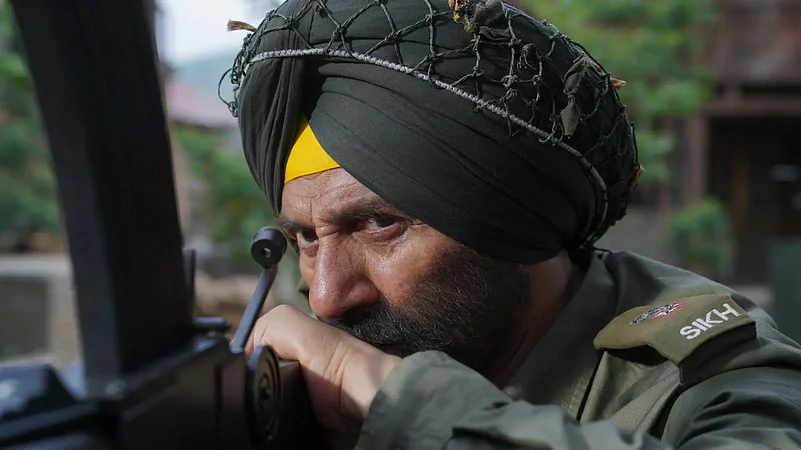
With Border 2 carrying so much legacy, what was the most challenging aspect of writing the film? And what does this film mean to the version of you who first fell in love with cinema?
Carrying forward a legacy is a tremendous responsibility. Imagine being offered the chance to write a sequel to a film that’s beloved by millions, a film that touched audiences across the country. Now, add to that the fact that you yourself watched it as a child, perhaps in your hometown and it left an impression on you. That, in itself, is humbling.
When that opportunity comes your way, it almost feels surreal. You can hardly believe it—yet, at the same time, you realize you’ve been chosen because people trust you to do justice to it. The challenge lies in balancing the legacy while also infusing it with freshness, contemporary relevance and your own perspective. New characters, new storylines, new energy but all woven carefully into the fabric of what the original created. Ultimately, it’s about honoring the past while embracing the present.
What’s one of the most memorable responses to Border 2 that you witnessed during one of the screenings or in a conversation with someone?
My mother saw the film and with tears in her eyes, she hugged me. She expressed, “Main waise zyada roti nahi hu films dekhkar, par ismei rona aa gaya.” (“I don’t cry often over films but this one made me.”). Making your mother cry should never be on your to-do list but her tears of pride will forever be a cherished memory for me.