In 1930, Gandhi’s 240-mile Salt March that began on March 12 proved that disciplined, non-violent dissent could challenge imperial power and mobilise millions.
Recent episodes, from student protests at Jawaharlal Nehru University Students' Union to opposition protests in the Lok Sabha, reflect growing tensions between institutions and dissent.
As Gandhian scholars argue, protest remains central to democracy—but only when grounded in justice, honesty and the principles of ahimsa.
“The objective of all non-violent activity is always a mutually acceptable agreement, never the defeat, much less the humiliation of the opponent.”
On March 12, 1930, Mahatma Gandhi called for a march that would come to embody the very essence of Gandhian philosophy. The nation was still in the political fervour generated by the Non-Cooperation Movement and the Khilafat Movement; the events of these years had already begun preparing people to adopt the path of non-violent resistance.
Gandhi, along with a small group of chosen followers, set out on a 240-mile march from Sabarmati Ashram near Ahmedabad to the coastal village of Dandi. As the march progressed, people from villages and towns joined in—youth, women, and ordinary citizens who believed in the cause.

The facts and figures of the Salt Satyagraha are well-known, drilled into students through textbooks and classrooms. Yet knowing the sequence of events is only one part of history. While the march was organised to challenge the oppressive salt tax that burdened the poor, reading between the lines reveals something deeper: dissent, pure, non-violent dissent—demanding equality from an empire.


If Gandhi’s Dandi March proved to India that freedom could be pursued without violence, it also stands today as a reminder that protest itself can be peaceful. In many ways, protest was the very force that shaped the birth of the nation.
Now, 96 years later, the question remains: does India still resonate with the values that once formed the foundation of its freedom struggle? More importantly, how does the nation understand protest today?
In recent years, the Indian administration has increasingly focused its energy on containing protests, often reframing opposition as anti-national, criticism as sedition, and intellectual dissent as a threat to public order. The space for disagreement appears to be narrowing.
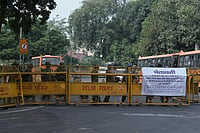
Consider a recent example. Students from the Jawaharlal Nehru University Students’ Union organised a Long March to protest alleged casteist remarks made by the university’s Vice-Chancellor. The demonstration reportedly turned violent, and several students were detained and sent to Tihar Jail. While they have since been released, the incident once again raised questions about how dissent, particularly from campuses, is being handled.
At the same time, turmoil unfolded within the country’s highest democratic institution. In the Lok Sabha, opposition parties sought a no-confidence motion against Speaker Om Birla, alleging that their microphones were switched off during debates and that parliamentary suspensions had been used disproportionately to curb dissent. Nearly 120 members of parliament have reportedly been suspended during Birla’s tenure, a sharp rise compared to earlier decades. The standoff triggered protests and walkouts by the opposition, eventually forcing adjournments of parliamentary proceedings.
Taken together, these episodes illustrate a striking paradox to 1930. The institutions born from a freedom struggle rooted in protest now often appear uneasy with protest itself.
The Salt March was not merely a demonstration against a tax; it was a moral assertion that dissent could be disciplined, principled, and transformative. Gandhi’s protest sought to challenge power without humiliating it, to confront injustice without abandoning civility.

In today’s India, both the conduct of protests and the responses they provoke reveal how far that culture has shifted.
Gandhian Scholar, Dr. Ravindra Kumar, Former Vice Chancellor, CCS University, argues that the philosophy of non-violence remains deeply relevant. “The path of Ahimsa is still relevant today,” he says. “The Salt Satyagraha is proof of it. When the administration denies people equality, it becomes an injustice. Equality is the most important thing for any person.”
Kumar explains that when this equality is denied, the collective strength of people emerges through ahimsa. “Protest and satyagraha in India have evolved depending on what the people demand and what the moment requires,” he notes. Yet he stresses a crucial principle: for protest to remain meaningful, “the cause must be honest and just.”
These ideas were explored in Gandhi & Dissent, a special issue published by Outlook Magazine in 2019 to mark the 150th birth anniversary of Mahatma Gandhi.
In the article A Great Dissenter Throws Light, philosopher and author Douglas Allen writes that solutions to contemporary crises require “an interaction of Gandhi-informed dissent with non-Gandhi-informed views.” Addressing misappropriations of dissent by both non-Gandhian and anti-Gandhian voices, Allen argues that Gandhi’s philosophy still offers a blueprint for navigating conflict.
Another piece revisits the turbulent moment of the Royal Indian Navy Mutiny. Writer Pramod Kapoor reflects on the episode’s violent turn, which Gandhi openly criticised, even urging the mutinous sailors to resign rather than pursue armed confrontation. The question lingers: had Gandhi and other leaders endorsed the revolt, would India’s path to freedom have unfolded differently?
Scholar Aakash Singh Rathore examines the deep ideological clash between B. R. Ambedkar and Gandhi in The Man Who Saw Mahatma’s Fangs. Revisiting Ambedkar’s searing remark that he had “seen the bare man in him… who showed me his fangs,” Rathore argues that their rivalry remains central to understanding India’s enduring debates on caste, power and equality.

Meanwhile, Saikat Niyogi traces Gandhi’s early struggle against racial discrimination in South Africa. His article recounts Gandhi’s confrontation with Jan Smuts and the sustained non-violent resistance that eventually led to concessions, culminating in the 1914 Indians’ Relief Act—an important victory for Indians living under a racially discriminatory regime.
Ninety-six years ago, Gandhi stood on the shores of Dandi with a fistful of salt and a heartful of dissent. The march was not merely a protest against a salt tax; it was a moral lesson to a country yet to be born. The question today is simple: does modern India still recognise the power of dissent that once shaped it?