The US issued a 30-day waiver allowing India to accept Russian oil already at sea to stabilise global supply during the Iran conflict.
Washington said the short-term move will not significantly benefit Russia as it only covers oil already shipped.
US officials expect India to increase energy purchases from the United States as part of broader trade and energy cooperation.
The United States has granted India a temporary 30-day waiver to accept Russian oil already at sea, a step Washington says is aimed at stabilising global energy supplies during the conflict involving Iran and will not materially benefit Moscow.
White House Press Secretary Karoline Leavitt said the decision was taken by President Donald Trump and his national security team as a short-term response to market disruptions linked to the ongoing West Asia crisis. According to PTI, the waiver allows Indian refiners to receive Russian crude that had already left ports and is currently on ships.
President Donald Trump, Treasury Secretary Scott Bessent and the entire national security team “came to this decision because our allies in India have been good actors and have previously stopped buying sanctioned Russian oil”, Leavitt said at a White House press conference on Tuesday.
“So as we work to appease this temporary gap of oil supply around the world because of the Iranians, we have temporarily permitted them (India) to accept that Russian oil. And this Russian oil was already at sea. It was already out on the water. So this short-term measure, we do not believe it will provide significant financial benefit to the Russian government at this time,” she said.


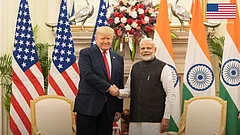

Reported PTI, Leavitt was responding to a question about Washington issuing a 30-day waiver to India to purchase Russian oil as tensions escalate in West Asia.
The US administration said last week that the waiver was being introduced to allow Indian refiners to buy Russian crude in the immediate term amid supply concerns linked to the conflict with Iran.
Treasury Secretary Scott Bessent said the measure was designed to keep global oil flowing while limiting benefits to Moscow.
“President Trump's energy agenda has resulted in oil and gas production reaching the highest levels ever recorded. To enable oil to keep flowing into the global market, the Treasury Department is issuing a temporary 30-day waiver to allow Indian refiners to purchase Russian oil,” Bessent had said.
He added that the “deliberately short-term measure” would not provide significant financial benefit to Russia because it only covers oil already stranded at sea.
“India is an essential partner of the United States and we fully anticipate that New Delhi will ramp up purchases of US oil. This stop-gap measure will alleviate pressure caused by Iran's attempt to take global energy hostage,” Bessent said.
According to PTI, the move comes after the Trump administration had earlier imposed 25 per cent punitive tariffs on India for buying Russian oil, arguing that New Delhi’s purchases were helping fund Russia’s war effort in Ukraine.
Last month, the US and India announced a framework for an interim trade agreement. Trump subsequently issued an Executive Order removing the 25 per cent tariffs after India committed to stop directly or indirectly importing energy from Russia and to increase purchases of American energy products.
US Energy Secretary Chris Wright said the waiver is intended to bring already-shipped Russian oil into the market quickly and help stabilise prices during the conflict involving Iran.
“We have implemented short term measures to help keep oil prices down. We are allowing our friends in India to take oil that is already on ships, refine it, and move those barrels into the market quickly. A practical way to get supply flowing and ease pressure,” Wright said in a post on X last Friday.
In an interview with ABC News Live, Wright said global oil supplies remain strong in the long term but short-term market pressures require immediate steps.
“But as oil gets bid up a little bit because of those constraints coming out of the Strait of Hormuz, we are taking a short-term action to say all this floating Russian oil storage that is around southern Asia, it is China just backed up, China does not treat their suppliers well, so there is a bunch of floating barrels just sitting there. We have reached out to our friends in India and said, 'Buy that oil. Bring it into your refineries'. That pulls stored oil immediately into Indian refineries and releases the pressure on other refineries around the world to buy oil that they are no longer competing with the Indians for in that marketplace,” Wright said.
“So we have a number of measures like that that are short-term and temporary. This is no change in policy towards Russia. This is a very brief change in policy just to keep oil prices down a little bit better than we could otherwise,” he added.
Wright also said he and Bessent had spoken with Indian officials about purchasing Russian crude that is currently waiting to be unloaded at Chinese refineries and redirecting it to India.
“The United States' policy towards Russia has not changed at all. India is very clear on that,” Wright said in an interview with CNN on Sunday.
Asked whether the waiver undermined Washington’s effort to isolate Russia, Wright said it did not.
“It is not,” he said, adding that India has “displaced” Russian oil imports and is increasing purchases from the US, Venezuela and other suppliers.
“India has been a great partner through this. But I did call up the Indians, as did Treasury Secretary Bessent, and said, 'Look, there is a whole bunch of oil that is floating to wait to unload at Chinese refineries'.
“Instead of having it wait six weeks to unload there, let us just pull that oil forward, have it land in Indian refineries and tamp this fear of shortage of oil, tamp the price spikes and the concerns we see in the marketplace. It is just a pragmatic effort that has a short time span. No change in policy towards Russia,” Wright said.
(With inputs from PTI)