Iran limits Strait of Hormuz closure to ships from the US, Israel, Europe and their allies, protecting 40% of India’s crude oil imports passing through the strait.
Russia confirms readiness to supply more crude to India, with current imports at nearly 1 million barrels per day and comfortable stock levels maintained.
US pledges affordable insurance for regional shipping and potential naval protection, while OPEC+ countries announce additional production starting 1 April to stabilise global markets.
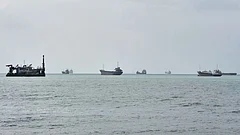
Iran has clarified that its closure of the Strait of Hormuz applies only to vessels from the US, Israel, Europe and their allies, offering some respite to India amid efforts to diversify its energy supplies. According to The Tribune, nearly 40 per cent of India's crude oil imports pass through the 33-km-wide waterway between Iran and Oman, heightening concerns over potential disruptions.
The development comes as Russia and the US address the broader oil crisis, with more than a fifth of global crude and gas supplies transiting the strait. Russian Ambassador to India Denis Alipov stated on Thursday that his country “has been open to supplying crude oil to India”.
The Tribune reported that India is currently importing almost 1 million barrels of crude a day from Russia, with additional volumes under discussion. Sources indicated that India maintains a strong position on energy security, with current stocks sufficient and daily replenishments ongoing.
There is no shortfall in LPG or LNG supplies, nor in global crude availability. India is engaging other suppliers, including offers of gas from Australia and Canada. Recently, India finalised a new contract with the UAE and the US.


India imports 195 million metric standard cubic metres per day (MMSCMD) of gas, with Qatar providing 60 MMSCMD. Efforts are underway to identify alternative gas markets. On Monday, Qatar halted gas production due to fears of strikes. According to The Tribune, India is also negotiating with major oil producers and traders to secure crude and LPG.
The country is in dialogue with the International Energy Agency (IEA) and the Organisation of the Petroleum Exporting Countries (OPEC). On Monday, eight OPEC+ nations—Saudi Arabia, Russia, Iraq, UAE, Kuwait, Kazakhstan, Algeria and Oman—announced plans to increase production from 1 April.
US President Donald Trump commented that the US Development Finance Corporation (DFC) would provide insurance “at a very reasonable price” to all shipping firms in the region. This would ensure free flow of energy to the world, Trump claimed, adding that the US Navy would protect ships in the Middle East, if necessary.
(With inputs from The Tribune)