Student protests at JNU began over biometric and facial-recognition systems but escalated after the rustication of five JNUSU leaders and heavy financial penalties imposed by the administration.
The Vice-Chancellor’s remark about SC/ST students “playing the victim card” ignited nationwide outrage, reopening debates on caste discrimination and institutional accountability in higher education.
The police crackdown on the February 26 student march reflects a broader pattern of shrinking campus democracy, ideological contestation, and increasing state intervention in universities.
The brutal police crackdown on protesting students at Jawaharlal Nehru University (JNU) on February 26 has once again laid bare the increasingly coercive reflex of the current regime in dealing with dissent. What began in August last year as student opposition to biometric surveillance on campus was steadily inflamed by the rustication and financial penalties imposed on five elected office-bearers of the Jawaharlal Nehru University Students’ Union (JNUSU). The situation further escalated when the incumbent Vice-Chancellor remarked that Schedule Castes/Scheduled Tribes students often play the “victim card”. The reverberations of that statement travelled far beyond the campus, provoking condemnation across academic and social spaces.

The remark reopened a deep wound in India’s educational and moral imagination. Across universities and within Dalit communities, the reaction was one of shock and anger. This was not an offhand expression uttered in irritation. It strikes at the ethical core of how caste is recognised—or denied—in public discourse. To characterise the articulation of caste-based discrimination as a “victim card” trivialises centuries of structural humiliation and recasts ongoing experiences of exclusion as exaggeration or strategy.
Coming as it did on the heels of the Supreme Court’s controversial stay on the University Grants Commission’s equity regulations, 2026, the statement generated serious concern. The issue is not one of clumsy phrasing or a momentary lapse in civility. Nor can it be brushed aside as a misunderstanding, notwithstanding the Vice-Chancellor’s customary excuse that her remarks were taken out of context. It had a distinct ring of the Rashtriya Swayamsevak Sangh (RSS) ideology.


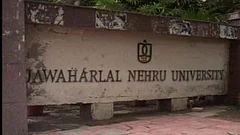
The immediate backdrop to the recent showdown at JNU lay in earlier tensions. Protests had begun in August 2025 against the installation of facial-recognition/biometric gates at the Dr. B.R. Ambedkar Central Library, and other spots in the university, seen as intrusive and anti-democratic. After a proctorial inquiry into alleged vandalism of these gates, the administration issued rustication orders on February 2, 2026, against five JNUSU office-bearers, barring them from campus for two semesters and imposing heavy fines. This action provoked widespread outrage.

On February 11, JNUSU called an indefinite strike, demanding revocation of the rustications, implementation of the UGC anti-discrimination (equity) regulations, and removal of the Vice-Chancellor. The February 16 “victim card” remarks deepened and broadened the agitation, fusing disciplinary, surveillance, and equity concerns into a single movement.
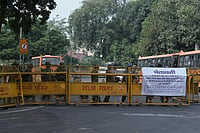
On February 26, JNUSU organised a “Long March” from the Sabarmati T-point on the university campus to the Ministry of Education. Authorities locked the campus gates and erected barricades to prevent the march. When students attempted to proceed, the police intervened forcefully. Around 50 students were detained; at least 14, including Union office-bearers, were arrested and sent to Tihar Jail. Videos showed the police dragging and brutally beating up protesters, leaving many students wounded. The Union condemned the action and accused the administration and the police of suppressing democratic dissent. Protests have since continued on campus, centred on reversing disciplinary measures, challenging alleged discriminatory policies, and demanding accountability for the police action.
The sequence of events makes one thing clear: while the Vice-Chancellor’s controversial remark was the immediate flashpoint, the conflict stemmed from a deeper democratic deficit on campus. The protests began over the implementation of biometric and facial-recognition system without meaningful consultation with students. Universities are communities of learning, not barracks. When decisions affecting privacy and access are imposed unilaterally, protest becomes predictable.

The right to protest is intrinsic to democratic life. Even if some damage occurred during demonstrations, rustication—especially of elected student representatives—was a disproportionate response. Rustication is academic excommunication; deploying it in a political dispute escalates rather than resolves tensions. The move recalls earlier events in Indian higher education—most painfully, the disciplinary action taken by the University of Hyderabad against members of the Ambedkar Students’ Association in 2015, a chain of administrative and political interventions that culminated in PhD scholar Rohith Vemula’s tragic death in January 2016. It re-exposed a troubling pattern of treating assertive student groups as adversaries rather than stakeholders.
The call for an indefinite strike and a march to the Ministry of Education at JNU fell within democratic norms. Inviting the police onto campus to block the march transformed an institutional disagreement into a law-and-order confrontation. Instead of dialogue, the administration chose coercion, deepening the crisis.
The “victim card” remark, released amid this charged atmosphere, intensified the rupture. By implying that Dalits frame discrimination as strategic victimhood, the comment appeared to trivialise well-documented structural inequities in higher education—inequities acknowledged by the UGC itself. The language resonated with broader claims that protective laws are “misused”, thereby casting suspicion on complaints rather than confronting discrimination.
Caste discrimination in universities is not conjecture; it is borne out by repeated testimonies and inquiries. For the head of a Central university to appear dismissive of that reality was bound to provoke outrage. The subsequent invocation of her own Bahujan background did little to settle the matter; identity cannot substitute for accountability. If anything, it underscored how deeply caste consciousness shapes both accusation and defence.

Ultimately, the crisis reflects institutional failures: inadequate consultation, disproportionate discipline, insensitive public rhetoric, and the abandonment of dialogue in favour of policing. Responsibility for escalation cannot rest solely with protesting students. Institutional authority is not a badge of power; it is a mandate to exercise restraint, judgement, and democratic responsibility. Those who occupy positions of power in public universities are bound to a higher standard of prudence and constitutional sensitivity. In this episode, the students of JNU have shown clarity, courage, and a mature grasp of democratic legacy. The administration, by contrast, has revealed not firmness but fragility—responding to dissent with derision and discipline rather than reason. What stands exposed is not student irresponsibility, but administrative incompetence.
The JNU episode cannot be separated from the wider political context. For over a decade, JNU has functioned as a symbolic battleground—one of the few major campuses where organised Left and progressive student politics still retains visible influence. Repeated attempts to reshape its political character and establish Akhil Bharatiya Vidyarthi Parishad (ABVP) dominance have met resistance at the ballot box. In that sense, JNU remains an outlier.
This context is crucial. Targeting JNU—through administrative action, financial pressure, or policing dissent—serves ideological purposes as much as institutional ones. When a university becomes synonymous with resistance, disciplining it sends a message beyond the campus: organised dissent will be decimated. The rustication of Union leaders and the police action against marchers must be read in that light.
Meanwhile, campus democracy across India has steadily eroded. Student Union elections have been curtailed in many institutions; administrative centralisation and surveillance have expanded; faculty autonomy has narrowed. JNU stands out not because it is exceptionally radical, but because it refuses to be domesticated. It remains participatory in a landscape increasingly engineered for compliance. Its culture of debate, mobilisation, and refusal to submit is not an aberration—it is its defining strength. That is precisely why it is made contentious. What unsettles its critics is not extremism, but the stubborn persistence of democratic engagement.

The decay now permeates the entire education system. Schooling has been marked by curricular homogenisation, closure of government schools, persistent teacher vacancies, and a deepening gulf between public and private institutions. In higher education, declining public funding, contractual faculty appointments, bureaucratic intrusion, and accelerating privatisation have eroded academic autonomy. Research is increasingly shaped by political and corporate interests, while dissent is recast as indiscipline. The overall result is a steady shrinking of intellectual space.
Incidents such as the recent embarrassment at the AI Summit—involving a politically aligned private university—are not isolated lapses but symptoms of a deeper institutional decay fostered by the regime. Grand technological posturing cannot compensate for the erosion of academic standards, and orchestrated spectacle cannot conceal structural decline.
Within this broader trajectory, JNU becomes emblematic. It represents not perfection but resistance—the claim that universities must remain spaces of contestation rather than instruments of conformity. The police crackdown thus symbolises a clash between two visions: the university as a managed, compliant institution, and the university as a democratic commons.

If democratic life is extinguished at JNU, the symbolic loss will be profound. The stakes go beyond personalities or isolated incidents. They concern academic freedom, the legitimacy of dissent, and the place of marginalised voices in public institutions. The episode ultimately forces a larger question: will universities remain sites of dialogue, or will they be reduced to disciplined extensions of state power? The answer will shape not only higher education but the democratic character of the republic itself.
Dalits and the Hindutva Anxiety
The victimhood card-remarks by the JNU VC reflected the ideological stance of the RSS about Dalits. The RSS’ ideological orientation has historically sought to subsume caste within a homogenised Hindu identity, thereby displacing the centrality of caste-based injustice from public reasoning. Its discomfort has extended not only to caste critique but also to the language of rights itself—particularly the specific constitutional protections accorded to the Scheduled Castes and Scheduled Tribes. Within Hindutva discourse, affirmative action and safeguards against discrimination are frequently framed not as structural correctives to entrenched inequality but as provisional accommodations that must eventually be reconsidered. While the RSS does not crudely demand the abolition of reservations, its broader intellectual ecosystem has consistently called for their review, recalibration, or dilution.
In that ideological climate, dismissing Dalit assertion as a “victim card” is not a stray or harmless remark. It resonates with a deeper unease about caste critique as such. When such sentiment emanates from the head of a Central university, it signals more than personal indiscretion; it reflects a fundamental contest over whether caste discrimination remains a legitimate category of analysis and political claim-making, or whether it is to be relegated to the realm of grievance politics. If the latter view gains ground, the constitutional architecture of safeguards begins to appear negotiable rather than foundational. That is what makes the moment grave.
What we are witnessing is part of a broader and more troubling pattern within elite institutions: caste oppression is increasingly reframed as emotional hypersensitivity, and the assertion of rights by marginalised communities is caricatured as opportunistic identity politics. When the leader of a premier public university reduces structural injustice to a rhetorical ploy, historical suffering is recast as performance. The phrase “victim card” performs ideological labour. It shifts attention away from discrimination and towards the supposed psychology of the oppressed. The burden of proof moves from institutions to students.

This strategy echoes an older Brahminical mode of minimisation: caste is declared either obsolete or exaggerated for political mileage. In that narrative, those who name caste are accused of perpetuating it. Meanwhile, the structural violence embedded in access to education, faculty recruitment, evaluation practices, social networks, and everyday campus interactions fades from scrutiny. What remains is the insinuation that Dalit students are weaponising grievance, rather than confronting enduring inequity.
(Views expressed are personal)






Anand Teltumbde is an indian scholar, writer and human rights activist
This article is part of Outlook 's March 21 issue 'Bombs Do Not Liberate Women' which looks at the conflict in West Asia following US and Israel’s attacks on Iran leading to the assassination of Ayatollah Ali Khamenei, while the world wondered in loud silence, again, Whose War Is It Anyway?