Judicial Magistrate Ravi of the Patiala House Court ruled that address and surety verification could continue after release
The students had challenged an earlier order by Judge Animesh Kumar that required verification before release
The arrests followed clashes during a JNUSU protest march over campus and policy-related demands
Following a court order for their immediate release, all fourteen students from Jawaharlal Nehru University, who had been granted bail on Friday, February 27, but were sent to Tihar Jail pending address verification, were released late on Sunday night.
Judicial Magistrate Ravi of the Patiala House Court ordered their immediate release, stating that the earlier bail order passed by Judge Animesh Kumar stood modified. The magistrate clarified that verification of permanent addresses would no longer be a precondition for release from custody. He cited the need to balance personal liberty with the prosecution’s concerns.
“The order dated 27 February 2026 shall stand modified to the extent that verification of permanent address/surety bonds shall be carried out expeditiously, but shall no longer operate as a pre-condition to the actual release of the accused persons from judicial custody,” the order stated.
JNUSU president Aditi Mishra, vice-president K. Gopika, joint secretary Danish Ali, former president Nitish Kumar, AISA national president Neha, along with Rahul Raj, Manikant Patel, Gowri Kolal, Ansh Pillai, Varkey Parakkal, Ranvijay Singh, Vicky Kumar, Shyam Sasi and freelance journalist Vishnu Tiwari, were released at around 10.30 pm on Sunday.
Earlier on Friday, Judge Animesh Kumar of the Patiala Sessions Court had ruled that the students would be released on bail only after verification of their permanent addresses, noting that they had been reluctant to disclose correct particulars and had not nominated family members or friends for intimation of arrest. He had also ordered 14 days of judicial custody and directed that they be produced before the court on 13 March 2023.


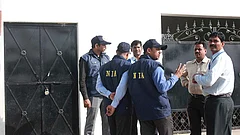
Following this, the students moved an application seeking immediate release without prior address verification, arguing that they are permanent residents of India and that verification of addresses outside Delhi would take time.
The Delhi Police opposed the plea, maintaining that the students should remain in custody until verification was completed and that the application should be dismissed or kept pending.
However, in the latest order passed on Sunday, Judge Ravi observed that “the ends of justice would be met by permitting the release of the accused persons from judicial custody pending verification of their bail surety bonds but subject to stringent and carefully crafted conditions to address the concerns raised by the prosecution.”
He observed that this would be a balance of the fundamental right to liberty of the accused with the legitimate interest of the state to secure the presence of the accused at the trial as well as the integrity of the verification process.
The judge ordered that the students would have to give an undertaking stating their permanent address, their present hostel/residential address along with their mobile number and email id, inform the investigating officer if there was any change in address, cooperate with the police during the verification process, and that they would not participate, organise, or lead any protest in and around the campus or anywhere else in violation of the bail conditions.
Earlier on Thursday afternoon, the Jawaharlal Nehru University Students Union (JNUSU) had organised a “Long March” to press for a series of demands. These included the resignation of Vice-Chancellor Shantishree Dhulipudi Pandit over her alleged caste-related remarks in a recent podcast interview, the revocation of rustication orders against certain students, the implementation of the University Grants Commission (UGC) Equity Regulations 2026, and increased funding for public institutions.
They had wanted to march till the Union Ministry of Education office at Shastri Bhawan in Central Delhi.
The detentions followed clashes during a protest march where JNUSU demanded, among other demands, the vice-chancellor’s resignation, and an apology from the Delhi Police for allegedly damaging a portrait of B. R. Ambedkar. The protest began at around 2.30 pm, with ACP Ved Prakash of Vasant Kunj police station present. The police detained 51 students in phases, though only 14 were formally arrested and produced before Patiala House Court.
The unrest followed days of mounting tension at Jawaharlal Nehru University, sparked by remarks made by the vice-chancellor on University Grants Commission equity regulations. She was allegedly quoted as saying that Dalits could not progress by playing a “victim card”, a statement she later said had been misinterpreted.
Earlier, on the night of 22 February 2026, a separate clash broke out on the JNU campus between two student groups. The left-leaning JNUSU and the RSS-affiliated Akhil Bharatiya Vidyarthi Parishad (ABVP) gave sharply contrasting accounts of what had occurred.
Visuals released by the students’ union appear to show stones being hurled at the encampment where the rusticated office-bearers had been staying. The footage shared by the Akhil Bharatiya Vidyarthi Parishad (ABVP) shows injured members, with the group alleging that its supporters were attacked by left-wing activists.
Earlier this month, four office-bearers of the students’ union, along with a former president, were rusticated for two semesters for protesting against surveillance measures in the central library. Since then, the union has maintained a sit-in at the SL–SIS lawns.