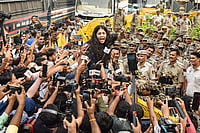
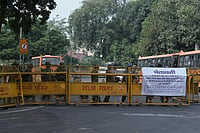
Mandal reservations sparked violent protests but were implemented; UGC equity rules faced smaller protests but were stopped by the Supreme Court.
Upper-caste groups raised concerns about “reverse discrimination,” though many reserved posts remain unfilled.
Caste debates are shaped by political strategy, economic stress, and institutional bias, often slowing reform.
In 1979, the Mandal Commission was formed. Its report was released the following year, yet it sat largely on the government’s desk gathering dust for a decade. Then, in 1990, the V. P. Singh government implemented the recommendations of the Mandal Commission reserving government jobs for backward classes. This triggered large-scale protests and violence across the country. Nearly 200 students attempted self-immolation; 78 died.
The Mandal protests were massive. Schools and colleges, according to senior journalist Abhijeet Sinha, were shut for a month across Patna. The streets simmered with violence; a constant worry over which sena would erupt next. The upper- and reserved-caste divide seeped into everyday life—friendships, workplace dynamics, even family conversations became charged with suspicion and fear. Many recall the pervasive sense of dread: walking to class or the market carried an unspoken tension, the feeling that social order itself was being rewritten.
Fast forward to 2025-26, when the University Grants Commission (UGC) suggested new equity regulations to eradicate explicit or implicit discrimination against the Scheduled Castes (SCs), the Scheduled Tribes (STs), the Other Backward Classes (OBCs) women, people with disabilities and religious minorities.




While on paper, affirmative action makes sense, on ground, this decision turned into rage for the ‘victimised’ upper-castes who could not shed the fear of imaginary false cases being slapped on them.
Upper-caste students and faculty mobilised themselves in campus events, framing the debate as an existential threat to their educational opportunities. While the protests were far smaller and less dramatic than in the 1990s, its impact was stronger. The 1990s protest failed to reverse the decision to reserve jobs for backward classes.
But in 2026, the Supreme Court issued a pre-emptive stay, halting the law before it could take effect.
It is unlikely that anyone drafting the 40 recommendations of the Mandal Commission foresaw the social upheaval that would follow. The Commission had recommended 27 per cent reservations for the Other Backward Classes (OBCs) in government jobs and higher education, alongside 15 per cent for the SCs and 7.5 per cent for the STs. With the addition of 10 per cent reservation for the Economically Weaker Sections (EWS), vertical quotas in the Union government and educational institutions now totalled nearly 60 per cent, leaving roughly 40 per cent of seats in the general category.
While the fearmongers back in the 1990s warned this would mean all workplaces will see an extinction of the general castes, the fears were quite misplaced.
Analyses of central university faculty vacancies shows that nearly 38 per cent of reserved posts remain unfilled—41.8 per cent for OBCs, 40.3 per cent for STs, and 32.1 per cent for SCs—compared with just 15.4 per cent vacancies in the general category. Meanwhile, state recruitment irregularities—such as in Uttar Pradesh, where OBC allocation in the recent local government recruitment was only 18 per cent compared to the mandated 27 per cent—further demonstrate the unequal nature of job recruitments.
Sinha recalls that the Congress Party would not have implemented the Mandal Commission report because it “would have meant a business loss. But V. P. Singh didn’t care for social reform; he only wanted to save his government. Initially, Lalu Prasad Yadav didn’t support him, but reservation became a way to stabilise power”. Bihar, he notes, was already a cauldron of caste-based tension―with multiple senas and counter-senas mobilizing against each other―with L. K. Advani’s Rath Yatra looming in the background.
He argues that this scenario cannot be seen with just the lens of political strata, but also needs to include economic data. Economically, India was struggling, with low agricultural output, weak infrastructure, and rampant unemployment. “The Pandora’s Box of OBC mobilisation opened amidst extreme economic and political stress,” observes Sinha, emphasizing that economic and social insecurity are ripe grounds to breed hate and politics.
Fast forward 35 years, and the context is different, but the psychology is strikingly similar. The UGC’s equity regulations aimed to prevent caste-based discrimination in higher education, yet it never saw the light of day. Shivanand Tiwari, former cabinet minister in the Rashtriya Janata Dal (RJD) government and later a leader of the Janata Dal (United), explains why. “The Mandal Commission protest was marked by self-immolations and violence against the decision, but it also gave rise to a jan andolan in support of the recommendations.
While the V. P. Singh government implemented the OBC reservations, an extra 10 per cent reservation was later added for the EWS. In the Indra Sawhney case, the court rejected the EWS quotas, ruling that reservation is meant only for those who are socially and educationally backward due to the caste system and to bring them into the mainstream, and not to eradicate unemployment or poverty.
Tiwari notes that in recent years, the Bharatiya Janata Party (BJP) extended the 10 per cent EWS quota nevertheless. Today, the courts are increasingly demanding surveys to justify reservation percentages. “But for EWS, no such survey was conducted and this reflects a broader shift in how the judiciary approaches caste and affirmative action,” he adds.
The parallels are striking though. Upper-caste anxieties were again stoked by claims of “reverse discrimination” and a fear that the law could be misused. Tiwari repudiates this reasoning, “Who runs the UGC? Who enacts the laws? It is the government and the judges who have stalled it. How can there then be thousands of fake cases as the protesters claim?”
This argument echoes a troubling precedent in India’s legal discourse. The decision to whether criminalise martial rape or not has been with the courts for many years. The opponents, which includes the Government of India, have often argued how would one even prove there was rape?
They claim women can lie, that false cases would proliferate, and that there would be no reliable way to verify whether a woman was genuinely harmed. In both instances―the marital rape debate and now the ‘false case’ panic in colleges―the burden of proof is shifted on to those who are most vulnerable, while those in positions of power are absolved of the responsibility to confront structural or social injustice. The “fake cases” narrative then becomes a protective shield for entrenched privilege, transferring the onus of truth on to the oppressed.
Media narratives exacerbate these tensions. Urmilesh, a veteran journalist, recalls that in the 1990s, many journalists had not even read the Mandal Commission report, as it was only available with the MPs in Delhi, and yet there was fearmongering over job losses. “Caste hegemony isn’t just social. It’s in government, judiciary and the media. Even in the US or the European Union (EU), equal opportunity commissions exist, but in India, bias shapes outcomes at every level,” says Urmilesh.
Today, misinformation persists, with exaggerated claims that multiple upper-caste vice-chancellors would lose their jobs under the UGC regulations—much like the hyperbolic rhetoric of the 1990s, despite limited evidence of large-scale displacement. Student activist Bajrang Bali Kahar puts it bluntly, “Upper-caste protests are pre-emptive. They act to prevent any progress for justice for the SCs/STs. Discrimination rarely targets the powerful—it is always against the weak.”
Institutional responses reflect these hierarchies too. In the 1990s, political opportunism drove reactions to Mandal. For instance, the BJP was a decade old at the time―rising like a phoenix from the ashes of the collapse of the Jana Sangh and the Janata Party. Even with the backing of the Rashtriya Swayamsevak Sangh (RSS), it couldn’t become the face of either the anti-Mandal or the pro-Mandal protest camps. “The BJP was riding on both boats, but they needed the OBC votes,” says Sinha.
Today, the alignment of the government with the judiciary is more overt, says Tiwari. When the Supreme Court blocked the UGC regulations, the lack of the government’s defence suggested a tacit approval to preserve the broader status quo.
“Governments usually defend their bills—we saw this during Mandal and other legislations—but the fact that the government did not defend the UGC regulations in court suggests that, this time, the judiciary and the administration are effectively aligned,” says Tiwari.
It is telling that despite protests, the government has largely remained silent. Citing example of Giriraj Singh, a vocal pro-upper-caste BJP MP from Bihar, Tiwari wonders why he was silent when thousands of upper-caste students claimed they were being threatened.
The human cost of systemic bias remains stark. Cases like Rohith Vemula and Payal Tadvi continue to expose the entrenched discrimination in higher education. Tiwari recalls that while Rohith was denied hostel accommodation, cancellation of stipend amid administrative pressure, Payal endured immense hardship despite her brilliance. “Women now play a role in caste hierarchies too,” he notes, underscoring the intersectionality of discrimination that extends beyond simplistic binaries. While Ram Manohar Lohia once claimed that women have no caste; they are backward by default, there is no denying that a Savarna woman holds more social capital and the powers and privileges associated with it, as compared to Dalit men.
Caste hegemony is also culturally transmitted, passed like an inheritance through generations. Schoolboys, Tiwari explains, learn caste discrimination from their fathers. He laments that we live in a country where even the Chief Justice of India (CJI) is not safe from his caste identity―a Dalit CJI can have a shoe thrown at him, in court, in the name of Sanatana Dharma.
Urmilesh situates these dynamics in the global context, noting that caste hegemony permeates social, governmental and media institutions. While Western democracies have equal opportunity commissions, he argues, in India, bias shapes outcomes at every level. The contrast between 1990 and 2026 is stark—then, violent protests forced the courts to intervene after implementation. Now, preemptive judicial intervention halted reform before it could take effect. “Reservation helped save governments and diverted attention from crises. Today, the logic is similar—politics and courts have come together to maintain the status quo, and real reform is being stalled,” says Sinha.
He is referring to the phenomenon of ‘Mandal-Kamandal’. In the 1990s, there was a political rumour that the Mandal was a strategy to divert attention from the rising attention and anger against the Rath Yatra. Some politicians named it ‘Mandal Kamandal’―Mandal symbolising the politics of reservation, and ‘Kamandal’, a pot used by saints and ascetics to connote Hindutva.
Upper-caste anxieties, observationally, tend to coincide with the rise in Hindutva sentiments. Sinha says that economic anxieties find new ways of expression and the combination of religious dogmas along with poor financial stability exacerbates ‘hate’.
“It’s the global playbook. From US President Donald Trump warning Americans against ‘immigrants stealing jobs’ to political gainers in India claiming that ‘upper-caste people or ‘sarvanas’ are in danger of losing jobs to minorities’,” says Sinha.
Kahar critiques the very notion of ‘savarna,’ arguing that while the constitutional category is simply ‘general’, the term becomes a political identity, rendering any push for social equity a threat to its dominance. Urmilesh reinforces the point; even after decades of reservations, upper-caste representation remains robust, and many reserved posts—especially in faculty positions—remain unfilled, a testament to the persistence of historical hierarchies and institutional inertia.
Anwiti Singh is a journalist with a passion for politics, intersectional feminism, and dissecting media culture. A dog mom, she is addicted to reading, true crime and naps.