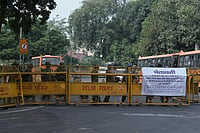
DU bans protests and assemblies for a month, citing law-and-order concerns after recent clashes.
Teachers and an EC member call it a curb on the constitutional right to protest.
Move comes amid divisions over UGC equity rules, NEP and faculty-related disputes
The University of Delhi has imposed a month-long ban on protests, rallies, public meetings and other forms of demonstrations on campus following recent clashes during a student mobilisation around the proposed UGC equity regulations, triggering strong objections from sections of teachers and members of the Executive Council.
During the protest, an influencer, Ruchi Tiwari, who was covering the events, alleged she was assaulted, while student bodies alleged she incited violence. Due to this, a massive controversy took place between the All-India Students’ Association (AISA), which was supporting the demonstration organised by the All-India Forum for Equity, and the Akhil Bharatiya Vidyarthi Parishad (ABVP).
In an order issued on February 17, the Proctor’s office said the decision was based on inputs that large gatherings could disrupt traffic, threaten safety and disturb public peace. The notification said past protests had, at times, escalated beyond the control of organisers and led to a deterioration in the law-and-order situation.
The restrictions, to remain in force for one month unless withdrawn earlier, cover assemblies of five or more people, slogan-shouting, speeches, dharnas, processions and any activity that could affect normal movement on campus.


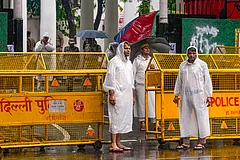
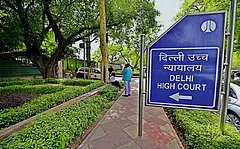

The move comes days after a demonstration called by the All-India Students’ Association in support of the UGC’s Promotion of Equity in Higher Educational Institutions regulations. The protest saw a confrontation between student activists and a YouTuber, with both sides accusing each other of assault and abuse. Police have registered two FIRs based on the complaints. The equity regulations themselves are currently stayed by the Supreme Court, but continue to divide opinion within the university.
DU Proctor Manoj Kumar Singh told Outlook the situation really worsened during the recent protests and the ban has been put into place to avoid such incidents from taking place again. “We have to protect our university. People can say whatever they want to, we will not let anyone ruin the reputation of our university,” he said.
Singh added that currently the emotions are “running high” and the university wants to prevent anyone’s sentiments from getting hurt in the future. “Seminars are most welcome but protests are completely banned,” he said, adding that the decision has been taken for maintaining law and order.

‘Attack on a vibrant democratic space’
Abha Dev Habib, secretary of the Democratic Teachers’ Front and associate professor at Miranda House, said the ban must be seen in the context of ongoing debates on equity and representation in publicly funded universities. “The right of people to protest is a constitutional right…Delhi University has always been a vibrant place and current lockdown should be seen in the context of UGC regulations for equity.”
Linking the decision to the demand for institutional mechanisms against discrimination, she said that the crackdown is a part of the strategy to silence the demand for an end to “discrimination” and for wanting “equity”.
Habib also questioned the administration’s response to the recent clashes and said that the authorities have no real footage that shows violence against Ruchi Tiwari by the protestors. “However, there is footage of 13th November showing violence on a professor. It is only unfortunate that the administration has not condemned even one,” he added.
Habib said that universities already have procedures through which protests can be regulated without a blanket prohibition, including prior intimation to the police and administrative oversight to maintain order.
Mithuraaj Dhusiya, an elected member of the Executive Council, also opposed the order, calling it an unacceptable restriction on democratic functioning within the university. In a statement that he shared with Outlook, Dhusiya said that it is the responsibility of the University and its constituent colleges to ensure that peace is maintained.
“Clampdown on protests and movements in the guise of ‘obstruction of traffic’ etc in the University is not acceptable at all,” he said.
He added that the directive raised concerns about whether the administration was attempting to curb mobilisations on several contentious issues. He said the order raised concerns about whether the administration was trying to curb mobilisations on several contentious issues, including appointments, the implementation of the NEP and teacher suspensions, asking, “does the DU administration not want public meetings and movements?”