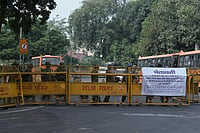
Students representing the open merit category from Kashmir are demanding that the government increase their current 40% job percentage to 65%.
On Sunday, authorities foiled the protest by the student leaders by detaining activists and politicians who have been seeking rationalisation in the reservation.
Chief Minister Omar Abdullah has stated that the cabinet has cleared the reservation rationalisation, and a file has been submitted to the Lieutenant Governor, Manoj Sinha, for approval
On Sunday, authorities foiled the protest by the students by detaining political leaders, including National Conference MP Aga Ruhullah, PDP MLA, Waheed Para and the party leader Iltijja Mufti, as they were planning to hold a demonstration in Srinagar city against the delay in rationalisation of reservations.
A day later, however, the students remained unrelenting, and they rejected the proposed move by the government to increase the quota of the open merit category to 50%.
“We will not stop until we get justice. Some of our student members were also detained, and they have been released now. And the leaders who were supporting us were also put under house arrest. We held the discussions earlier with the government, including Social Welfare minister Sakina Itoo, and we will not budge until the reservation is increased to 65%,” says Tafazul Bilal, a member of the Open Merit Students Association (OMSA).

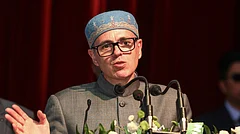


The government headed by chief minister Omar Abdullah has proposed to increase the reservation of the open merit category to 50% after a cabinet subcommittee report was discussed by the Council of Ministers and sent to the Lieutenant Governor Manoj Sinha for clearance.
Jammu and Kashmir rural development minister, Javed Dar, says that the government has kept the interests of the students in mind while finalising the report on the reservation quota. He says that the report has been sent to the LG for approval.
The reservation issue also betrayed the differences within the ruling National Conference (NC) following the detention of its MP Aga Ruhulla. NC chief spokesperson Tanvir Sadiq has denounced Ruhulla’s detention, but former chief minister and party president Farooq Abdullah justified the move.
The issues only sharpened the differences between the NC MP and his party who has been accused by a minister in the Omar Abdullah cabinet for organising these protests against the chief minister on the directions of the central government, which wants to allegedly weaken the elected government. Omar has often taken pot shots at the LG, accusing him of ordering transfers in the departments that were under his control.
The row over the reservation erupted after LG Manoj Sinha granted a 10% job quota to the Paharis before Omar assumed office which curtailed the share in employment percentage of open merit students. A section of Pahari leaders has warned of strong protests if their quota is reduced by the government.
National Conference MLA and Pahari leader, Javed Mirchal, however, says that the government of Omar Abdullah has viewed the welfare of all sections of society as its prime responsibility. “The elected government is committed towards the welfare of Pahari-speaking people, and there is no such move to reduce the reservation percentage of the scheduled tribe category,” he says.
In the recent job advertisements issued by the government, open merit students have been getting 40% share, scheduled caste 8%, schedule tribe 20%, other backward classes 8%, those living along the Actual Line of Control (ALC) and international border (IB) 4%, while 10 percent jobs are reserved each for the Resident of Backward area (RBA) and the Economically Weaker Sections (EWS) category. Students representing the open merit category say that their actual share in the jobs was even lesser than 40 per cent as the horizontal reservations are mostly adjusted in the general category.
“We have urged the government that if the students from different categories are selected for jobs in the open merit category, then their corresponding share in their own category should get transferred to the general merit,” says Tafazul.
Schedule caste activist, R K Kalsotra, however, says that the government cannot increase the job percentage of the open merit to 65% by reducing the constitutional reservation quota of other categories.
“The ST quota for the Paharis has been created by the government for political purposes by giving reservations to affluent sections of society. But when it comes to reducing the quota for the EWS category, the government has limited powers to do that as it is a reservation provided by the Constitution. We are seeking that the reservation should be rationalised in a manner that those getting constitutional reservation should benefit and not those categories which have been created for political reasons only,” he says.
“We are in favour of increasing the reservation of the open merit category to 53%, but at the same time the reservation of the OBCs should be also increased to 15% while that of the STs to 12% and the SCs to 8% which will leave those who have the original right over reservation restricted to only 43%,” adds Kalsotra.