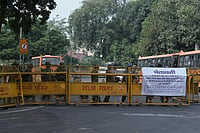
Police and RAF stopped a JNUSU march at JNU, detaining over 40 students as around 700–800 protested.
Students sought the Rohith Vemula Act, UGC equity regulations, restoration of funds, and VC’s resignation over alleged casteist remarks.
Protesters claimed gates were locked and force used; no official response yet.
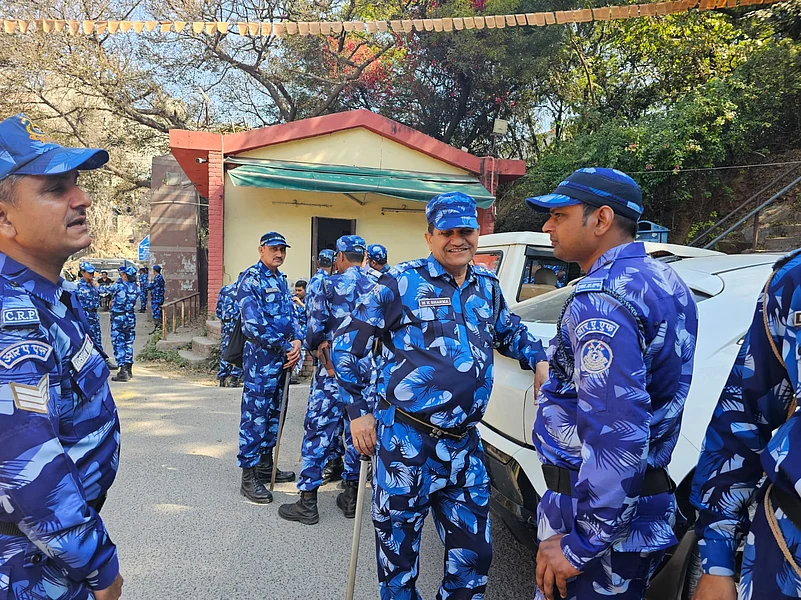
At least 40–50 students were detained on Wednesday after the Delhi Police and the Rapid Action Force (RAF) stopped a “long march” called by the Jawaharlal Nehru University Students’ Union (JNUSU) at Jawaharlal Nehru University.
Students alleged that around 700–800 of them, had gathered on campus before police sealed the main gate with multiple locks and barricades, preventing them from marching towards the Ministry of Education.
Nitish Kumar, former president of the Jawaharlal Nehru University Students’ Union, who has also been detained during the protest, said that they were not allowed to march. And the JNU gate was closed with four locks.
“We somehow broke the locks and also broke the barricades, but after that they started detaining people. They started beating people as well, ”he added.
Kumar added that there was no clarity on the exact number of detainees as police continued to pick up students. “Even now, people are standing firm at the JNU gate, but they are gradually detaining people,” he said, adding that he did not know where he was being taken.


Protest Over VC’s Remarks, Rohith Vemula Act
The march was called to demand implementation of the University Grants Commission’s equity regulations, enactment of the proposed “Rohith Vemula Act,” the resignation of Vice-Chancellor Santishree Dhulipudi Pandit, and restoration of university funding.
The immediate trigger for the protest was a podcast appearance by Pandit earlier this month on the YouTube channel of The Sunday Guardian, where she allegedly commented on caste-based discrimination policies.
Referring to victimhood politics, Pandit said: “There is permanent victimhood, and you cannot progress by being permanently a victim or playing the victim card… By making somebody the devil, it is not easy to progress… It is manufacturing realities… Where I am the permanent victim whatever happens and you are the permanent oppressor. That doesn’t at all work.”
Student groups and several faculty members have termed the remarks insensitive and casteist, arguing that they undermine structural discrimination faced by Dalit and other marginalised communities in higher education institutions.
On February 24, former JNUSU president Dhananjay filed a complaint before the National Commission for Scheduled Castes and Scheduled Tribes, alleging that the Vice-Chancellor’s remarks promote “hatred and ill will” against Dalits and other marginalised communities. The complaint seeks action under Section 3(1)(u) of the Scheduled Castes and the Scheduled Tribes (Prevention of Atrocities) Act, 1989, along with an independent investigation and her removal from office.

“Gates Chained, Barricades Everywhere”
Videos shared by the JNUSU media cell show heavy security presence at campus gates and students being escorted to police vehicles.
In one video, JNUSU president Aditi Mishra spoke about the march, alleging that hundreds of police and RAF personnel were deployed and that the university gates were chained and locked.
“Barricade after barricade. They even had the audacity to put chains and locks on the gates of our university,” she says in the video, adding that several students were detained and that some were allegedly beaten.
Another video shows Danish Ali, JNUSU Joint Secretary, alleging that when students attempted to move forward after breaking the locks, police resorted to lathi-charge and detentions. She claims that some men in mufti were also present and assaulted students.
“When we were taking out a peaceful march towards the Ministry of Education, we saw how the Delhi Police arrived with a strength of around 700 personnel,” Ali says in the video. “Why is it that every time students protest, the police arrive, beat them, assault them, and detain them?”
According to Nitish Kumar, multiple complaints have been filed against the Vice-Chancellor over the past weeks, but students claim there has been no formal engagement from the administration.
“Nothing. They have not held any meeting or anything with us,” he said.
The march was supposed to begin around 2.30 pm on Thursday but it ended even before it could start . The university administration and Delhi Police had not issued an official statement at the time of publishing.