



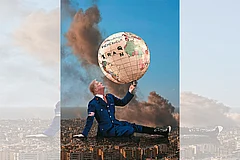
U.S. military interventions—from Iraq and Afghanistan to Libya and Iran—have often been framed as missions of freedom and democracy, but critics say this rhetoric appears selectively depending on Washington’s strategic interests.
Regime-change interventions have frequently produced prolonged conflict or political instability, as seen in Iraq, Afghanistan and Libya, raising questions about whether democracy can be imposed through military force.
Analysts argue that the U.S. invokes human rights and liberation against adversaries but rarely uses the same language in conflicts involving allies, shaping global perceptions of American power and credibility.
On March 19, 2003, as American forces crossed into Iraq, President George W. Bush addressed the world from the White House.
“The people of the United States and our friends and allies will not live at the mercy of an outlaw regime that threatens the peace with weapons of mass murder. We will pass along to our children all the freedoms we enjoy, and chief among them is freedom from fear,” he said.
Within weeks, Baghdad fell. Statues of Saddam Hussein were pulled down in scenes broadcast globally as visual shorthand for liberation. But by the end of that year, Iraq had descended into insurgency.
For decades, the United States has framed key foreign interventions as missions of liberation, to free people from dictatorship, terrorism or repression. From Baghdad to Kabul, American leaders have spoken of democracy, women’s rights and human dignity. Yet in other conflicts, particularly Palestine, Washington’s posture has been markedly different, relying on strategic alliances or limited military engagement without invoking the same liberation rhetoric.


Critics call this pattern ‘selective liberation’: the deployment of human rights language when aligned with US strategic interests and its relative absence when it conflicts with them.
The idea resurfaced sharply on February 28, 2026, when a joint US-Israeli military campaign struck targets across Iran. Within hours, Iranian state media confirmed that Supreme Leader Ali Khamenei had been killed in the strikes.

The death of a sitting supreme leader at the hands of foreign militaries was unprecedented in the modern history of the Islamic Republic and immediately triggered geopolitical shockwaves. Protests erupted across West Asia and South Asia. Demonstrators gathered in Karachi, Baghdad and Tehran, while anti-war rallies also took place in Washington and New York.
One protester in Washington told The Guardian, “We’ve seen this play out before; regime change doesn’t end conflicts, it just creates new ones.”
The US justification for the operation rested partly on concerns about Iran’s nuclear programme. Yet Rafael Grossi, head of the International Atomic Energy Agency, appeared to complicate that narrative, noting that inspectors had not found evidence that Iran was actively building a nuclear bomb, even though concerns remained about enriched uranium stockpiles.
As many as 1,332 people have been killed so far, according to the Iranian Red Crescent. Nearly 168 schoolgirls and staff were killed in the attack by the Israeli missile on the Shajareh Tayyebeh school. Most of the victims were students aged seven to 12 years old.
The episode revived a long-standing debate among analysts about how the United States frames its military interventions.
“The United States has always relied on very high-sounding principles to justify power politics,” says Talmiz Ahmad, a veteran diplomat and West Asia expert. “During the Cold War, the rhetoric was about defending the ‘free world’ against authoritarian communism. Today, it is about democracy confronting authoritarian rule. The language changes, but the logic of power remains the same,” he adds.

According to Ahmad, the gap between rhetoric and reality has been a defining feature of American foreign policy for decades. “If you look historically, very few countries have become stable democracies as a direct result of US military intervention,” he says.
The invasion of Iraq remains the most widely cited example of liberation rhetoric colliding with geopolitical reality. In 1998, the US Congress passed the Iraq Liberation Act, formally declaring that removing Saddam Hussein and promoting democracy in Iraq was official American policy. After the September 11 attacks, the Bush administration framed regime change as both a strategic necessity and a moral imperative.
Bush repeatedly described the war as an effort to free Iraqis from dictatorship. “The Iraqi people are worthy and capable of self-government,” he says.
No stockpiles of weapons of mass destruction, one of the central justifications for the invasion, were ever found.
According to the Costs of War Project at Brown University, the war led to roughly 268,000 to 295,000 deaths between 2003 and 2018, including more than 180,000 civilians. Sectarian violence tore through Iraqi society, millions were displaced and the collapse of state institutions helped create conditions for the rise of ISIS.
“We wanted freedom. We did not want chaos,” an Iraqi civil servant told The New York Times in 2004, a sentiment that came to define how many Iraqis viewed the aftermath of the invasion.
Two years earlier, the United States had launched another war framed through the language of liberation.

After the September 11 attacks, Washington invaded Afghanistan to dismantle al-Qaeda and remove the Taliban government that had sheltered the group’s leadership. The intervention initially enjoyed broad international support.
But as the war expanded into a two-decade nation-building project, American rhetoric increasingly emphasised democracy and women’s rights.
In a radio address in 2001, First Lady Laura Bush declared that the fight against terrorism was also “a fight for the rights and dignity of women.”
Girls returned to school, billions in aid flowed into reconstruction projects and elections were held under a new constitution.
Yet, the Taliban were never fully defeated. When US troops withdrew in 2021, the Afghan government collapsed within weeks and the Taliban returned to power. “They spoke of liberating us,” an Afghan women’s rights activist later told the BBC. “But liberation without security is temporary.”
Historian Vijay Prashad, director of the Tricontinental Institute for Social Research, believes the pattern is deeply embedded in American foreign policy. “The United States has never been genuine about its use of terms such as human rights or its concern about Iran’s nuclear programme. Since the 1979 Iranian Revolution, the project has essentially been the overthrow of the Islamic Republic,” he says.
To Prashad, the rhetoric surrounding Iran today echoes language used in earlier interventions. Washington frequently presents conflicts as struggles between freedom and tyranny, yet its alliances rarely follow those same moral lines. “Terms like ‘human rights’ or ‘democracy’ appear when governments opposed to the United States come to power. When friendly regimes rule, the same language disappears,” he argues.
Nowhere is that rhetoric more conspicuously absent than in the Israel-Palestine conflict.
While the United States officially supports a two-state solution, it has also remained Israel’s closest strategic ally, providing billions in military assistance and shielding it diplomatically at the United Nations.

Human rights organisations, including Human Rights Watch, have documented alleged violations in the occupied Palestinian territories, including settlement expansion and restrictions on movement.
Since October 2023, Gaza has witnessed devastating violence. According to Palestinian health authorities, tens of thousands of people have been killed during the conflict. Yet, Washington rarely frames the crisis in terms of Palestinian liberation.
“Israel is the United States’ most important strategic ally in West Asia,” says senior journalist Seema Sirohi. “That is why you see a very different approach. The US supports a two-state solution in principle, but it has never really put the kind of diplomatic muscle behind it that might force a settlement,” she adds.
In 2011, the United States joined NATO’s intervention in Libya during the uprising against Muammar Gaddafi. The operation was framed as a humanitarian effort to prevent civilian massacres.
The intervention succeeded in toppling Gaddafi but left Libya fractured between rival governments and militias. Former US President Barack Obama later described the failure to stabilise Libya after the war as the “worst mistake” of his presidency.
This, Max Abrahms, a scholar of US foreign policy and terrorism, says, is a way for American leaders to frame interventions differently depending on political circumstances. “The stated rationale for intervention can change depending on what is politically acceptable at the time. The United States said it was intervening to protect civilians, but the real outcome was regime change,” says Abrahms.
In Sudan, decades of sanctions and diplomatic engagement have failed to prevent the country’s descent into another devastating civil war.

For Ahmad, these examples illustrate the limits of external intervention as a tool for democratic transformation. “Change cannot be imposed through military power. Real political transformation has to emerge from within societies themselves,” he says.
Iranian author and historian Arash Azizi says the reaction among Iranians themselves has been deeply divided. “Many anti-regime Iranians believed Donald Trump when he said help was on the way and thought the United States could play an emancipatory role. But now they are faced with rising civilian casualties and no clear path to the regime change they hoped for,” he says.
Azizi adds that the Gaza war has also reshaped how Iranians view American power. “Israel’s assault on Gaza, with full US support, has tarnished the American image around the world. Iranians have complex views of the conflict because of their own government’s support for Hamas, but the perception of US double standards is widespread,” says Azizi.
In Venezuela, Washington recognised opposition leader Juan Guaidó as the country’s legitimate president in 2019 and later conducted a controversial operation that resulted in the capture of President Nicolás Maduro. The intervention was justified as a response to narcotics trafficking and authoritarian rule, but critics argued it violated international law.
In each case, the outcomes have been contested and unstable. The recurring pattern raises a fundamental question: can liberation ever be imposed from outside?
Prashad believes history suggests otherwise. “Change cannot come with a destructive war from outside that then tries to enforce something. We have no successful examples of that. Transformation must come from within societies themselves,” he says.
The contradiction between rhetoric and reality continues to shape global perceptions of American power. When liberation is invoked selectively, loudly in some conflicts and absent in others, the language of freedom itself begins to lose credibility.
Across Iran, Afghanistan and Iraq, military operations are shaped by geography. Much of Afghanistan and western Iran is dominated by rugged mountain systems such as the Hindu Kush and the Zagros Mountains, where steep slopes and narrow passes restrict troop movement, complicate supply lines and offer natural cover for ambushes and guerrilla tactics. These landscapes then transition into deserts and plains across Iraq and parts of Iran, allowing easier movement for mechanised forces but exposing troops to long-range attacks and difficult urban warfare.
Against this backdrop, Ahmad argues that a large-scale ground war remains unlikely for now. Drawing on the experience of US wars in Afghanistan and Iraq, he says Washington has learned that “boots on the ground” turn soldiers into direct targets, which is why military objectives are more often pursued through bombardment rather than a land invasion. Any attempt at war, he suggests, would face strong domestic pressure if casualties begin to mount in the United States.
“So long as there are no casualties, the US can get away with mass murder,” says Ahmad.



Mrinalini Dhyani is a senior correspondent at Outlook. She covers governance, health, gender and conflict, with a strong emphasis on lived realities behind policy debates.
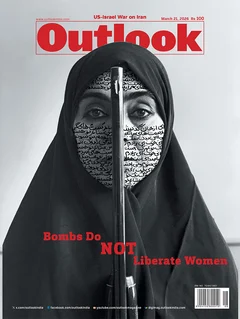
This article is part of Outlook 's March 21 issue 'Bombs Do Not Liberate Women' which looks at the conflict in West Asia following US and Israel’s attacks on Iran leading to the assassination of Ayatollah Ali Khamenei, while the world wondered in loud silence, again, Whose War Is It Anyway?















