This so-called ‘victimhood’ is rejoiced and regurgitated by the proponents of Brahmanism.
Dalits’ socio-economic existence continues to be adversely affected by debilitating caste violence.
The VC’s views seem to share clear parallels with RSS-inspired politicians.
One of India’s premier institutions of Higher learning, JNU often makes the headlines which are attributed largely to its highly assertive and vibrant students’ politics. Again, the institution is in the news, but this time for its Vice-Chancellor Shantishree Pandit’s remarks against Dalits and Blacks on the Sunday Guardian podcast. “Dalits and Blacks”, she asserted, “are drugged with victimhood”.
One wonders what could have occasioned her to make such remarks that are now being expectedly construed as casteist and racist. Despite having taught political science at the Savitribai Phule Pune University for decades and having come from the Other Backward Class, she would be expected to be sympathetic to socio-economically deprived communities such as Dalits and Blacks.
The disparaging remarks divest them of political consciousness as if they inherently lack the capacity to think rationally. With such a sweeping characterisation, she could be said to be belittling the historic struggles these communities have led for centuries against casteism and racism. Her remarks suggest that Dalits and Blacks manufacture their dehumanisation. The attribution has denounced the path-breaking contributions of such iconoclasts as Jotiba, Savitribai Phule, Dr. Ambedkar and several others to exorcise Indian society of the spectre of caste. This Brahmanical brainchild has marginalised Dalits’ socio-economic existence for centuries.

Castigating the existence of a birth-based hierarchical system does not seem to be her concern. Her interest rather seems to be fixated on denouncing the significance of empowering policies such as Reservation. It also questions the institutionalisation of the Scheduled Castes and Scheduled Tribes (Prevention of Atrocities) Act, 1989 that safeguard the physical well-being of Dalits and Adivasis. These constitutionally-guaranteed interventions, it was hoped, would potentially enable these communities to lead the life of dignity. But despite these protective mechanisms, which evolved through parliamentary debates marked by the erudition of India’s law makers over the years, the ideal of annihilating caste from India has continued to elude its law makers.



This is attested by the cases of caste violence against Dalits that are reported daily from rural and urban India. Several sociological and anthropological studies have shown caste being practiced both covertly and overtly in India. To negate this avatar of caste blighting their lives, Dalits had made the demand for a separate homeland for themselves under the rubric of Dalitsthan in the 1970s. Showing sagacity, however, Dalits did not persist with the demand deciding instead to take caste head-on through constitutional means pledging their loyalty to the secular credentials of India’s constitution.
If Dalits were drugged with victimhood, they would not have imagined their future without caste oppression. But Prof. Pandit’s remarks demonstrate that she refuses to recognise the persistence of casteism and racism being practiced against Dalits and Blacks respectively. Similarly, her remarks also deny the political significance of egalitarian Buddhism Dr. Ambedkar single-handedly revived. This revival created the politico-religious and economic consciousness among Dalits freeing them from the yoke of Brahmanical Hinduism. This is shown by the existence of Dalit middle-class. But despite these gains, they continue to encounter virulent effects of caste.
Dalits’ socio-economic existence continues to be adversely affected by debilitating caste violence. Even India’s institutions of higher learning have not remained immune to the pernicious affliction of caste. Several suicides of Dalit and Adivasi students due to alleged casteism show that caste has penetrated through these urban citadels. Rohith Vemula, Dr. Payal Tadvi and Darshan Solanki are some of the recent cases that come to mind. But those who subscribe to Brahmanical Hinduism refuse to recognize knowingly or unknowingly the ill-effects of caste much less denounce them. Appeared to be deeply smitten by the caste logic, the spin-doctors of Brahmanical Hinduism like Prof. Pandit seem to treat the caste subjugation of Dalits as a commonsense desired to be reproduced.

If Dalits really believed in caste profiteering off Indian society, as Prof. Pandit’s remarks suggest, they would have manufactured victimhood against Brahmanism akin to that of her ideological guru, the RSS that constantly excoriates the legacy of the Mughals. Barring their aesthetically grand monuments adorning India’s geography, the then mighty Empire is long gone. But the proponents of Brahmanical Hinduism holding India’s Muslims to ransom brazenly milk the religious cow to inflame communal passions.
This is aimed at thrusting upon secular Indians the divisive imagination of Hindu Rashtra. Most constitution-abiding secular Indians find this imagination unpalatable. The RSS sells this phantasmagoric vision to the ‘Hindus’ who had been liberated from the yoke of the Mughal subjugation three hundred years ago. This victimhood is rejoiced and regurgitated by the proponents of Brahmanism.
If Dalits had been possessed by a victim mindset, they would have challenged politically and legally the institutionalization of unconstitutional ‘reservations’ for economically weaker sections. Drugged with victimhood are those twice-born castes that for decades in the name of preserving merit vilified reservation policy for the empowerment Dalits and Adivasis. Buddhism was banished from India and its monasteries were converted into temples by Brahmanical forces erasing the rich anti-caste history.
Today’s Neo-Buddhists, formerly Dalits, who followed Dr. Ambedkar’s clarion call embracing Buddhism in 1956, have not demanded the restoration of the anti-Brahmanical heritage. They certainly would have, if they were high on caste-induced victimhood. Unabashedly self-serving, Brahmanical forces have time and again squandered the state resources to realize their religious and mythical fantasies to reassert their cultural hegemony over non-Brahmins. Brahmanical religious practices are anti-nature. They have spoilt our pristine rivers and mountains by constructing temples on them as well as dumping religious trash into them. Environmental pollution left behind by myriads of religious rituals is stubbornly justified in the name of religion. Raising critical questions about these issues is termed as anti-Hindu.

Although terming the VC as casteist and racist is indeed a harsh indictment, it cannot be termed as wholly unjustified. Her denunciatory comments browbeat her own accomplishments that eulogise her elevation to be JNU’s first-OBC-woman Vice-Chancellor.
This claim now rather sounds as a self-congratulatory back-patting which denudes it of its moral appeal. It now appears as merely an instrument deployed to acquire positions of power. Such an instrumentalisation of one’s social identity may be highly rewarding for one’s personal growth, but it jeopardises the interests of the deprived caste as a whole. And it allows the hegemonic power to reproduce its pernicious effects that perpetuate the dehumanisation of that socio-economically marginalised caste. Hence the moral claim that Prof. Pandit makes to stand apart the twice-born castes is at best vacuous.
Before making the controversial remarks, she appears to have given no credence to the feelings of several hundred students and teachers from socio-economically marginalized backgrounds that study and teach at the institution she is heading. She now stands dispossessed of the moral courage to defend the alleged denigrating remarks.
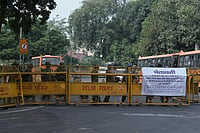
With those offensive remarks, she appears to have renounced the very principle of the Constitution that celebrates equality. She now appears to be no different from those who shouted such an incendiary slogan as Brahmanvad zindabad (Long live Brahmanism) during anti-UGC-Equity regulations protests in Delhi recently. This inflammatory slogan would undoubtedly sound offensive even to the sensibilities of a constitution-abiding Brahmin.
After facing the backlash, the VC has now reportedly said that her words have been taken out of context. Have they been? What is the context she would expect us to understand while deciphering the real meaning in her assertions? The only context by which her remarks seem to have been influenced is her desire to be rehabilitated elsewhere with a plum position after completing her tenure at JNU.
This is perhaps the context within which one can situate her distasteful remarks. The reason for this conclusion lies in the way her predecessor functioned. He vilified JNU, denied promotions to several deserving SC, ST and OBC faculty members. He took no action against those outsiders who brazenly entered the university perpetrating grievous violence on its teachers and students and who were allowed to disappear without being held accountable; they continue to remain untraceable.
These ‘achievements’ eminently qualified him for the coveted position of the UGC Chairmanship and a prestigious Padmashree. Perhaps Prof. Pandit is also using her predecessor’s ‘sterling accomplishments’ as a roadmap to reach the destination loaded with plumb positions.

Her criticism of the UGC Equity Regulations of 2026 lacks a thoughtful and constructive engagement, if there may be any. Contrarily, she has attributed a motive to those involved in drafting the regulations. Her allegation that the regulations were secretly drafted keeping the Government and the concerned ministry in dark reflects poverty of thought. Moreover Prof. Pandit’s views seem to share clear parallels with those of the RSS-inspired twice-born BJP politicians who have persistently questioned the relevance of Constitution to Indian society.
No longer confined to the fringe of our polity, these views seem to have taken the Centre stage of our institutions of higher learning. This means that these institutions are not only being potentially weaponised to reproduce Brahmanism, but also to inflict epistemic violence on Dalits.
Pradeep Shinde is Assistant Professor, Jawaharlal Nehru University.
Views expressed are personal.