For three decades, and especially through the last 13 years of industry disruption and the COVID pandemic, Outlook survived by refusing to compromise on editorial independence, credibility, and journalistic values
Outlook’s shift to a digital-first strategy proved that reinvention is possible without abandoning the brand’s irreverent DNA
By dismantling patriarchal newsroom norms, Outlook reshaped not just its content but the culture of leadership in Indian media.
It was in 2012 when I walked into the Delhi Outlook Magazine office and realised that this was a place that was throbbing with a rare energy that newsrooms are known for and I knew I’d always keep that intact. To be on the other side of a media organisation is a difficult road to navigate and yet, it comes with a unique fulfilment that I have felt often as I have defended the editorial freedom and integrity as the CEO.
A news organisation is not just a business. It is many more things. It means one has to respect the news, treat it as sacred and never compromise. I am proud that I have not compromised ever when it comes to Outlook even as the media landscape changed and we saw very difficult times. Outlook kept us afloat. It kept us going despite the criticism, the allegations because truth is often dignified, silent and never petty. We know our truth.
The next 13 years would be crucial for us. Outlook’s transformation over the last 13 years is a story of survival against all odds and a story of a magazine that never compromised on its core values. It is not easy for someone on the business side to protect the editorial independence at a time when compromises were being made.


For the first eight years after my arrival in Delhi, it was about keeping sales from falling further and it was a tough task to reverse this decline. Many predicted I would leave. Others speculated that the promoters had brought me to shut down operations entirely. None of the two happened.
I stayed. At the time, a seasoned CFO and a strategist from the Raheja group asked me to understand every line of the company’s financial statements, which was a completely new domain for me then. What I discovered in those numbers was deeply worrying.
In 2013, scaling operations became the only viable path forward. This approach offered us a temporary relief, but we knew it was only a short-term fix and survival became the defining challenge for the next decade. And then, the COVID pandemic hit us. It hit us hard. Magazines began to shed. Acquisitions in the sector were announced and these would focus more on digital advertising and brands as disruptive strategies. We were a weekly, and consumers demanded more timely updates, and in order to do this, we would need to get more resources, and monies were hard to come by. With all the updates and other non-traditional media and people bringing out specialised content thereby reducing the dependence on the magazines for exclusivity of content, the magazines were faced with a severe task of a rethink. The format itself became a challenge as magazines are a physical and tangible product and even if we would enter the digital space, the subscriptions of the magazine had to increase in order for us to keep printing it.
The pandemic raised an existential question: Would Outlook survive? During COVID, our promoters gave a clear directive—to adopt a digital-first strategy. Our task was to not let the magazine die by leveraging strong branding on social media and online to make younger audiences aware of the brand and use digital advertising to invest in the print. We had to adapt while not letting go of our core.
We formed a small team and worked intensely with late nights stretching into months, reaching out to experts and friends for guidance while building a team suited to this new era. This transformation took place while we accepted substantial salary cuts and moved ahead without any certainty that the digital-first pivot would succeed. It was an uncertain time, but my faith in Outlook never wavered.
The brand has always stood for credibility. Our sister publications—Outlook Traveller, Outlook Money, and Outlook Business—have consistently upheld high editorial standards and reader trust, strengthening the overall Outlook ecosystem.
For years, we struggled. At one point, we didn’t have enough money to buy toilet paper for the organisation, but we kept going. Relentlessly and faithfully.
The breakthrough came in 2023, which became a defining moment and clear proof that organisational transformation was possible and even viable. Outlook moved from a survival mode to a recovery path and then, finally towards sustainable growth.
Today, the organisation is healthy again. The senior leadership team and all publishers who work directly with me have 10-15 years of institutional continuity, which helps us handle crises together and maintain strategic consistency, even as we plan for the next phase in a fast-changing media environment. The promoters stood by us and supported us through the difficult times and through the transformation that were considered risky, but Outlook stands for risk and as we went into uncharted waters, we had the journalism that we did as the lighthouse guiding us to safe shores. We faced a lot of judgement for being who we were. Irreverent. This is how the magazine had first started. With a cover on Kashmir and the question of freedom. Copies of the magazine were burnt in various parts of the country. We remained unfazed.
It is that the DNA of the brand that keeps us going.
We had to make tough choices. Hard decisions had to be taken. There was nothing personal and we were led by our unshakeable faith in the magazine’s potential to ward off challenges. The then editor wasn’t ready for the digital shift and we had to part ways. We needed newer ideas, a different way of looking at the news and we decided to find a person who would take risks and free the newsroom from rigid ideas and perspectives.
It was around this time that I met Chinki Sinha. She had worked in several media organisations and in 2021, she was looking to go to Columbia University for her Master of Fine Arts. She had her admission letter and her scholarship, and it took me some convincing for her to join us. Many in Delhi’s media circles saw her appointment as a big gamble, but my aim was to bring in a fresh editorial perspective, move away from a weekly roundup format, and introduce more flavour and variety into the magazine and most importantly, become more subversive and move away from male-dominated newsrooms to give women a chance.
Again, our strategy was not digital-only, but digital-first, which meant that we would need to transform the physical magazine and link it with the digital edition.
We consciously decided not to copy the formulas of other publications and instead build our own niche. Some critics claimed we had abandoned Vinod Mehta’s legacy, but in reality, Vinod himself would never have followed just one fixed path. He was an editor who took risks and he had come from a diverse range of publications, including Debonair magazine. He emphasised on writing well and reporting fearlessly. All our editors in the past have been unique in their approaches and their unique personalities reflected in the way the magazine shaped.
Chinki stayed despite the challenges. She was judged and criticised, called all kinds of names and her character was questioned by many who were not ready to accept a woman as an editor leading a news magazine. It is unfortunate that a woman editor is held to different standards than a male editor, but as an organisation, we knew this all along and we stood our ground. Women editors were a rarity and they found space only in lifestyle magazines because the general perception was that they weren’t political enough. That is a patriarchal and parochial way of looking at who gets to lead a newsroom.
Several other women were appointed as editors in newspapers and magazines after Outlook decided to make its newsroom diverse, equal, and inclusive.
We appointed other women editors in the group. At present, 70 per cent of our workforce is women and that’s something that makes us proud as a media organisation in a world that places a higher value on men. The dismantling of the old guard was necessary. The dismantling of structures that were not inclusive had to be done. Transformation and redemption are hard goals. We are a work in progress, but we have a vision.
Outlook changed to a thematic magazine when Chinki came in and she argued that in order to stand out, risks like these must be taken.
We no longer wanted a ritualistic exercise in stereotypes. Change is hard. We surged ahead with this. We decided to step out of the weekly format, and now we come out once in 10 days in order to give us more time to contextualise news and report from the ground. Chinki’s idea was to go for a collective approach and bring in voices of all kinds and diverse forms.
I often think of the Bengali magazine Desh from Anandabazar Patrika, which was both political and literary, publishing fiction, poetry, and essays that readers genuinely looked forward to, and that is the kind of storytelling power Outlook went for.
Transitions are always messy. A new person, especially a woman, has to deal with resentment and misplaced expectations. Chinki was new to newsroom management. After COVID, many were reluctant to return to the office and Chinki insisted on reporting from the ground signalling a return to the good old-school journalism that meant no armchair reporting. There was a pushback. It was not unusual. It was also not unexpected.
I pushed for closer integration between print and digital operations, which met strong resistance from journalists who were uncomfortable with the speed and style of digital journalism and an increased emphasis on reporting and writing well.
Our goal was very clear. We did not want content churners; we wanted journalists. We expected them to step out of the office, report from the field and bring back original stories.
We faced the ire of many who made unfair and untruthful allegations.
But dignity is utmost and we are undeterred by all the negativity that surrounds us and we will continue to protect our editorial independence and our innovative approaches against all that threatens to pull us down.
We have stood by every journalist over the last 30 years as we fought numerous legal battles. Like all other media organisations, we do take government advertising but we handle it with full transparency and professional standards. All such advertisements are clearly labelled as advertorials, which is in line with established industry norms.
Today, three women editors head our major verticals, all of whom joined in the immediate post-COVID period. As an organisation, we have zero tolerance for discrimination against women that is now so apparent in the way people have looked at our editors who are neither compromised nor weak.
For me, the challenges remain and I will continue to work on making Outlook a place where stories are told without bias and a space where editorial and integrity is upheld at any cost.
Facts are uncomfortable for those that have tried all forms of insinuations, but it is an exercise in futility to indulge the judgements because stories need to be told and everything else is noise.
I am proud to have been here and worked with those who have been irreverent in their being and approach.
With that, we move forward with our legacy intact. In the pages of this issue, you will find what we have stood for and what we continue to safeguard. Credibility.
Indranil Roy is chief executive officer, outlook group of publications

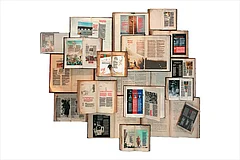
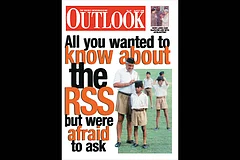
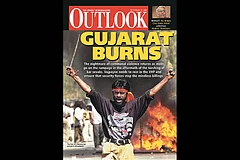

This article appeared as Fully-Loaded Magazine in Outlook’s January 01, 2026, issue '30 years of Irreverence' which commemorates the magazine's 30 years of journalism. From its earliest days of irreverence to its present-day transformation, the magazine has weathered controversy, crisis, and change.