Internet access in India evolved unevenly but became socially transformative in the 2010s with smartphones, cheap data and widespread connectivity.
Social media platforms reshaped communication, identity, politics and attention, privileging speed, visibility and constant self-disclosure over depth.
Outlook’s thematic issues captured these cultural shifts—tracking how technology, media, memory, art and intimacy changed Indian social life over time.
Its arrival was uneven. Cyber cafés became early gateways for urban, middle-class youth, followed by desktop broadband and rudimentary mobile data. Access was slow and limited, yet transformative. Even then, the idea of a parallel digital existence—often loosely described as virtual reality—began to take shape, enabling experimentation with identity and intimacy beyond physical space.
The decisive shift came in the early 2010s. Cheaper smartphones, falling data costs, and the spread of 3G turned internet access from novelty into routine. This was when the internet became socially consequential. It reorganised daily life. We no longer merely used it; increasingly, we lived on it.
Social media accelerated this transformation. Orkut introduced networked sociality; Facebook normalised constant self-disclosure; Twitter compressed politics into fragments; Instagram aestheticised everyday life. Together, these platforms altered discourse itself—flattening hierarchies, shrinking attention spans, and privileging immediacy over reflection.
The smartphone completed this shift. Our online presence began shaping how we lived, loved, worked, and spent our time. We started seeing ourselves through screens. As we spent more time online, we spent less time reading or thinking deeply. Digital platforms are designed to keep us scrolling and reacting. Over time, this changed how we focus, process information, and understand the world.


Opulent Ties: Laxmi Mittal set the template for the Big Fat Indian wedding after he spent a whopping $60 million on his daughter’s wedding in 2004. For Indians back home, destinations ranged from South of France to Bali and performers preferences ranged from Shah Rukh to Kylie

Past in the Present: “Once upon a time” has always been a perfect place to be. The memories of a time and world gone by tug at our collective hearts. As the world got disrupted beyond recognition by the pandemic, this issue of Outlook took the readers back in time

Pretend City: The story of Bombay and the story of Mumbai, told through the eyes of the political leader, the migrant worker, the filmmaker, the gangster. The story of an old city. And a new metro. What is. And what could be

Good News!: The pages in this issue were a work of fiction inspired by the state of news media and were meant for reaction purposes only. Absolutely nothing was wrong. All was well. Hunky dory

Love’s Worth: Love’s signs are everywhere and nowhere in particular. This issue of Outlook explored various aspects of love. On the cover was an artwork by Sudarshan Shetty

The Facebooked: In just a year after it went public, Facebook hooked lakhs of Indians and revolutionised the way we communicated. Outlook examined the social and business phenomenon of the social networking site

Talking to My Selfie: In its 19th anniversary special, Outlook looked back at how the mobile phone, also born in 1995, the same year as Outlook, changed the way we lived, loved, worked, played, thought and looked at ourselves

Twitternama: It was the time when Twitter became an instant rage and politicians, actors, celebs, businessmen and a whole lot of others hung on to their 140-character gyaan on life, the universe and everything. Why was what they were writing so important? Outlook trawled the Twitterverse to find out

Art and Life: After Nobel Laureate and Canadian writer Alice Munro’s daughter Andrea Skinner said that she was abused as a child by her stepfather and her mother kept quiet, Outlook published an issue that ignited the debate—can art and the artist be separated?

Degeneration X: It was a time when cinema, media, theatre, music, art … everything wet duhhhh. Low-brow was truly ruling the waves. An Outlook special

Bulwark Against Despair: It was a time when more than ever there was a need to reclaim the space available for art to reflect the politics in our lives. The fifth edition of the Kochi-Muziris Biennale did just that


Taking Shots for You: While the pandemic was still raging, Outlook met the real-life heroes who made the Covid vaccine possible in India. They were the volunteers in critical human clinical trials for two vaccines

90 on the Board: They were still putting in a full day’s work. They were painters, danseuses, politicians, chartered accountants and booksellers. They were 90 years or more then. What made the nonagenarian grandees carry on so fruitfully when the entire country was battling the 21st century blues? An Outlook special


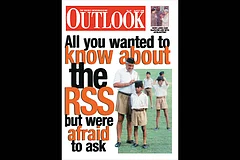

This article appeared as Love, Life, Laugh in Outlook’s January 01, 2026, issue 30 years of Irreverence which commemorates the magazine's 30 years of journalism. From its earliest days of irreverence to its present-day transformation, the magazine has weathered controversy, crisis, and change.