President Trump is reviewing a 14-point Iranian peace plan while expressing doubt over its acceptability.
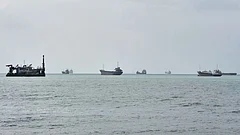
The US has warned shipping companies of sanctions for paying Iranian fees to transit the Strait of Hormuz.
Human rights groups have raised urgent alarms over the deteriorating health of Nobel laureate Narges Mohammadi.
President Donald Trump confirmed on Saturday that he is evaluating a fresh 14-point proposal from Tehran aimed at ending the current conflict, though he expressed immediate doubt regarding its viability. According to AP, the document was delivered via Pakistan, which has served as a neutral intermediary for previous negotiations between the United States and Iran.
"I’ll let you know about it later," the President told reporters before boarding Air Force One, noting that he was awaiting the "exact wording" of the text. Shortly after, Trump suggested on social media that the offer might be insufficient, stating he "can't imagine that it would be acceptable in that they have not yet paid a big enough price for what they have done to Humanity, and the World, over the last 47 years."
The Iranian submission follows a nine-point American proposal and comes just days after the U.S. rejected a prior overture. Despite the diplomatic friction, a three-week ceasefire remains in place. Parallel to these talks, President Trump has proposed a plan to reopen the Strait of Hormuz, a critical maritime artery for a fifth of the world’s oil and gas trade.



While diplomatic channels remain open, the condition of imprisoned human rights lawyer Narges Mohammadi has reached a critical stage. The Nobel Peace Prize laureate was rushed to a hospital in Zanjan on Friday following a cardiac crisis and a fainting spell. Her family alleges her health declined following a beating during her arrest in December.
The Norwegian Nobel Committee has urged Iranian authorities to facilitate an immediate transfer to her medical team in Tehran. However, her husband, Taghi Rahmani, stated that the Intelligence Ministry is blocking the transfer for necessary imaging of her blood vessels. "She has the mental resilience for imprisonment, but her body does not have the readiness," Rahmani told Sky News. Mohammadi had been serving a nearly 14-year sentence but was on medical furlough until late 2024.
The U.S. has intensified its economic pressure by warning global shipping firms against paying Iran for safe passage through the Strait of Hormuz. Following the outbreak of war on 28 February, Iran began charging fees for ships to use routes closer to its coastline.
Washington has now clarified that sanctions could apply to payments made via digital assets, informal swaps, or even charitable donations. AP reported that the U.S. Central Command turned back 48 commercial vessels on Saturday as part of a naval blockade initiated on 13 April to deprive Tehran of essential oil revenue.
Domestically, Iran continues a crackdown on suspected intelligence leaks. On Saturday, authorities executed Yaghoub Karimpour and Nasser Bekrzadeh, who were convicted of spying for Israel’s Mossad.
The men were accused of transmitting sensitive data regarding government leaders and the Natanz nuclear facility, which sustained heavy damage in a joint U.S.-Israeli bombing last year. Reported AP, these hangings are part of a broader trend, with more than a dozen individuals executed on similar charges in recent weeks amidst criticism from rights groups regarding the fairness of the trials.
(With inputs AP)