India is engaging with authorities in Tehran, including the Iranian Navy and even the IRGC, through diplomatic channels
Friendly countries such as China or Russia are prioritised over others
For vessels not backed by governmental negotiations, payments up to $150,000 are being sought for a secure passage, as per news reports
The war in West Asia has turned one of the world’s most critical energy pathways into a passage defined by precariousness and danger. Before the conflict began, around 150 ships would cross the Strait of Hormuz every day.
Today, along with the danger of mines and the Iranian blockade, America too is enforcing a blockade to squeeze Iranian oil revenues around the Strait.
Add to this quagmire, reports of per vessel fee, shadow fleets and Iran’s new authority to streamline the same. A recent report in Reuters details various mechanisms evolved by Iran to further tighten its control over the strait.
How Do The Vessels Cross The Strait?
Preference for ships to pass through is multi-tiered. Friendly countries such as China or Russia are prioritised over others. Next come countries with close ties to Tehran such as India or those enjoying a government-to-government agreement.
For vessels not backed by governmental negotiations, payments up to $150,000 are being sought for a secure passage, according to media reports.
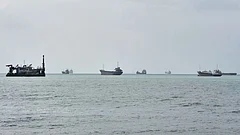


While Iranian officials term the payment as fees charged for ‘security and navigation’, these go against international maritime conventions that provide for transit passage in international straits.
How Are Indian Ships Passing Through Hormuz?
According to Reuters, India is engaging authorities in Tehran, including the Iranian Navy and even the IRGC, through diplomatic channels.
Indian-flagged ships are vetted and upon verification, the captain is given a route by the Indian Navy. Ships are instructed to strictly follow directions.

Role of IRGC
Even after bilateral governmental talks, the reports highlight that permission is sought from the Iranian Foreign Minister. This request is reportedly forwarded to the Supreme National Security Council including the IRGC and representatives of the Supreme Leader.
If okayed, the decision is conveyed with the IRGC providing much needed coordinates and instructions for a harm-free passage.
Also, IRGC oversees vetting of vessels with ‘affiliation checks’ for any American or Israeli connection. Documents, as per the report, would then be sent to the recently formed Persian Gulf Strait Authority.
Even after passing the initial Iranian checkpoints around Hormuz, vessels encounter IRGC and Iranian naval checks.
Only after multiple probes is a vessel escorted by smaller Iranian boats through the passage laden with mines.
The layered procedures that are yet evolving with strike against India-bound wooden cargo vessel earlier this month and reports of at least two other ships bound for Indian shores attacked since the start of conflict.