The US and Iran have agreed to a 60-day memorandum of understanding to facilitate a ceasefire and nuclear talks.
Commercial shipping is gradually reviving with 29 out of 109 large oil tankers successfully exiting the Strait of Hormuz.
US Central Command is offering navigational advice to merchant ships to ensure safe passage through the Persian Gulf.
Shipping activity through the Strait of Hormuz is showing early signs of recovery, with vessel owners increasingly confident that traffic could return to normal if security conditions continue to improve.
The Trump administration and Iran reached a tentative 60-day memorandum of understanding on Saturday to extend a fragile ceasefire and launch formal nuclear negotiations, according to CBS News. The diplomatic breakthrough has triggered a gradual revival in commercial shipping through the Strait of Hormuz.
According to a Bloomberg report, American military authorities are providing commercial operators with navigational advice to help vessels safely traverse the strategically vital waterway. A US Central Command spokesperson confirmed to Bloomberg that military assets are not accompanying merchant ships, but said advisory support remains available to companies in the region.
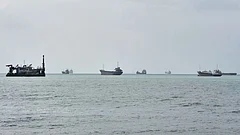
Shipping traffic is slowly resuming after a major disruption to the global energy trade. As of Saturday, at least one-quarter of the total non-Iranian commercial vessels stranded since the conflict escalated have exited the waterway, according to a Bloomberg report. Tracking data shows 29 out of 109 large oil tankers trapped at the start of the war, each capable of hauling 700,000 barrels or more, have successfully departed, Bloomberg reported.


Fragile Ceasefire Talks
Following a high-stakes, two-hour Situation Room meeting on Friday, US President Donald Trump said he is making a "final determination" on the proposal, according to CBS News.
Trump demands that Iran permanently reopen the Strait of Hormuz, remove all maritime mines, and allow the US to "unearth and destroy" its stockpile of highly enriched uranium. Vice President JD Vance described the sides as "very close," though diplomatic friction remains high, CBS News reported.
Iranian officials signalled significant resistance to several American terms, specifically denying that any agreement to transfer or destroy their enriched uranium has been finalised, according to CBS News.
The proposed agreement would involve the US gradually lifting its naval blockade and relaxing some sanctions in exchange for Iran’s commitment to never possessing a nuclear weapon, according to CBS News. Despite the progress, both sides continue to report ongoing military friction and a deep lack of trust.
Industry Remains Cautious
The Strait of Hormuz was effectively closed in February. At the peak of the conflict, the disruption stranded 1,500 to 2,000 non-Iranian commercial vessels and roughly 20,000 to 22,500 mariners inside the Persian Gulf, according to the reports.
Operators are now sending vessels back into the region, though some local nations never fully halted trade. The United Arab Emirates maintained state-owned energy movements throughout the crisis, while Qatar quietly continued exports of liquefied natural gas to major international customers, according to the Bloomberg report.
Many vessel operators are adopting stringent security measures, including switching off satellite transponders to run "dark" during voyages. TotalEnergies CEO Patrick Pouyanne told Bloomberg his company would seek evidence of a durable peace before resuming normal shipping operations into the Gulf.
“We would expect, if you like, a frenzy phase to start with,” Gerasimos Kalogiratos, chief executive officer of Capital Tankers Corp., told Bloomberg on an earnings call this week.
Kalogiratos said that tanker costs would stay high in the longer-term as global oil inventories refill barrels lost to the war.
The gradual return of shipping activity comes as markets closely watch ceasefire negotiations between the United States and Iran. Both sides have indicated they are nearing an agreement that could extend the current ceasefire by 60 days and pave the way for talks on Iran's nuclear programme, although no final deal has yet been announced.
While optimism is growing, many shipping companies remain cautious about fully resuming operations until there is greater clarity on long-term security conditions in the Gulf.