






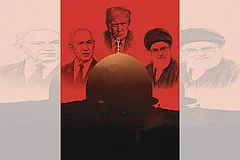
Conflict involving the United States and Israel targeting Iran has choked tanker movement through the Strait of Hormuz, delaying imports that meet nearly 60% of India’s LPG demand.
Despite government assurances, there are supply delays, rationing for commercial use, stranded cargo (≈3 lakh tonnes), and rising costs, pointing to a tightening system rather than a full shortage.
Heavy reliance on Gulf imports, limited diversification, and low storage capacity (2–3 weeks buffer) leave India’s LPG system highly sensitive to global geopolitical shocks.
On most days, the Strait of Hormuz, a narrow maritime corridor between Iran and Oman that carries a significant share of the world’s energy trade, is an abstraction in Indian life, far removed from the rhythms of everyday existence. But as the United States and Israel attacked Iran, tanker traffic through the strait was disrupted, and suddenly that distance collapsed. This time, the impact is closer to home—quite literally in India’s kitchens, as its gas import is tied to this route. Nearly 60 per cent of its LPG consumption is imported from the Gulf countries, passing through this single chokepoint. The result is not yet a full-blown shortage, but a tightening system: delayed cargoes, prioritising household supply while restricting commercial consumption, rising freight costs, and a government scrambling to deal with a crisis that it denied existed in the first place.
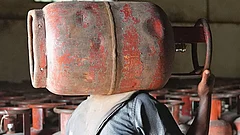
While the Bharatiya Janata Party government has repeatedly stated there is no shortage of cooking gas, social media is flooded with people standing in long queues across Delhi, Uttar Pradesh, Punjab, Maharashtra and other states. The impact of the gas shortage has been felt across the country.
Beneath the immediate crisis lies a deeper question—one that has surfaced repeatedly over the past decade but remains unresolved: why does India’s cooking gas system remain so exposed to geopolitical shocks thousands of kilometres away?
Going by Dr. Mohammad Muddassir Quamar, who teaches at the Center for West Asian Studies at Jawaharlal Nehru University, Delhi, there is no black-and-white answer. “When this war started, people in the strategic community had a fair sense about how India’s energy interests would be impacted,” he says. “But the problem is that they didn’t anticipate how long the war would go and what kind of shape it would take.”


The Strait of Hormuz has, for decades, been recognised as one of the world’s most sensitive energy chokepoints. Any disruption—whether due to war, sanctions, or maritime threats—has global repercussions.
Rapid increase in demand has not been matched by a corresponding expansion in storage capacity, leaving the country exposed to supply disruptions.
Quamar notes that while India has diversified crude oil imports over the years—sourcing from Russia, the United States and Africa—LPG diversification has been slower. “The economics of shipping, combined with long-standing contracts with Gulf suppliers, have kept the system anchored to West Asia.”
India’s liquefied petroleum gas (LPG) dependence is, in part, the outcome of one of its most successful welfare interventions. The Pradhan Mantri Ujjwala Yojana (PMUY), launched in 2016, expanded LPG access to more than 90 million households, dramatically reducing reliance on biomass fuels.
Rapid increase in demand has not been matched by a corresponding expansion in storage capacity, leaving the country exposed to supply disruptions.
The Indian government’s response to the crisis has been swift, if reactive. Despite the fact that the Strait of Hormuz has been effectively closed to commercial shipping for the first time in recorded history, Petroleum Minister Hardeep Puri assured the Lok Sabha on March 12 that India’s fuel supply remains secure. Puri blamed the crisis on panic buying. He added that LPG production has increased by 28 per cent over the past five days.
However, market analysts say the increase may still fall short of demand. Sumit Ritolia, lead analyst for the refinery at Kpler, says, “Even if refineries manage to increase LPG output by 10-20 per cent above current domestic production, domestic supply would only rise to roughly 47-50 per cent of total demand, leaving a significant gap that must still be filled through imports.”

Despite the government assurances, the situation seems serious. Rajesh Kumar Sinha, Special Secretary at the Ministry of Ports, Shipping and Waterways, said on March 17 that as much as three lakh metric tonnes of liquefied petroleum gas LPG is presently stranded at the Strait of Hormuz. Presently, 22 Indian-flagged vessels are stranded at the Strait of Hormuz, of which six are LPG carriers.
There are roughly three lakh metric tonnes of LPG presently stranded at the Strait of Hormuz. Two Indian-flagged LPG tankers—the Shivalik and Nanda Devi—safely passed through the Strait of Hormuz on March 14 and have reached India carrying approximately 92,700 metric tonnes of LPG.
Sources say that the government was using all kinds of strategic maneuvering to ensure safe passage for its vessels in the Strait of Hormuz. “Exporting pharmaceuticals to Iran is one of them. We have also agreed to provide medical equipment to Iran to ensure safe passage of vessels from the Strait of Hormuz,” says an official.
Even as Puri assured Parliament that there was no dearth of LPG cylinders, he ended up accepting that the government was dealing with a crisis. “India is navigating the most severe global energy disruption in recorded history,” he said. “India must stand united behind its energy warriors, behind the institutions managing this crisis,” he concluded.
The more difficult question is whether the crisis could have been mitigated. Energy experts argue that the risk was neither new nor unpredictable. The Strait of Hormuz has witnessed repeated episodes of tension over the past two decades, from tanker attacks to military stand-offs. In that context, the absence of a comprehensive LPG security framework—covering strategic reserves, diversified sourcing and crisis protocols—appears less like an oversight and more like a policy gap.

Policymakers and analysts say that India’s energy planning has historically prioritised access and affordability, sometimes at the expense of resilience.
Quamar points out that the problem is structural as well. For instance, a key feature of India’s LPG system is that it operates on a continuous supply model rather than one built on large stockpiles. Unlike crude oil, which can be stored in strategic reserves, LPG is typically imported, processed and distributed quickly, with limited scope for long-term storage. This model has worked efficiently under normal conditions. But it also means that even minor disruptions in imports—caused by geopolitical tensions, shipping delays, or market fluctuations—can quickly affect availability, he adds.
He also says that the reliance on West Asian suppliers is reinforced by logistical and economic factors. Shorter shipping distances and established trade relationships make the Gulf the most viable source of LPG imports, limiting the extent to which India can easily diversify in terms of LPG energy needs.

Some government officials say that the rapid increase in demand has not been matched by a corresponding expansion in storage capacity, leaving the country exposed to supply disruptions. At the same time, India’s storage capacity remains relatively modest when compared to its overall demand. This creates a narrow buffer, leaving little room to absorb shocks in supply.
India’s LPG storage capacity stands at roughly 1.2 million tonnes, enough to cover about two to three weeks of demand. By contrast, the country has built strategic petroleum reserves for crude oil, recognising its importance to energy security. No equivalent buffer exists for LPG. The absence of such buffers means that even short-term disruptions—like the current slowdown in tanker traffic—can quickly translate into domestic stress.
In its reviews of India’s energy policies, an IEA report titled ‘India Gas Market Report: Outlook to 2030’ recommended expanding storage capacity.
“The imbalance between rising consumption and limited storage highlights a structural weakness in India’s LPG ecosystem,” says a consultant who works with the government in the Ministry of Coal.
He adds, “The success of government initiatives aimed at promoting LPG adoption comes at the cost of increased reliance on imports, without sufficient investment in resilience.” Ultimately, the current situation reflects a broader challenge: aligning the success of welfare-driven demand expansion with the infrastructure needed to sustain it. Without such alignment, India’s LPG system will remain efficient in normal times but fragile in crises.
Mohammad Ali is an award-winning journalist, based in Delhi. He is senior associate editor with Outlook

This article appeared in Outlook's April 1st, 2026 issue titled 'ParaDime Shift' which looks at how the US-Israel attack on Iran has come home to India with the LPG crisis and is disrupting the nation's energy ecosystem, exposing policy gaps and testing the limits of diplomacy.
















