Jag Vikram safely crossed the Strait of Hormuz carrying 20,400 tonnes of LPG and is due in Mumbai on 15 April.
India has identified vessels for possible evacuation as several Indian ships remain in West Asian waters.
Port operations remain normal, while authorities move to ensure exporters receive concessions directly.
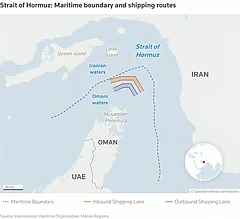
An Indian-flagged liquefied petroleum gas (LPG) carrier, Jag Vikram, has safely passed through the Strait of Hormuz and entered the Gulf of Oman, becoming the first Indian vessel to make the crossing since a temporary two-week ceasefire between the United States and Iran was announced.
The ship is expected to reach Mumbai on April 15, according to the Indian government.
Tracking data showed the tanker moved through the strategic waterway between Friday night and Saturday morning. By Saturday afternoon, it had entered the Gulf of Oman after leaving the Ras Al Kuh traffic separation scheme at 1.30pm, completing the transit.
“The India-flagged LPG vessel Jag Vikram has safely crossed the Strait of Hormuz today (Saturday),” the government said in a statement. “The vessel is carrying approximately 20,400 tonnes of LPG cargo with 24 seafarers onboard.”
Owned by Mumbai-based Great Eastern Shipping Company, Jag Vikram is a medium-sized gas carrier with a deadweight capacity of more than 26,000 tonnes. It is the ninth Indian vessel to leave the Persian Gulf, west of the Strait of Hormuz, since early March.


Official figures show several Indian ships remain in the region. According to the Directorate General of Shipping, 14 Indian vessels are currently in the Persian Gulf, six in the Gulf of Oman, three in the Gulf of Aden and three in the Red Sea. Six of the ships in the Persian Gulf belong to the Shipping Corporation of India.
The government has also begun contingency planning for possible evacuations. The Ministry of Petroleum and Natural Gas has identified 17 vessels for this purpose, including three LPG carriers, three LNG carriers and 11 crude oil tankers. Four are Indian-flagged, while the remaining 13 are foreign-flagged.
Separately, the Department of Fertilisers has listed 16 vessels for evacuation, including one Indian-flagged ship, Jag Arnav.
When tensions escalated, at least 28 Indian-flagged vessels were operating in the Strait of Hormuz area. While some have since moved to safer waters, several remain in the region, along with hundreds of foreign-flagged ships carrying cargo bound for India.
Meanwhile, the Directorate General of Shipping has issued a circular to major ports, raising concerns that concessions offered by port authorities are not being consistently passed on to exporters.
The notice said relief measures such as waivers on detention charges, ground rent and reefer plug-in fees were often delayed because they were processed through reimbursement systems involving terminal operators and non-vessel operating common carriers (NVOCCs).
Authorities have now ordered that all such concessions must be passed on directly and transparently to stakeholders, including freight forwarders and NVOCCs, who must then transfer the benefits to exporters. The practice of retrospective adjustments and reimbursement claims has been ended with immediate effect.
Despite regional tensions, port operations across India remain normal, with no congestion reported. The government said it is working closely with ministries and maritime stakeholders to protect seafarers and ensure shipping continues without disruption.
India remains highly reliant on imported energy, sourcing nearly 88 per cent of its crude oil, around half of its natural gas, and close to 60 per cent of its LPG needs from overseas.