India has yet to release the final report on the AI-171 crash one year after the disaster.
Investigators cite ongoing technical analysis, while pilots' groups have questioned the delay.
Victims' families continue to seek answers, closure, and greater transparency.
On June 12, 2025, Air India flight AI-171, a Boeing 787-8 Dreamliner bound for London Gatwick, crashed moments after taking off from Ahmedabad. In less than a minute, hundreds of lives were lost and countless others were changed forever.
On Friday, Air India employees observed a two-minute silence to mark the first anniversary of the disaster. Yet for many families, the silence is also a reminder of something still missing: answers.
A year after the crash, India is still awaiting the final accident investigation report. Families who hoped the anniversary would bring clarity about what caused the tragedy are instead confronting another delay.
ICAO Norms Versus Actual Timelines
The International Civil Aviation Organisation (ICAO) sets global standards for aircraft accident investigations. Under ICAO Annex 13, investigators are expected to release a final report within 12 months of a crash.
If that deadline cannot be met, authorities are encouraged to issue interim statements outlining the progress of the investigation.
The framework is designed to ensure transparency, preserve evidence, and keep affected families informed while investigators work toward definitive conclusions.


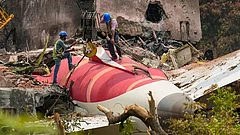
Authorities must protect the wreckage and flight recorders from tampering. Authorities must submit a preliminary report to ICAO within 30 days of the disaster. States are also encouraged to set up family assistance support structures to keep the families of victims informed regarding the progress of the investigation before public release.
How Long Major Crash Investigations Take Globally
While the one-year benchmark is widely recognised, major aviation investigations often take considerably longer. Modern aircraft are highly complex machines, and investigators must analyse vast amounts of technical evidence, from flight recorder data and maintenance records to air traffic control communications and aircraft systems.
Some of the world's most significant aviation disasters have taken years to fully unravel. The investigation into the crash of Air France Flight 447 lasted nearly three years, while inquiries into the two fatal Boeing 737 MAX crashes stretched over months and years as experts examined aircraft design, certification processes, and pilot actions.
In aviation safety, speed is rarely prioritised over certainty.
Why Delays Happen
India's Aircraft Accident Investigation Bureau (AAIB) is leading the AI-171 probe with assistance from international agencies, including the US National Transportation Safety Board and the UK's Air Accidents Investigation Branch.
According to officials, the delay stems from ongoing forensic examinations of the Boeing 787's General Electric GEnx engines and electronic engine-control systems. Critical data continues to be analysed at specialised facilities in the United States and France, with sources indicating that the final report may still be months away.
The delay has also drawn criticism from the Federation of Indian Pilots (FIP), which questioned why the investigation remains incomplete a year after the crash. Pilot representatives have urged authorities either to publish conclusive findings or wait until the investigation is fully complete rather than release an inconclusive assessment.
"We are at one year since the crash. Why is the AAIB [Aircraft Accident Investigation Bureau] unable to investigate a flight of 32 seconds?" FIP president C.S. Randhawa asked at a press conference in Ahmedabad.
"If there are no conclusive findings, we have asked the government to wait until the probe is concluded and publish the final report," he added.
The FIP, along with Pushkar Raj Sabharwal, father of commander Sumeet Sabharwal, has also approached the Supreme Court seeking an independent, judicially monitored investigation. Meanwhile, the Centre has told the apex court that the probe is being conducted in accordance with ICAO standards. The AAIB's preliminary report, released a month after the crash, stated that fuel supply to the aircraft's engines was cut off moments before impact.
Do Families Deserve More Disclosure?
For the families left behind, the delay is about far more than procedure. It is about closure.
Several relatives have voiced frustration not only with the pace of the investigation but also with the aftermath of the crash itself. Some families reported distressing issues during the identification and repatriation process such as jumbled remains of other passengers, while others have raised concerns over compensation and legal waivers.
The compensation process recently become a point of contention for some families. Radhika Mishra, daughter of former Gujarat chief minister and crash victim Vijay Rupani, reportedly wrote to Tata Sons and Air India Chairman N. Chandrasekaran objecting to a requirement that families waive their right to pursue future legal claims in order to accept the airline's final compensation offer.
In its response, Air India reportedly stated that it is not imposing any deadline or pressure on victims' families to accept compensation and that they are "entirely free" to wait for the final investigation report before making a decision. Mishra is understood to have argued that families should not be asked to relinquish legal rights while the investigation into the cause of the crash remains incomplete.
Many aviation experts argue that regular public disclosures can help maintain trust without compromising the integrity of an investigation. Even if definitive answers are not yet available, periodic updates can reassure families that progress is being made and that lessons are being learned.
One year on, the wreckage has been cleared, memorials have been held, and the country has paused to remember the victims. But for those who lost loved ones aboard AI-171, the most important question remains unanswered: what exactly went wrong that day over Ahmedabad?
Until the final report arrives, that question — and the grief attached to it — continues to linger.