



US President Donald Trump confirmed the peace agreement will be signed electronically this Sunday to end the ongoing war.
The strategic Strait of Hormuz will be reopened to all international traffic immediately following the signing of the deal.
Pakistan Prime Minister Shehbaz Sharif and Deputy Prime Minister Ishaq Dar played central roles in mediating the final negotiations.
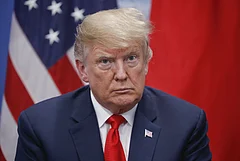
US President Donald Trump announced on Saturday that the US and Iran will sign an agreement to end the war on Sunday. The move will immediately reopen the strategic Strait of Hormuz. According to the Press Trust of India, the announcement followed indications from Pakistan that the final stages of negotiations were complete, with an electronic signing ceremony scheduled for the weekend.
"The Deal is scheduled to get signed tomorrow, and immediately after it is signed, the Hormuz Strait is OPEN TO ALL," Trump said to PTI in a Truth Social post.
While Iranian officials have not issued an immediate comment on the reported timeline, Pakistani leaders confirmed the breakthrough.
"We are closer to a peace deal than ever before. With finalisation likely expected in the next 24 hours, Pakistan is preparing for the electronic signing of the peace deal immediately after, followed by technical level talks next week," Pakistan Prime Minister Shehbaz Sharif said via a social media post.
The agreement follows months of intense international mediation, with subsequent details contrasting the pact against previous nuclear frameworks and highlighting Pakistan's diplomatic role.



Nuclear Deal Contrasts
Trump kept the threat of fresh attacks dangling if the deal failed to pan out as expected, PTI reported.
"We look forward to working with Iran, and the entire Middle East, long into the future. Hopefully, this process will all work out quickly, easily, and smoothly. If it doesn’t, we have the ultimate alternative, hopefully never to be used again," Trump said.
The US president also compared the new framework to the 2015 Joint Comprehensive Plan of Action negotiated under former US president Barack Obama.
"Barack Hussein Obama’s Deal with Iran, the JCPOA, was an easy, beautiful, smooth road to a Nuclear Weapon, which Iran would have had six years ago, and would have used long before now," Trump said to PTI. "My Agreement with Iran is the exact opposite, A WALL TO NO NUCLEAR WEAPON! In fact, they no longer want a Nuclear Weapon, nor will they have one, either through purchase, development, or any other form of procurement," he said.
Trump asserted that Iran’s nuclear programme had been effectively neutralised, saying they would dispose of any remaining material at a later stage.
"At the appropriate time, when all is calm, we will go in and get the Nuclear Dust, buried deep under the powerful sunken granite mountains, thanks to our beautiful B-2 Bombers and their brilliant pilots, and downblend and destroy it, whether in Iran, or the United States," he said.
Pakistan Mediation Efforts
The diplomatic breakthrough follows a telephone conversation between Pakistan Deputy Prime Minister Ishaq Dar and Saudi Foreign Minister Prince Faisal bin Farhan. Following the call, the Pakistan Foreign Office issued a statement on Saturday confirming the expected timeline.
"They welcomed the US-Iran negotiations in their final stage, with the electronic signing ceremony scheduled for tomorrow (Sunday), and expressed the hope that this important development will contribute to lasting peace and stability in the region," the Foreign Office said in the statement.
During the discussion, the Saudi foreign minister praised Pakistan’s consistent and sustained efforts in supporting mediation and dialogue throughout the process, PTI reported. The two officials also discussed the upcoming Regional Four Foreign Ministers (R-4) meeting, scheduled to take place in Egypt later this month.
Sharif thanked the United States and Iran for their ongoing commitment during the negotiations and expressed appreciation for support from countries in the region, tagging Trump, US Vice President JD Vance, US Secretary of State Marco Rubio, Iranian President Masoud Pezeshkian, and Iranian Foreign Minister Abbas Araghchi online.
"We are confident that this historic peace deal will form a strong foundation for lasting peace," Sharif said.
Sharif also spoke with Qatar Prime Minister Sheikh Mohammed bin Abdulrahman bin Jassim Al Thani on Saturday, expressing appreciation for Qatar's strong and steadfast support for Pakistan's peace efforts. Sharif said a peace deal was "ready for signatures by the relevant parties very shortly," according to a statement issued by the Pakistan Prime Minister's Office.
The Qatari leader commended Pakistan’s role in advancing diplomatic efforts, according to the statement reported by PTI. Both leaders expressed hope that the initiative would contribute to lasting peace in the region and agreed to remain in close contact in the coming days.
In parallel, Dar held separate telephone calls with EU High Representative for Foreign Affairs Kaja Kallas, Swiss Foreign Minister Ignazio Cassis, Egypt Foreign Minister Badr Abdelatty, and the Saudi foreign minister. Dar discussed with the four leaders the progress in the ongoing US-Iran engagement, with all sides expressing hope that the diplomatic efforts would contribute to "lasting peace and stability in the region", according to social media posts by Pakistan’s Ministry of Foreign Affairs, PTI reported.
Iranian Stance and Background
Iranian officials hinted at a breakthrough earlier in the week. On Friday, Araghchi suggested that progress was imminent regarding the negotiated terms.
"Islamabad Memorandum of Understanding has never been closer," Araghchi said to PTI in a social media post. "Pending its finalisation, the media should refrain from entering speculation about its content. In line with our responsible and transparent approach, all details will be shared with the public in due course," he said.
The wider conflict, which began on Feb. 28, has rattled global markets, tested regional alliances and intensified diplomatic efforts to secure a negotiated settlement.
Pakistan emerged as a key mediator throughout the crisis, facilitating direct contacts between Washington and Tehran and hosting diplomatic efforts aimed at ending the conflict. Islamabad previously hosted the first round of peace talks in April after a fragile ceasefire. Senior officials from both sides attended, but they failed to clinch a deal, PTI reported.















