The U.S. and Iran signed a peace pact, lowering oil prices as supertankers resume crossing the reopened Strait of Hormuz.
The agreement demands a halt to the war in Lebanon, sparking a major rift over Israel's troop deployment.
Fresh Israeli airstrikes hit southern Lebanon, leaving more than a million displaced civilians in limbo.
Global energy markets reacted immediately on Thursday as the first commercial tankers sailed through the Strait of Hormuz following a U.S.-Iran peace pact, even as renewed Israeli airstrikes in Lebanon cast a shadow over U.S. President Donald Trump’s pledge to end the regional conflict.
The developments follow Wednesday’s signing of a memorandum of understanding (MoU) by Trump and Iranian President Masoud Pezeshkian, which took effect two days earlier than scheduled. While the accord has successfully lowered oil prices and initiated the reopening of vital shipping lanes, Israel’s continued military operations in Lebanon underscore a major diplomatic rift between Washington and its wartime ally, leaving more than a million displaced Lebanese citizens in a state of deep uncertainty.
Three Saudi-flagged supertankers carrying 6 million barrels of crude oil safely traversed the Strait of Hormuz hours after the agreement was finalised. The MoU calls for the immediate lifting of the U.S. blockade on Iranian ports and the reopening of the strategic waterway. Shippers noted that restoring full transit to pre-war levels will take time due to the necessity of clearing naval mines and ensuring safe passage, but immediate shifts were visible. Vessels that previously turned off their transponders to hide their locations are now broadcasting their positions in preparation to cross the strait. Consequently, benchmark Brent crude futures dropped another 2%, falling below $78 a barrel, their lowest mark since the conflict began.


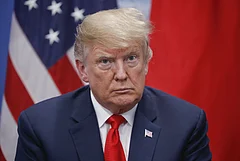

The interim pact initiates a 60-day negotiation window to secure a permanent settlement to the war, which was launched in February by Trump and Israeli Prime Minister Benjamin Netanyahu. However, Israel was excluded from these negotiations, despite having launched a ground invasion of Lebanon in March and seizing a large portion of the south to combat Hezbollah militants.
Because Tehran insisted that any peace deal must encompass Lebanon, the memorandum explicitly demands a "permanent termination" of the war there, alongside guarantees for Lebanon’s "territorial integrity and sovereignty." This represents a significant concession to Iran by the U.S. administration. In recent days, Trump has grown openly critical of Israeli operations, accusing the military of unnecessarily destroying entire buildings to target individual fighters.
According to Reuters, Israel is currently engaged in intense negotiations with the United States as it attempts to maintain its military presence in southern Lebanon. A senior Israeli official, speaking to Reuters on the condition of anonymity, stated that Israel is "conducting stubborn negotiations" with Washington to keep troops deployed in a self-described buffer zone south of the Litani River. A second Israeli official reported to Reuters that the final outcome will rest on whether Trump "decides to force the issue" by threatening diplomatic or economic repercussions if Israel refuses to comply with the terms of the U.S.-Iran pact. Netanyahu's office did not immediately respond to requests for comment.
Though fighting briefly taroed down earlier in the week when the deal was first announced, hostilities intensified again on Thursday morning following the formal signing. Lebanese state media reported fresh air and artillery strikes hitting southern towns, including one attack that killed at least one person in a vehicle. A Reuters report also noted the presence of low-flying Israeli drones over Beirut and its southern suburbs.
The escalating friction marks one of the most severe rifts in U.S.-Israeli relations in decades, with the pact drawing widespread criticism across the Israeli political spectrum. Netanyahu has historically capitalised on his close relationship with Trump, which previously prompted major shifts in U.S. policy in Israel’s favour. Now, the country faces a difficult strategic choice. As the Times of Israel wrote on Thursday: "Soon, Israel may be forced to choose: Either keep up the military pressure and lose Trump’s diplomatic support, or stay on his good side — but only by ending, or scaling back, the conflict that many see as the country’s most urgent fight."
For the civilian population caught in the crossfire, the diplomatic breakthrough brings little immediate relief.
"Iran and the Americans are done. Fine. In Lebanon it's not over yet," said Mohammed Doghman, a displaced resident from Nabatieh currently living in a tent in Beirut, who was reading the updates on his mobile phone. "They should give us a final answer: has the war ended for good, or will we return to it again?"
(With inputs from Reuters)