



The Donald Trump administration immediately withdrew Iran's oil sanctions exemption on Tuesday following maritime attacks.
US Central Command launched powerful military strikes against Iran for targeting three commercial vessels in the Strait of Hormuz.
The military escalation shatters a performance-based ceasefire Memorandum of Understanding established weeks ago between Washington and Tehran.
The Donald Trump administration withdrew a critical oil sanctions exemption with immediate effect on Tuesday. The move targets Iranian energy purchases.
American forces struck Iran on the same day. The US Treasury stated the offensive aims to penalise Tehran for assaulting three commercial ships navigating the Strait of Hormuz.
The sudden escalation shatters a recent Memorandum of Understanding (MoU). Washington and Tehran had established the performance-based ceasefire weeks ago to suspend their months-long conflict.
"As President Trump and the administration have repeatedly affirmed, the MoU in effect with Iran is entirely performance-based. Iran will only reap benefits if they exhibit good behavior," a US official said, according to the publication.
Strikes And Ceasefire Violations
US Central Command launched intense military operations to exact a heavy toll on Iran. The administration targeted the nation over its hostile actions towards commercial maritime traffic.
"US Central Command forces have begun launching a series of powerful strikes against Iran to impose heavy costs for targeting and attacking commercial shipping crewed by innocent civilians in an international waterway. The US strikes are in response to Iranian attacks on three commercial vessels that were transiting the Strait of Hormuz. Iran’s demonstrated aggression was unwarranted, dangerous, and a clear violation of the ceasefire," the command stated on X.


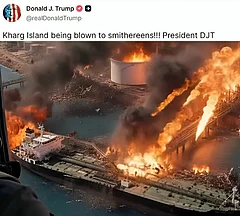

One affected merchant vessel was the Al-Rekayyat. The Qatari ship was sailing to India with an energy cargo.
The now-cancelled general licence originated in late June. Officials had programmed the exemption to last 60 days until August 21.
Impact On Indian Imports
The aborted general licence offered substantial advantages to India. The country sustained a robust energy trade with Iran prior to the original US sanctions.
Prashant Vashisht, senior vice president at ICRA, said the historical trade dynamics favoured India. He said Iranian vendors provided extended credit windows of 60 to 90 days, outpacing the 30-day terms from alternative producers. Geography also favoured Tehran over distant suppliers like Venezuela.
"Iranian crude made up about 10.5% of India’s total crude oil imports in 2018. And historically, Iranian crude sellers have given a longer credit period of 60 to 90 days as against 30 by other crude producers. Also, it is obviously geographically more proximate than a country like Venezuela. So Indian refiners would benefit because of these reasons. Iranian energy is well suited for purchases by India," Vashisht told Hindustan Times.
The Strait of Hormuz blockade trapped 10-11mn barrels of oil daily. The International Energy Agency reported strategic reserves supplied 4mn barrels per day to bridge the gap.
"Crude oil is in short supply. Around 10-11 million barrels of oil a day were stuck in the Strait of Hormuz. As per the International Energy Agency, 4 million barrels per day has been made up by strategic reserves being allowed to flow into the market. I think India would be buying a lot of crude wherever it can get it," Vashisht said according to the Hindustan Times.
Context Of Previous Waivers
The Trump administration previously distributed two 30-day licences in March. The US Treasury introduced these permits to facilitate the procurement of sanctioned Iranian and Russian energy. The move was designed to ease escalating global energy prices.
Washington implemented those temporary exemptions shortly after a period of intense military action. American and Israeli forces had executed strikes on Iranian targets in late February.
US authorities ultimately allowed the previous Iranian purchase permit to lapse in April. The administration chose not to grant an extension at that time.















