The US and Iran have resumed indirect negotiations in Doha to build on last month's Memorandum of Understanding.
It focuses on restoring shipping through the Strait of Hormuz, unfreezing Iranian assets and advancing discussions on Tehran's nuclear programme.
Recent exchanges of strikes over the Strait of Hormuz highlighted lingering disagreements over maritime security and regional issues, underscoring the challenges facing efforts to secure a lasting peace.
After years of negotiations, Iran and six world powers reached the Joint Comprehensive Plan of Action (JCPOA), commonly known as the Iran nuclear deal, in July 2015.
Brokered under the former US President Barack Obama, the agreement placed strict limits on Iran's nuclear programme in exchange for sanctions relief.
The deal was signed by Iran, the five permanent members of the UN Security Council, China, France, Russia, the United Kingdom and the United States, along with Germany, collectively known as the P5+1. The European Union also participated in the negotiations.

What Happened To The Original Nuclear Deal?
Under the agreement, Iran agreed to cap uranium enrichment at 3.67 percent, a level suitable for civilian energy production but well below weapons-grade. It also pledged not to store nuclear material at its underground Fordow facility, instead converting it into "a nuclear, physics and technology centre".


Tehran further agreed not to produce highly enriched uranium or plutonium that could be used in a nuclear weapon and committed to restricting activities at its Fordow, Natanz and Arak facilities to peaceful purposes, including medical and industrial research.
Iran also agreed to implement an additional protocol allowing inspectors from the International Atomic Energy Agency (IAEA), expanded access to its nuclear facilities and, where necessary, undeclared sites.
In return, the United States, the European Union and the United Nations lifted or suspended nuclear-related sanctions. After the IAEA verified in early 2016 that Iran had fulfilled its initial commitments, the Obama administration removed secondary sanctions on Iran's oil sector, allowing the country to restore oil exports to near pre-sanctions levels. The United States and its partners also unfroze about $100 billion in Iranian assets.
The agreement, however, faced strong opposition from some of Washington's regional allies. Israel argued the deal was too lenient, while countries including Saudi Arabia said they should have been consulted because they would be directly affected by a potentially nuclear-armed Iran.
On May 8, 2018, US President Donald Trump fulfilled a campaign pledge by withdrawing the United States from the JCPOA and reimposing sanctions on Iran, “horrible, one-sided deal that should never, ever have been made.”
“I made clear that if the deal could not be fixed, the United States would no longer be a party to the agreement,” Trump said.
“The Iran deal is defective at its core.”
Following the U.S. withdrawal, Iran gradually rolled back its commitments under the agreement and resumed expanding its nuclear programme.
In January 2020, after the U.S. killing of Iranian General Qasem Soleimani, Tehran announced it would no longer observe limits on uranium enrichment. Later that year, it began building a new centrifuge production facility at Natanz to replace one destroyed in an explosion it blamed on Israel
Tehran has also progressively restricted the IAEA's access to its nuclear sites, although it pledged in March 2023 to increase cooperation with the agency.
In early 2023, U.N. inspectors reported detecting uranium particles enriched to nearly weapons-grade levels in Iran, intensifying international concerns over the country's nuclear programme.
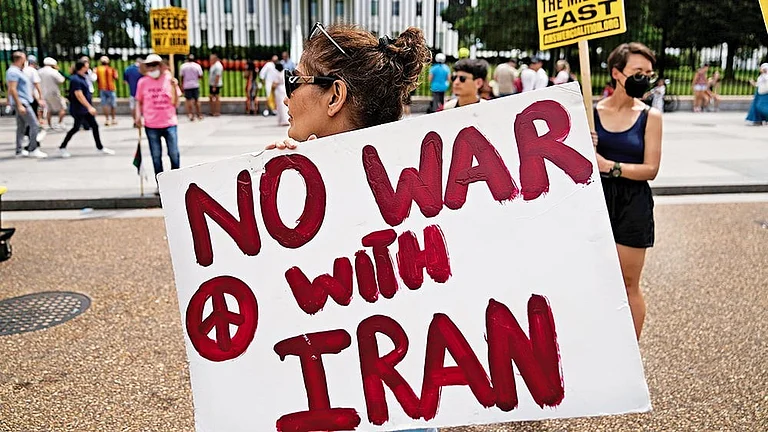
What Does Iran Want Now and What Is the US Offering?
The United States and Iran both claimed victory after a tense three-month conflict that ended with the signing of a Memorandum of Understanding (MOU) aimed at permanently ending hostilities.
The latest conflict in West Asia began on February 28, when US strikes killed Iran's Supreme Leader, Ayatollah Ali Khamenei, triggering a regional conflict. In response, Iran closed the Strait of Hormuz, disrupting one of the world's busiest oil shipping routes and fuelling a global energy crisis.
The fighting ended with a ceasefire on April 8. On June 17, 2026, the United States and Iran signed a 60-day MoU, which formally halted hostilities, reopened the strategically vital Strait of Hormuz and launched a 60-day negotiation process over Iran's nuclear programme. The US primarily wants the critical Strait to be opened, while Iran has maintained that any deal will include Lebanon’s safety from Israeli attacks as integral.
In a Truth Social post last month, Trump said his proposed agreement would be "far better" than the 2015 JCPOA.
The 14-point MOU centres on Iran's nuclear programme, sanctions relief and a permanent end to hostilities. Under the agreement, Iran reaffirms that it "shall not procure or develop nuclear weapons" and agrees to resolve the disposition of its stockpiled enriched nuclear material through a mechanism to be agreed upon by both sides, with a minimum requirement that the material be downblended under the supervision of the IAEA.
The MOU also provides for negotiations on uranium enrichment and other aspects of Iran's civilian nuclear programme, with both countries agreeing to reach a mutually acceptable framework during the 60-day negotiating period.
Pending a final agreement, both sides have committed to maintaining the status quo. Iran will not expand its current nuclear programme, while the United States has agreed not to impose new sanctions or deploy additional military forces to the region.
In return, Washington has pledged to issue waivers allowing the export of Iranian crude oil, petroleum products and related services, including banking, insurance and transportation. The United States also undertakes to lift UN, IAEA-related and unilateral US sanctions according to an agreed schedule, and to release Iran's frozen assets under procedures to be jointly agreed by both sides.
The MOU further establishes a $300 billion fund for Iran's "reconstruction and economic development", although the United States is not required to contribute financially. It also commits both countries, and their allies involved in the conflict, to an immediate and permanent end to military operations, including in Lebanon, while pledging not to threaten or use force against each other and to respect Lebanon's sovereignty and territorial integrity.

Why Are The Talks Happening In Doha?
Iran and the United States concluded two days of indirect talks in Doha on Wednesday.
with no indication they had made a breakthrough toward a permanent peace agreement, instead focusing on implementing provisions of the interim memorandum signed last month.
Reuters reported that discussions centred on two key issues covered by the agreement: restoring maritime traffic through the Strait of Hormuz and unfreezing Iranian assets.
Qatar's Foreign Ministry said the next round of talks would take place after the funeral of Iran's late Supreme Leader Ayatollah Ali Khamenei, who is due to be buried on July 9.
The Doha negotiations made "positive progress" on issues related to the memorandum that ended the war in June and were "building on the outcomes" of an earlier summit in Switzerland, the ministry's spokesperson said in a post on X.
Speaking in Washington, Trump said the two sides were making progress on possible limits to Iran's nuclear programme, the issue at the centre of the conflict that began in February.
"The denuclearization of Iran is moving along well," Trump told reporters. "They've had very good meetings, and we'll see."
Vice President JD Vance said talks in Doha are “going well” and that discussions about the nuclear issue would start soon.
“It’s still pretty early, but talks are going well,” he told CNN. “Well, right now, the technical negotiators are sitting down with the Iranians, with the Qataris, and with others in Doha, you know, talking, talking about some of the details here,” he said. “We’re worried about the nuclear issue, we’re going to start talking about that, so right now the talks are going well.”
Can A New Deal Actually Happen?
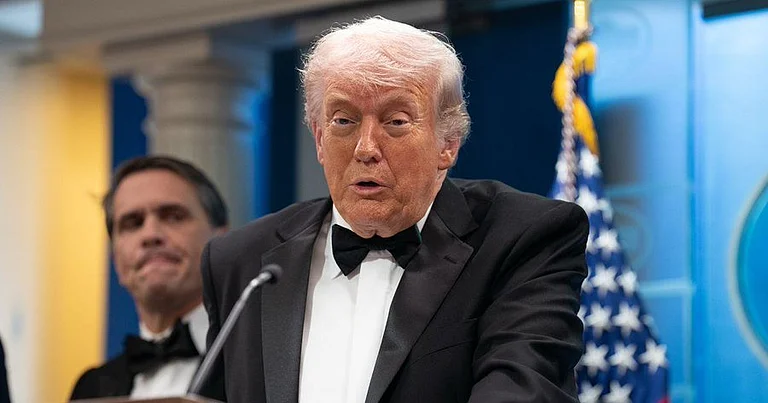
Ever since the MoU was signed, Trump has made remarks that have seemed erratic.
Trump, in a series of angry social media posts described the Iranians as “very dishonorable people to deal with”.
“With them, there is no such thing as dealing in good faith …. They better get their act together, and FAST! ” the US president wrote on Friday.
Ebrahim Azizi, head of the Iranian parliament's national security committee, said that any military action by the US will be "facing a decisive military response."
Israel has continued to attack Lebanon, contributing to tensions between Netanyahu and Trump. Earlier this month, Trump said he had described Netanyahu as “crazy”, while also calling him a “very good man” with whom he has an “amazing partnership”.
The trilateral framework signed in Washington last week between US, Israel and Lebanon links a phased Israeli withdrawal from Lebanon to Hezbollah’s disarmament. However, Hezbollah has rejected the deal and opposed its conditions.
The fragile ceasefire was also tested by strikes exchanged by US and Iran, although both countries have agreed to "stand down" after several days of military exchanges that threatened to unravel last month's ceasefire agreement.
The latest escalation began on Thursday when an Iranian projectile struck a commercial cargo ship in the Strait of Hormuz. The United States responded over the weekend with a series of strikes on Iranian targets, with U.S. Central Command (CENTCOM) saying the operation was a direct response to Iran's "continued aggression" against commercial shipping.
On Saturday, Iran retaliated by launching strikes against U.S. military bases in Kuwait and Bahrain. Washington said none of the missiles reached their intended targets and reported no casualties or damage. Iran's Islamic Revolutionary Guard Corps (IRGC), however, claimed it had struck and destroyed eight U.S. military sites in the two Gulf states.
The latest confrontation has exposed disagreements over the implementation of Article 5 of the Memorandum of Understanding, which calls for the reopening of the Strait of Hormuz. While the agreement restored commercial shipping through the strategic waterway, Washington and Tehran remain divided over who should manage and direct maritime traffic.
Iranian Foreign Minister Abbas Araghchi said the Strait of Hormuz would remain under Iranian control for the next 30 days and warned that any further U.S. military action would worsen the already fragile security situation. He also said Tehran was prepared to work with Gulf states on regional security.